SelectStar
Multi-database monitoring and observability — unified dashboards, alerts, and recommendations across MySQL, Oracle, Cassandra, PostgreSQL, and more.
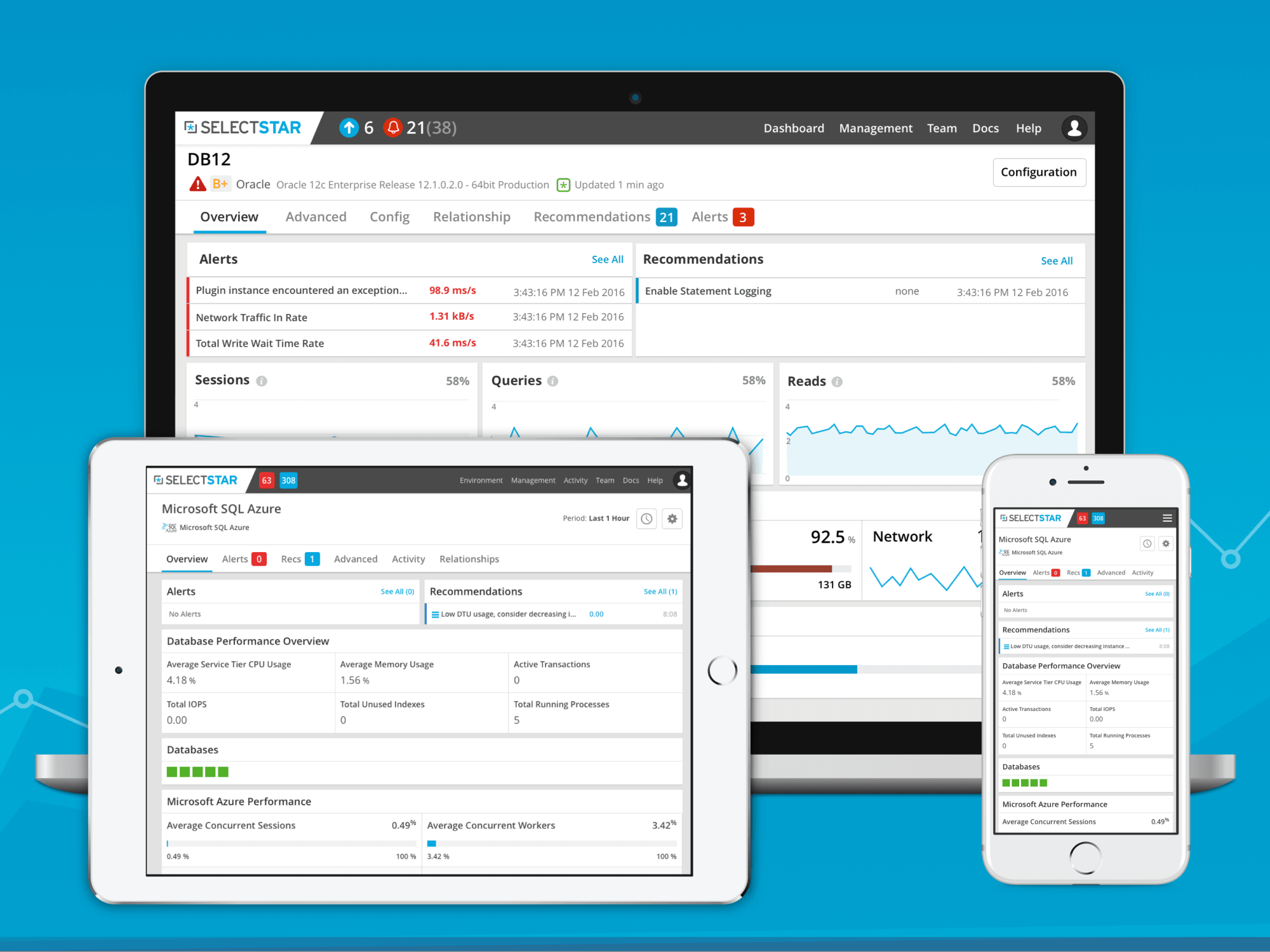
SelectStar is a SaaS database performance monitoring platform — one place to monitor, manage, and optimize every database type, wherever it lives.
- 2021
- Senior Product Designer
- SelectStar
- Blue Medora team
Problem
Database operators were drowning in engine-specific tooling. A team running MySQL, Oracle, Cassandra, and PostgreSQL side by side had to context-switch between four different consoles, four different vocabularies, and four different ideas of what a 'healthy' instance looked like.
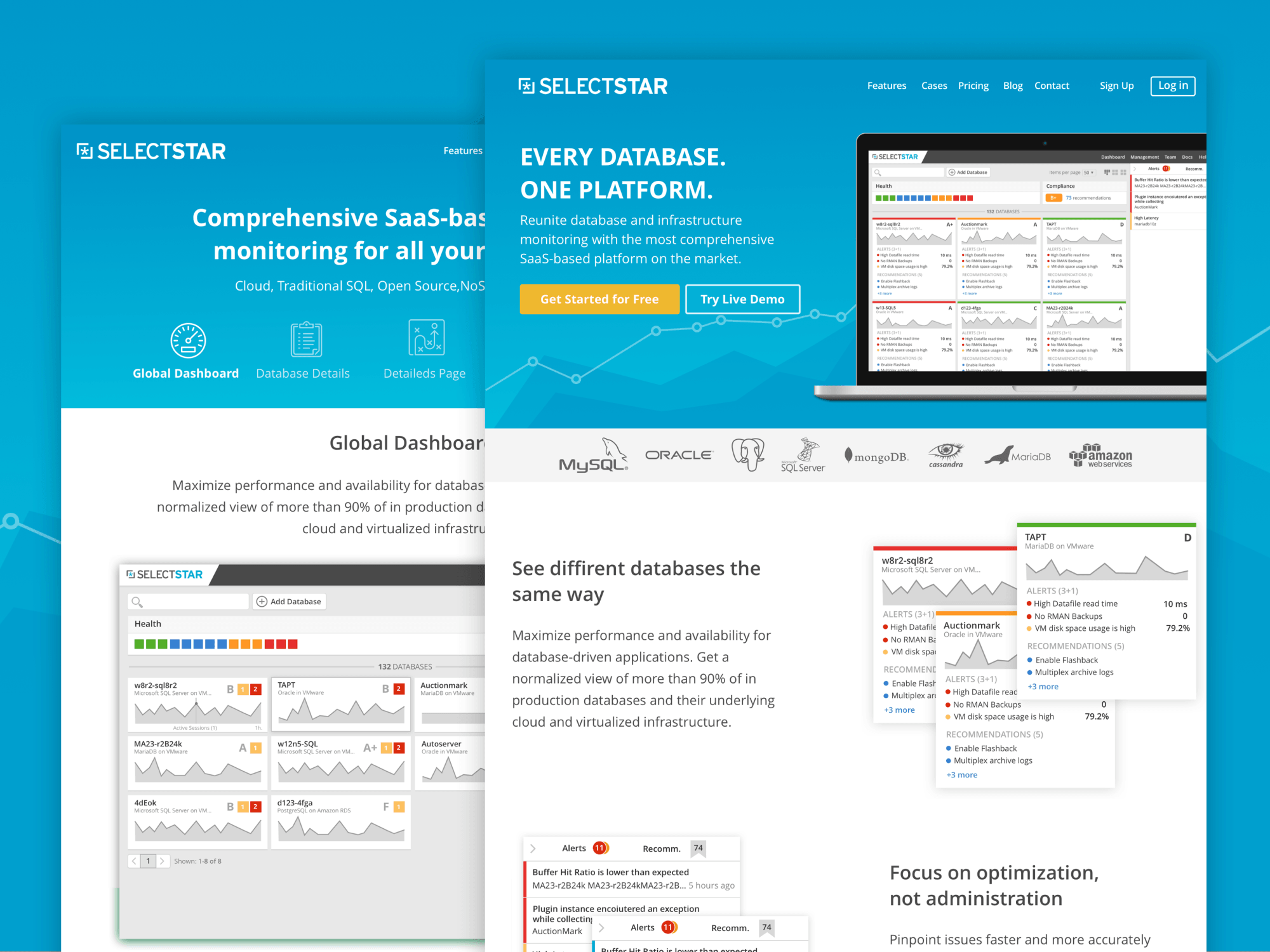
The goal was a single observability platform — unified dashboards, alerts, and recommendations — that treated each engine as a first-class citizen without forcing a lowest-common-denominator view.
Approach
Onboarding around the database, not the product
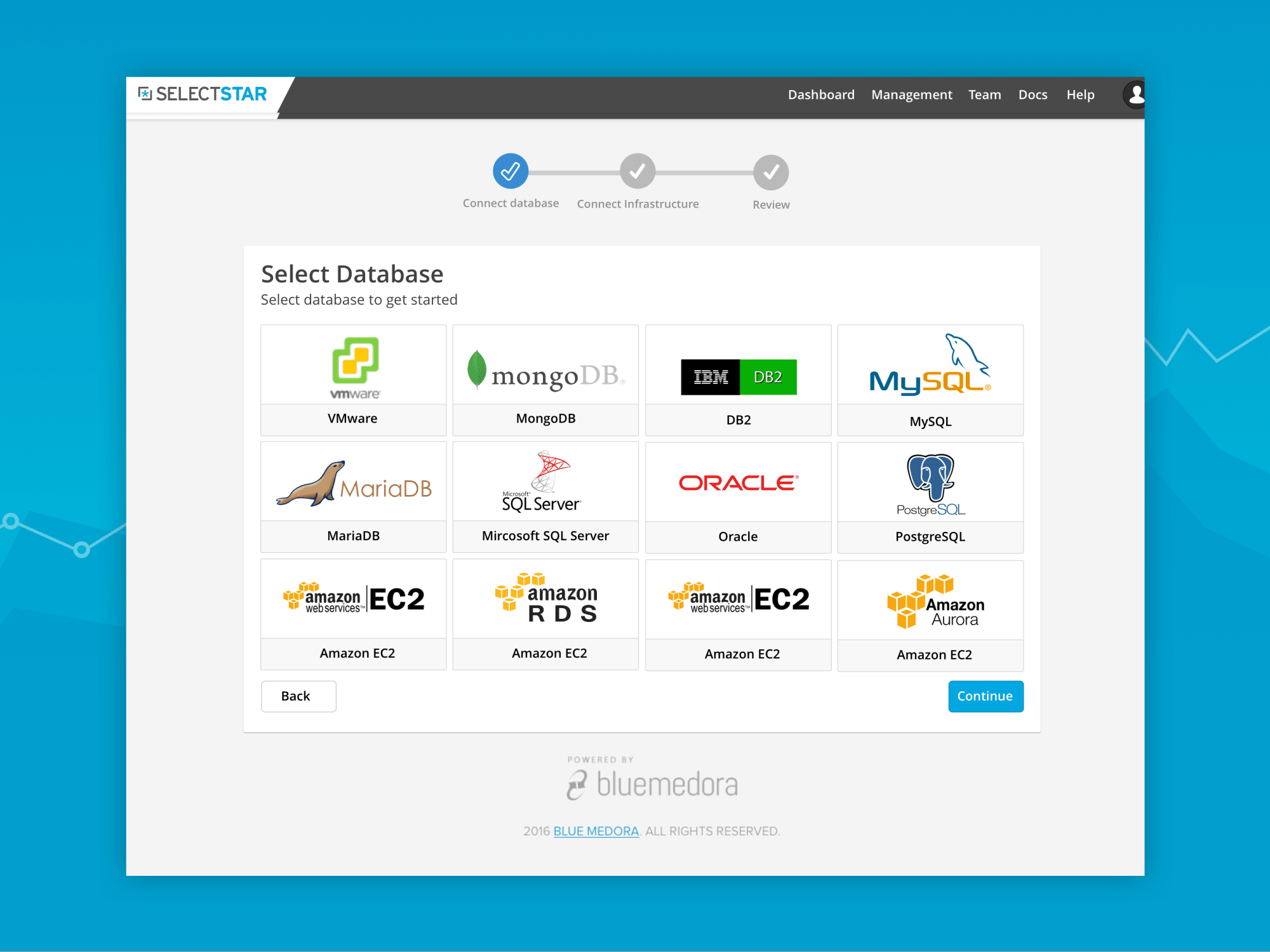
First-run starts with the engine, not the feature set. The tile grid sets expectations early — this is a BlueMedora-era product that monitors many databases — and routes each user into a config flow tuned to their stack.
A consistent dashboard grammar
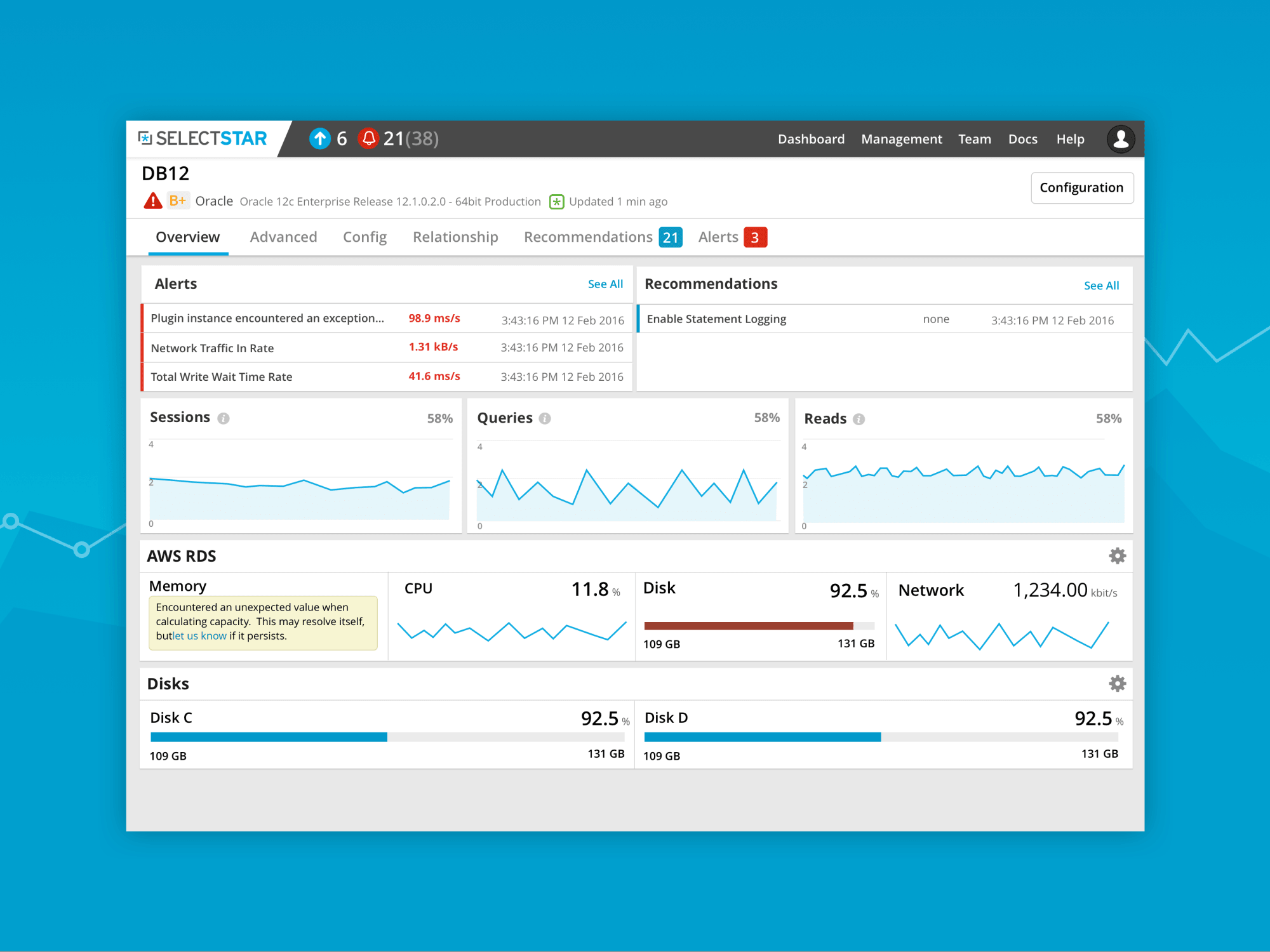
Every engine speaks the same visual language: a left-rail nav, KPI cards across the top, sparklines for trend at a glance, and tabs for the engine-specific drilldowns underneath. Operators learn the layout once and reuse it across the fleet.
Engine-aware variants
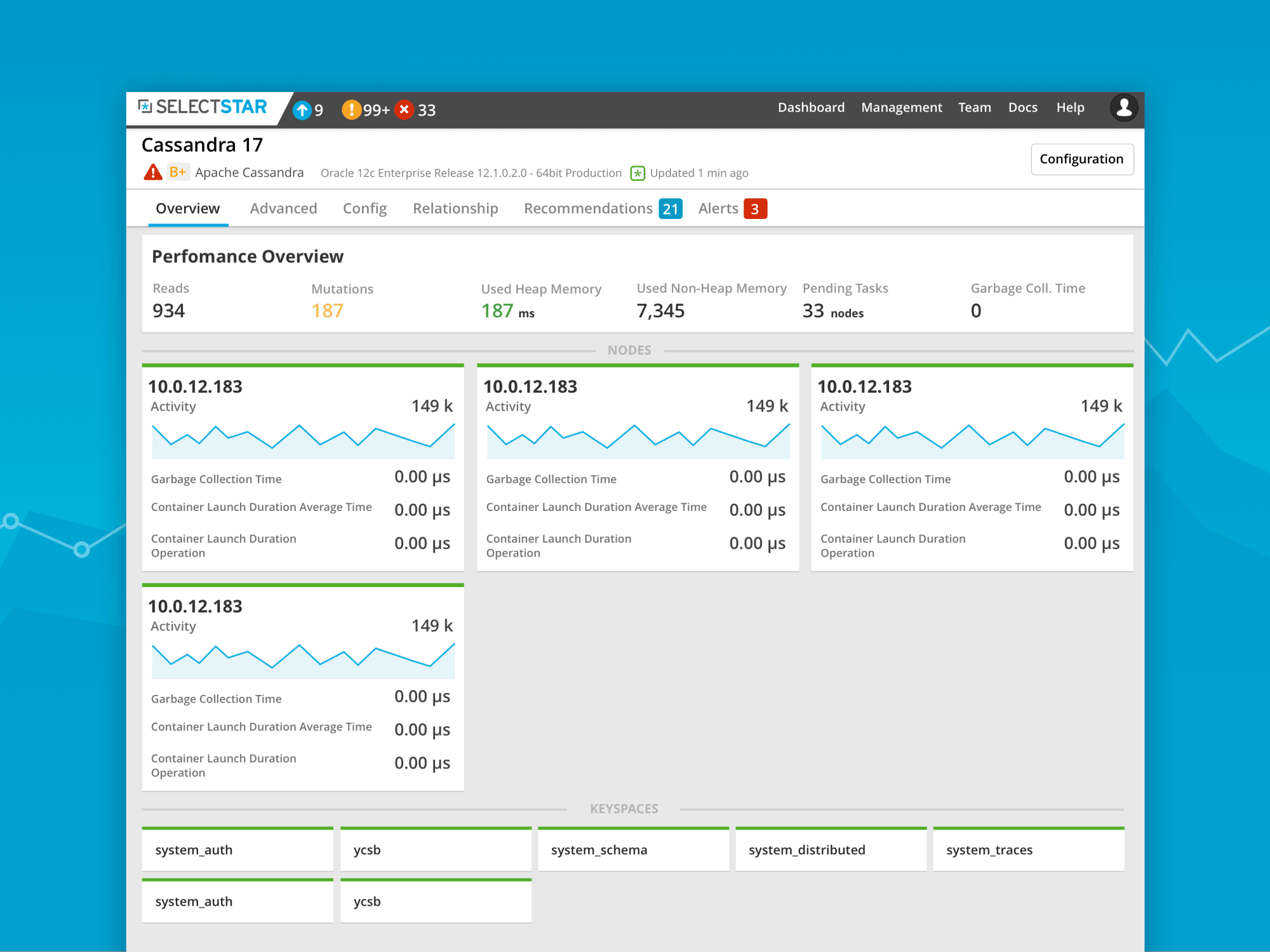
Cassandra is a distributed store, so the overview foregrounds nodes and keyspaces. The shell stays the same, the content swaps to match the mental model of the engine.
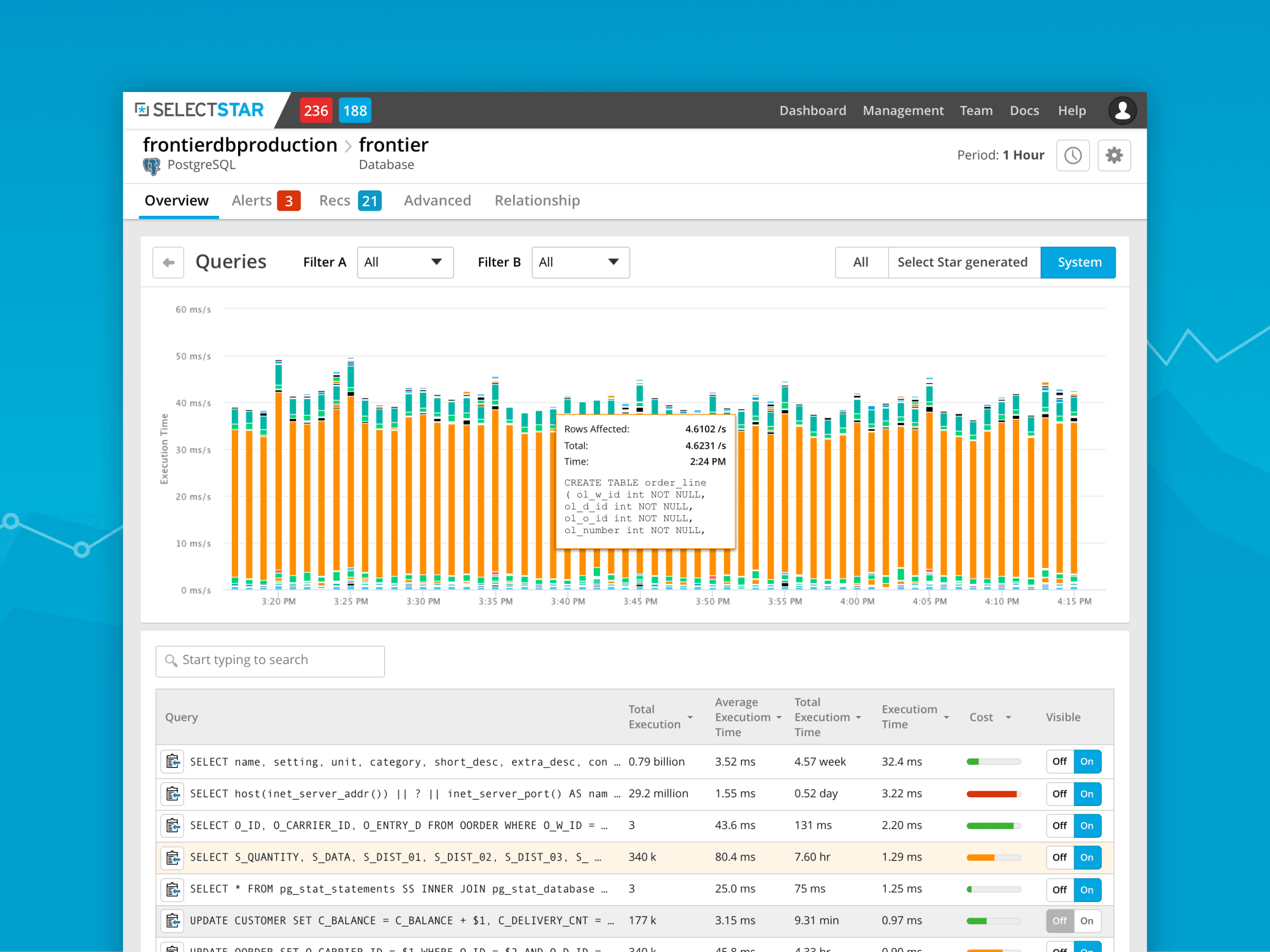
PostgreSQL gets a query-centric workspace — stacked execution-time bars surface slow statements quickly, while the rest of the chrome remains familiar.
Alerts that read like conversations
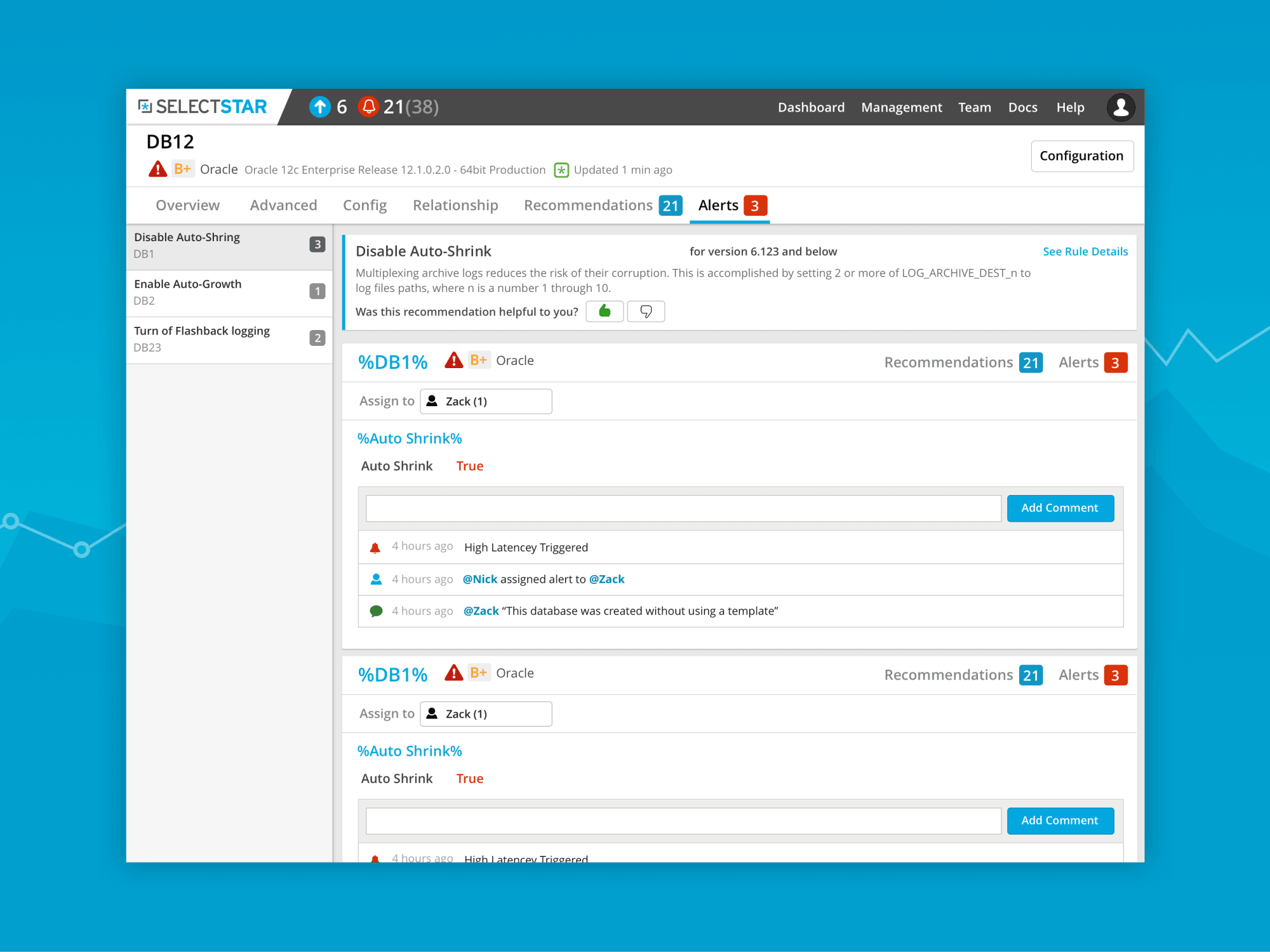
Alerts and recommendations live next to a comment thread with @mentions, so triage and handoff happen in the same place the incident is seen.
Outcome
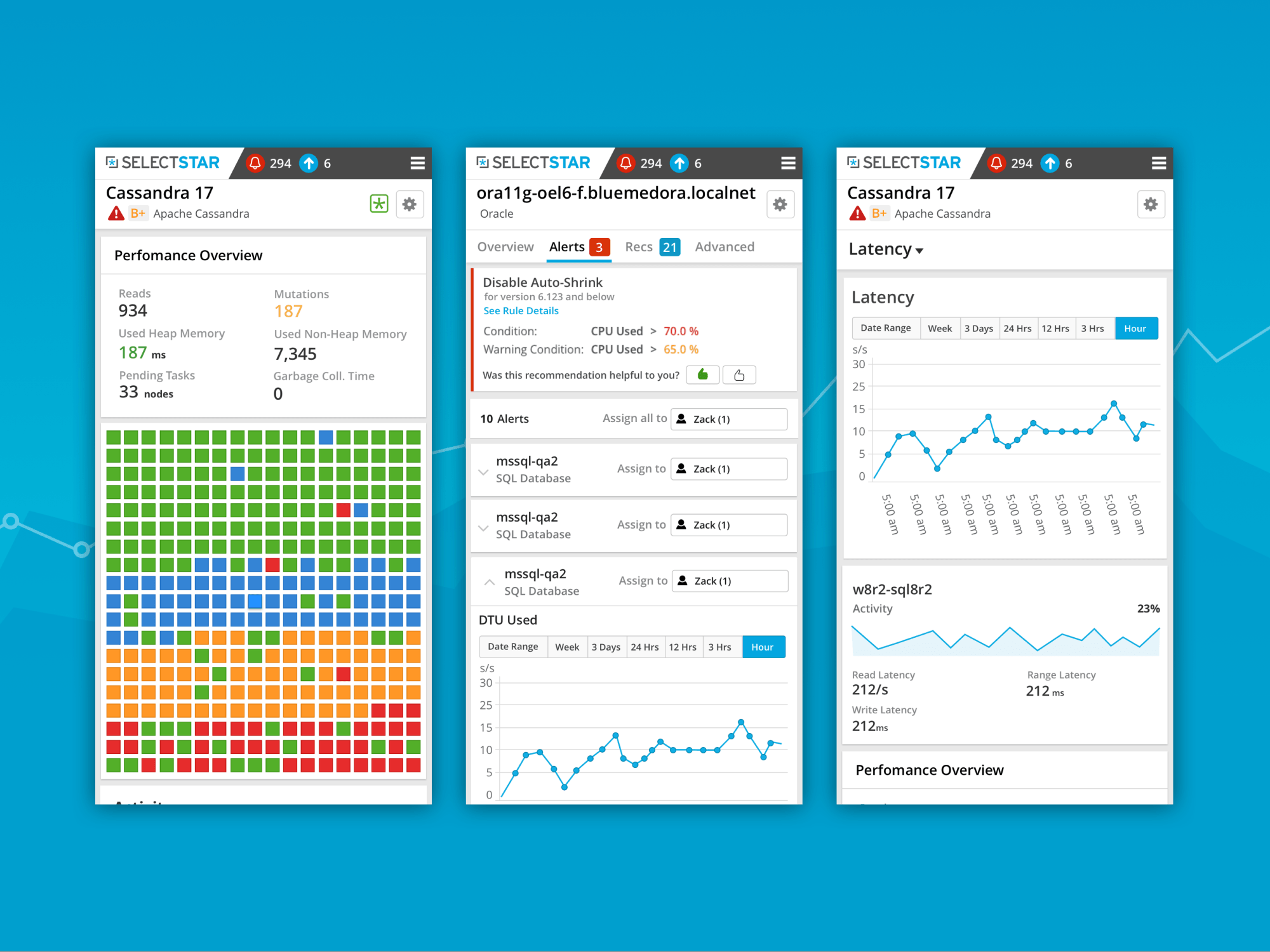
The system held together across engines and form factors. On-call operators could check overview, alerts, and latency from a phone without losing the structure they used at their desk — the same monitoring vocabulary, scaled down.