QuantHub
HR people-analytics dashboard. Startup; led design from prototype to production.
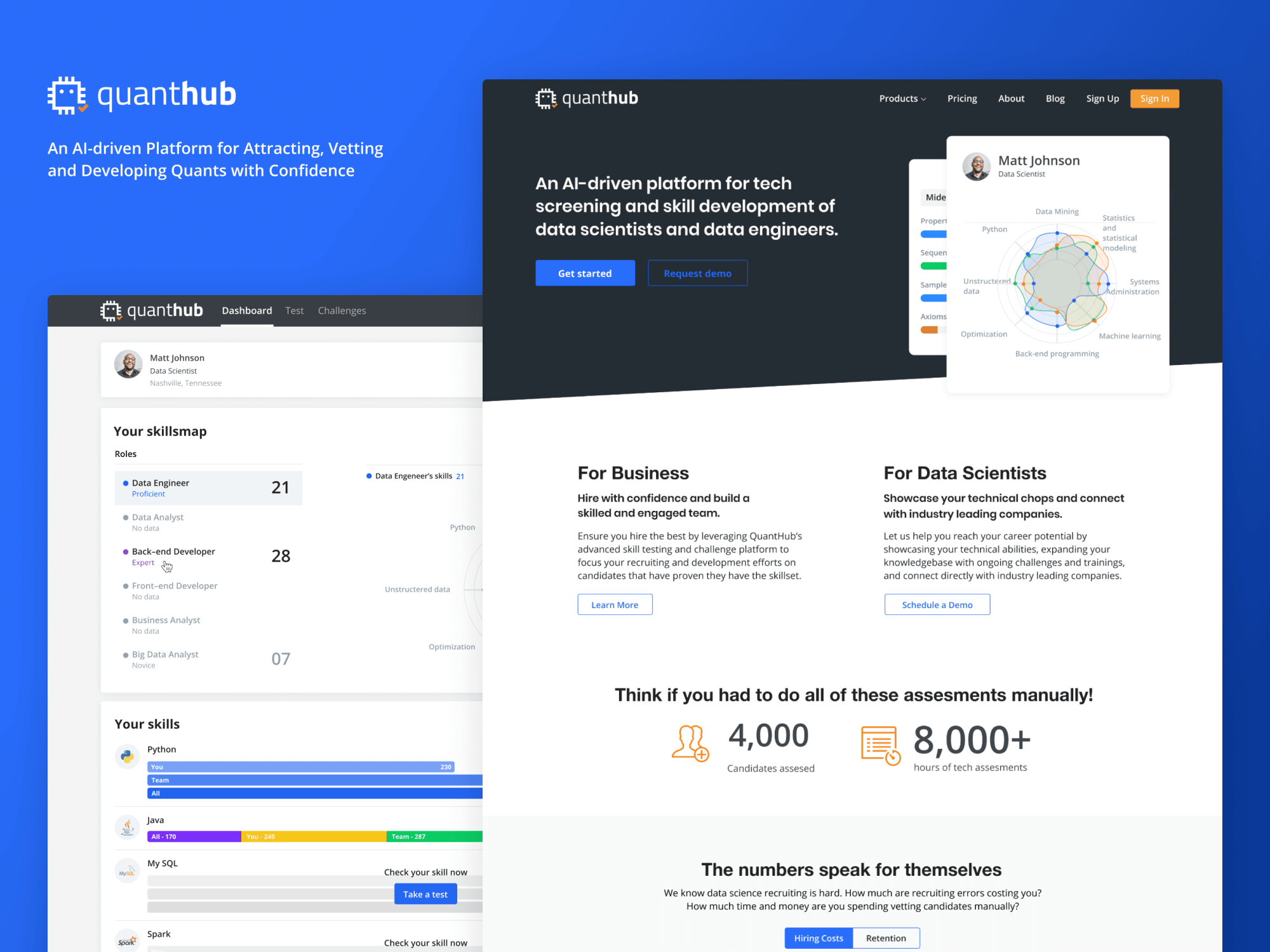
An early-stage company providing companies with an AI-driven tech screening and skill development platform for data scientists and engineers.
- 2018–2019
- Lead Designer
- QuantHub
Context
QuantHub is an AI-driven platform for technical skill verification and growth — adaptive assessments for data scientists and engineers on one side, and a hiring surface for companies on the other. As Lead Designer (2018–2019), I took the product from early prototype to production across both audiences.
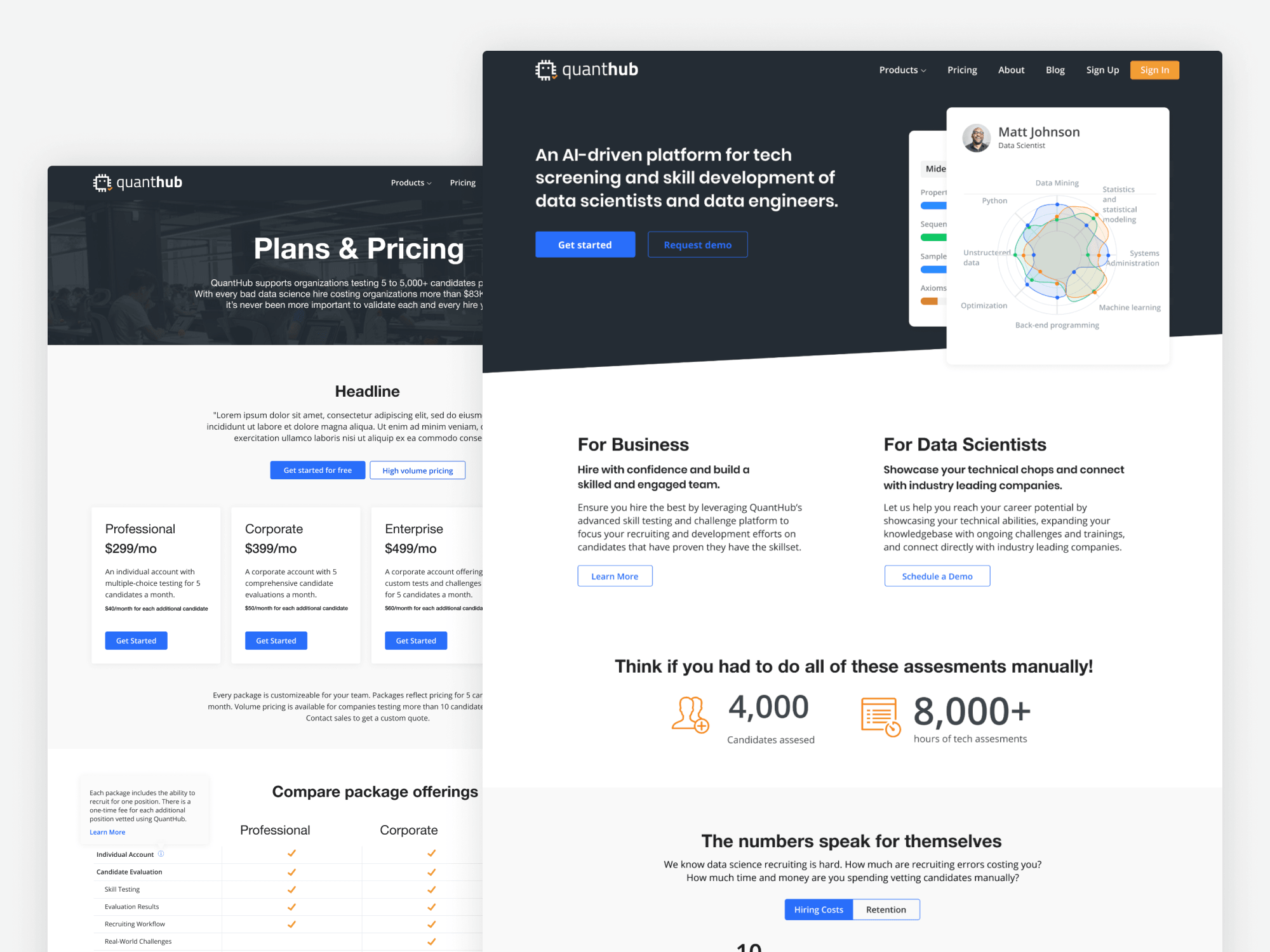
Two roles, one platform. A Quant grows a verified profile of skills. A Company filters a candidate pool by what those candidates can actually do. Most of the design work was making those two jobs feel native on a shared foundation.
Research and direction
We interviewed both sides of the market and clustered what they told us. The same theme came back from opposite directions: there was no trustworthy signal connecting effort on the candidate side to confidence on the hiring side.
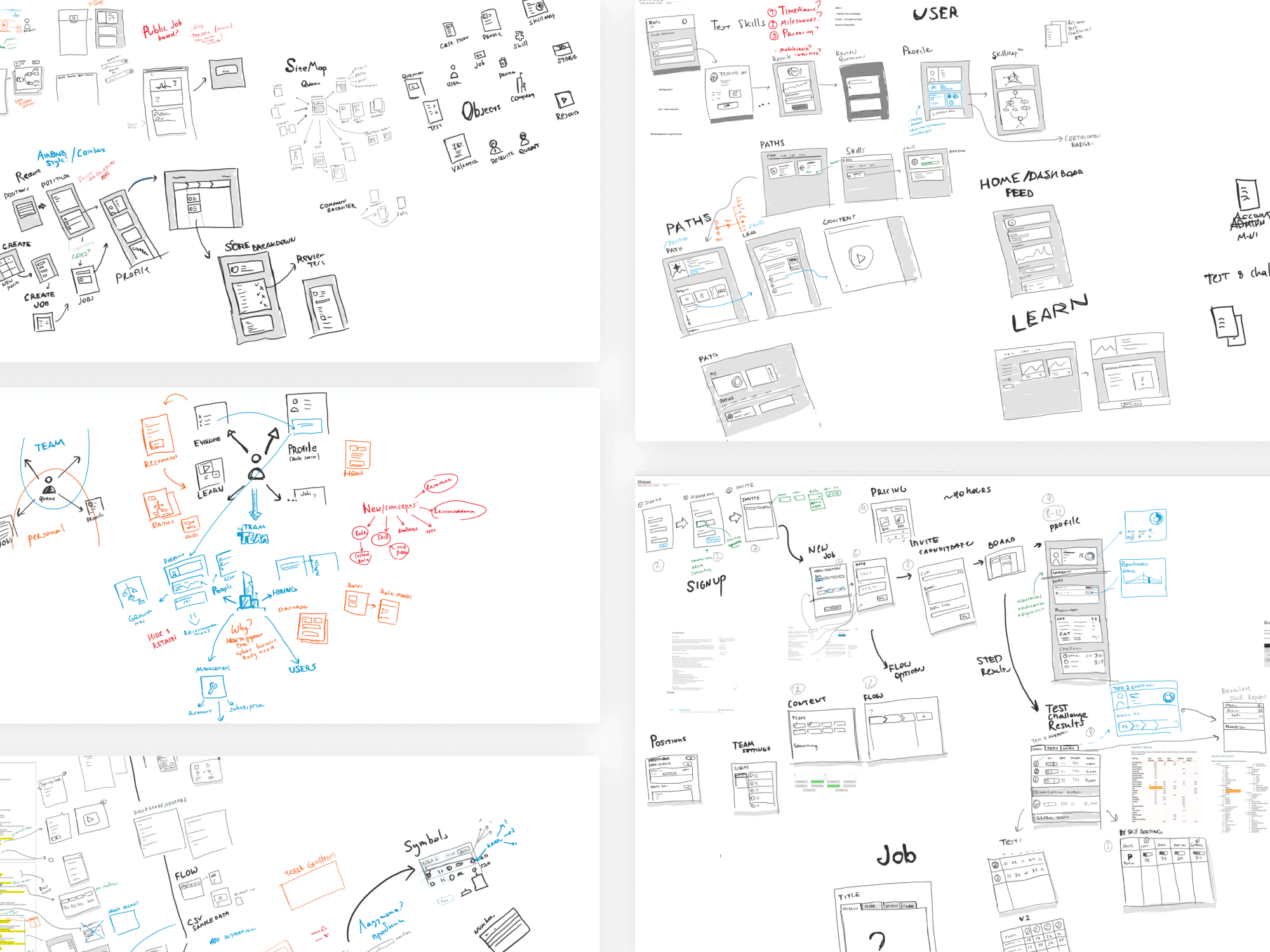
Sketching kept the cost of exploration low. We tested how an adaptive test should feel, what a verified profile could contain, and where the Quant and Company products needed to diverge.
Information architecture
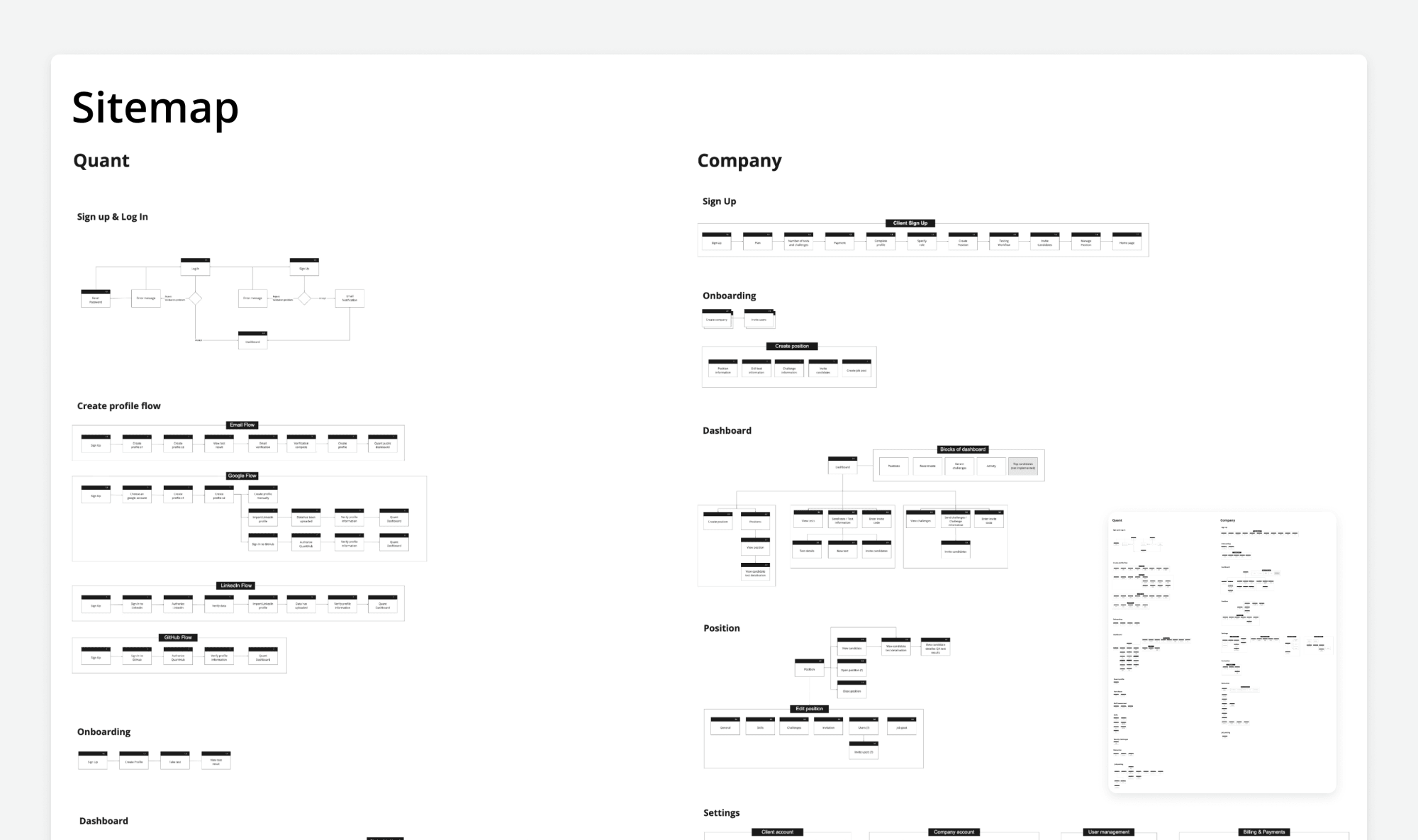
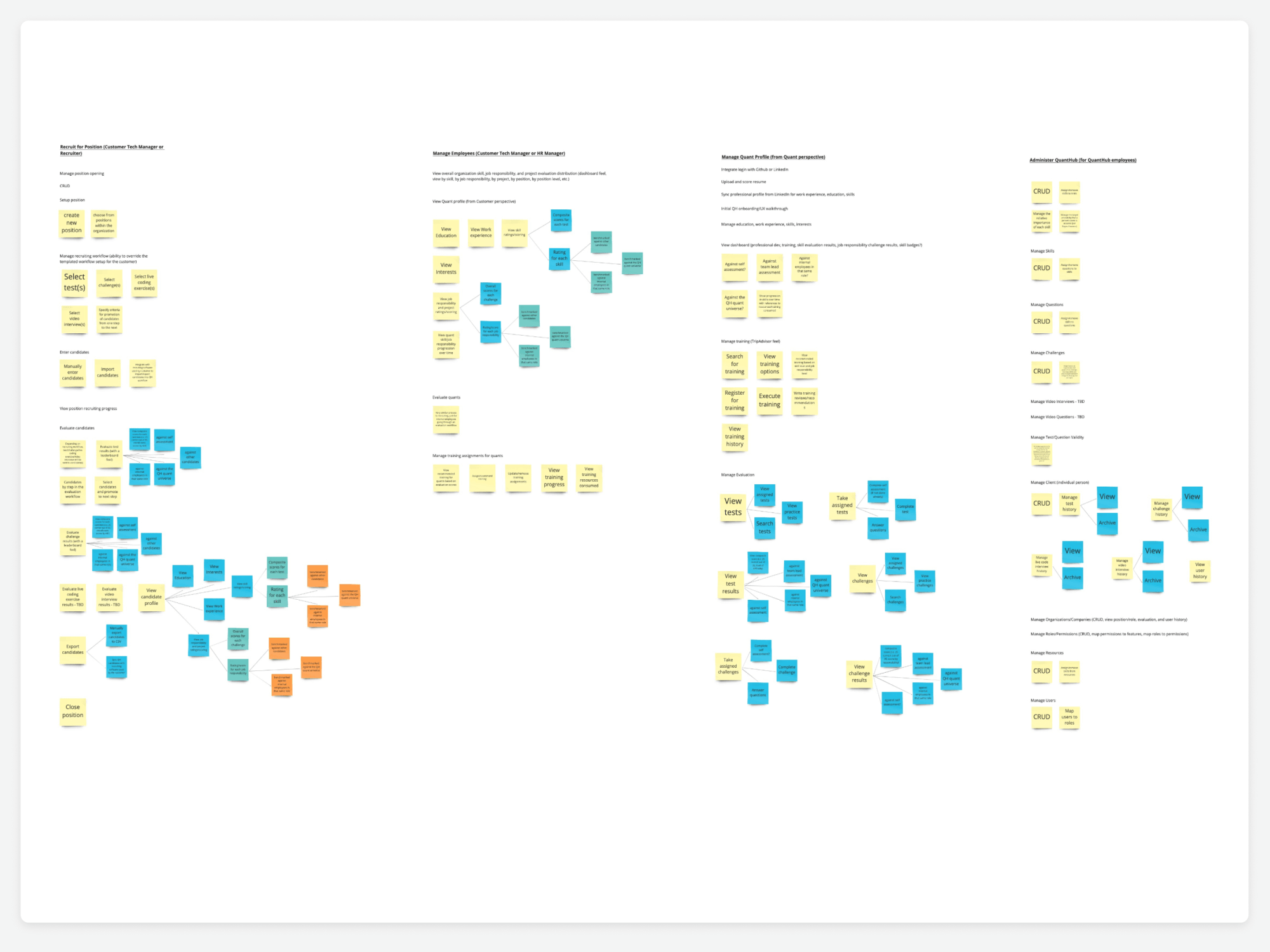
The sitemap made the dual-role reality concrete: shared primitives — skills, challenges, results — under two distinct top-level experiences with different goals and rhythms.
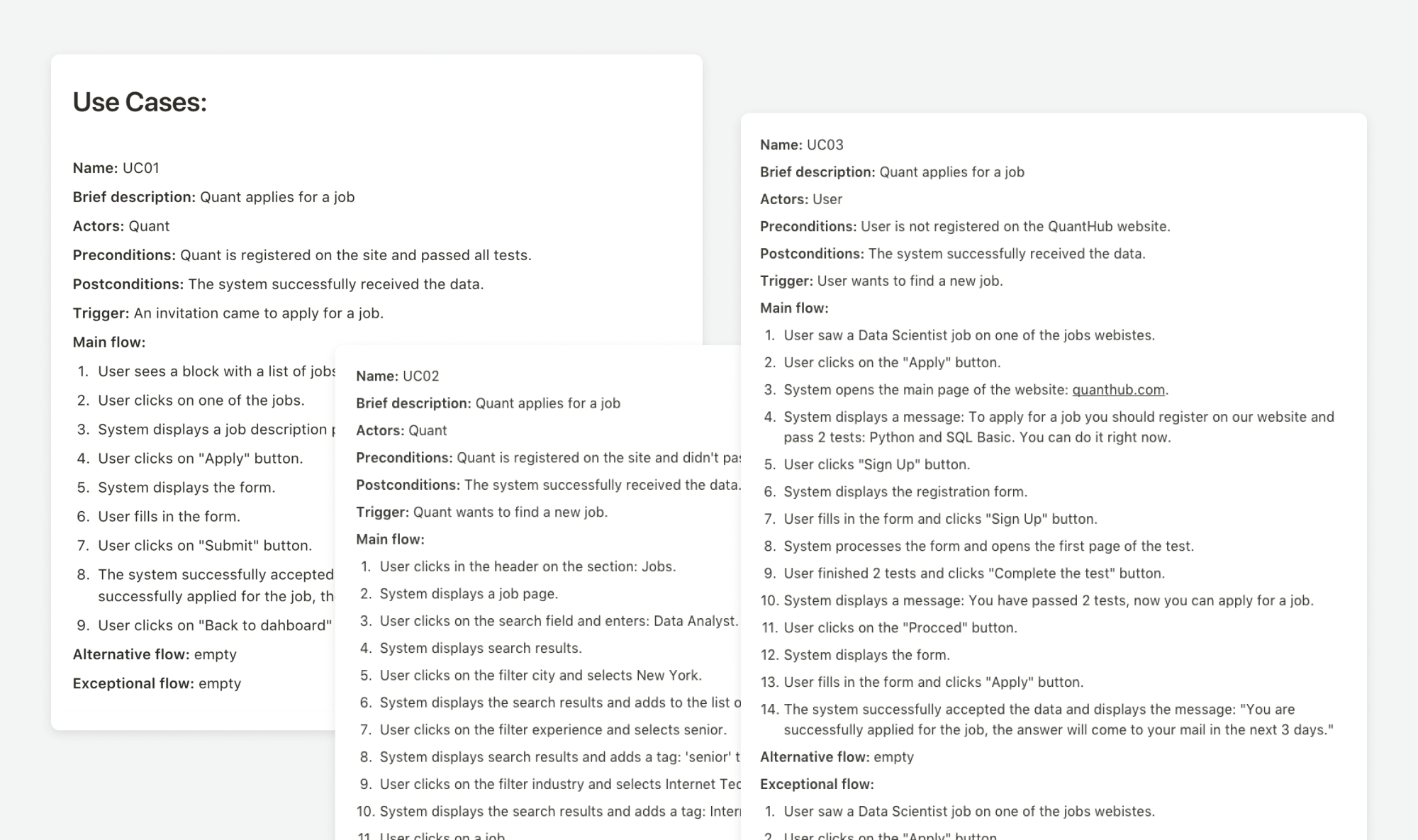
Each use case anchored to a real task: take an assessment, review a skill, post a position, shortlist a candidate. If a screen didn't serve one of these, it didn't ship.
Design system
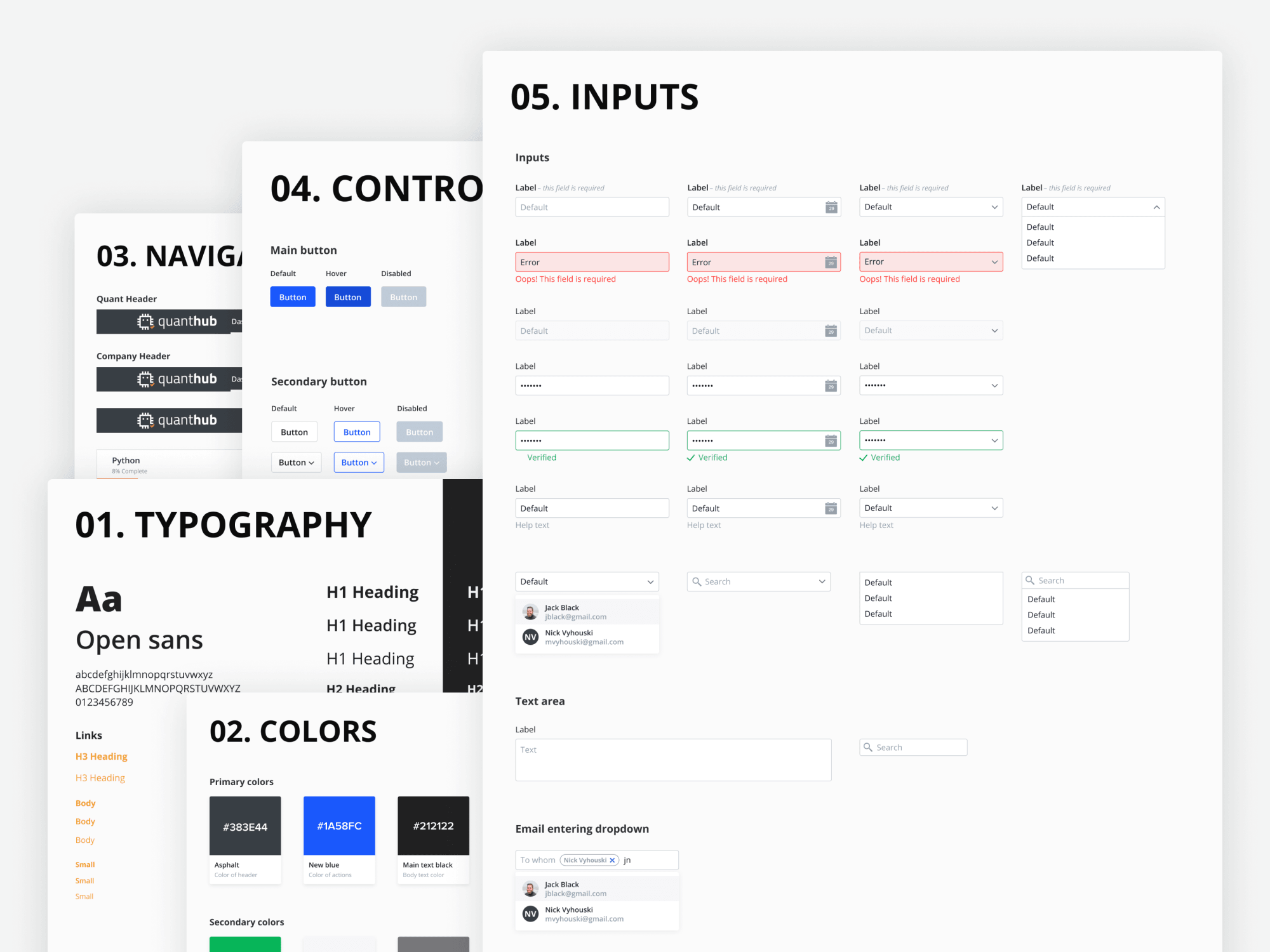
With two surfaces and a small team, the system did the heavy lifting. I built a shared library of components, type rules, and color tokens so the Quant and Company products stayed coherent — while each could express the information density its audience needed.
The Quant experience
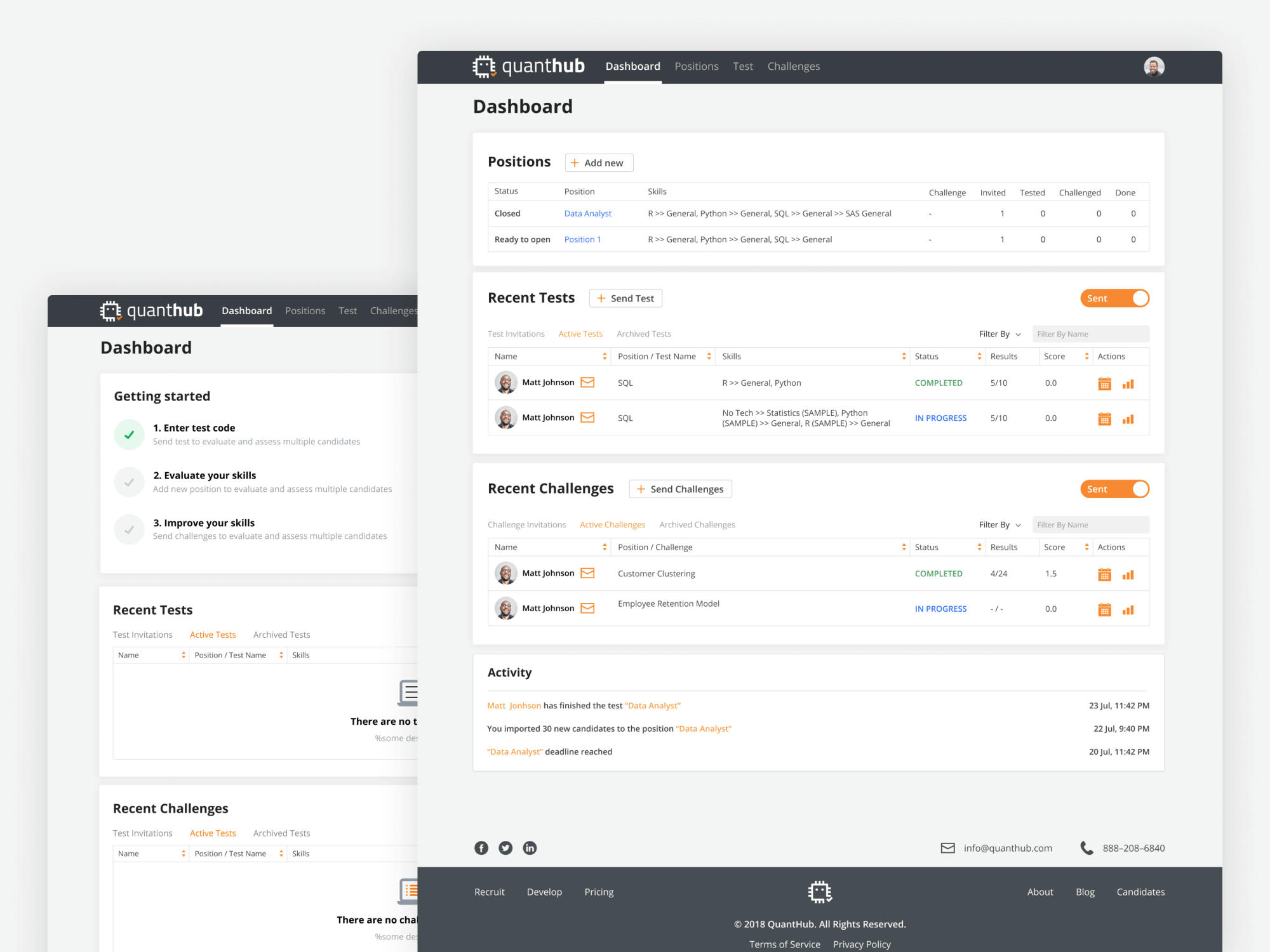
The dashboard had to work on day one and on day ninety. The empty state coaches new users toward a first assessment; the populated view surfaces progress, recent challenges, and the skills worth investing in next.
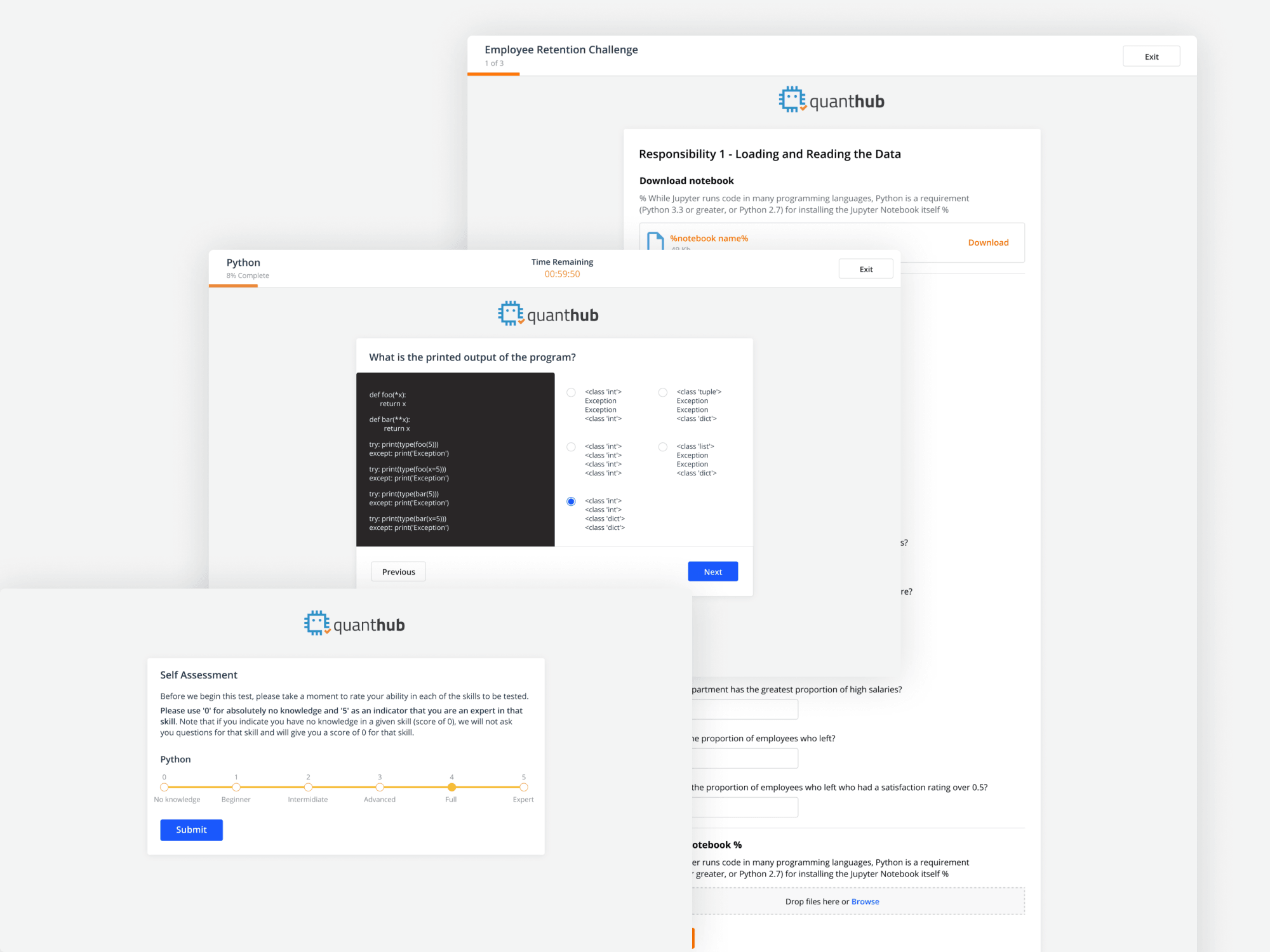
Test-taking is where the platform earns trust. We stripped chrome, kept timing and progress legible, and designed for the fact that these sessions are stressful. The goal was for the interface to disappear and let the question do the work.
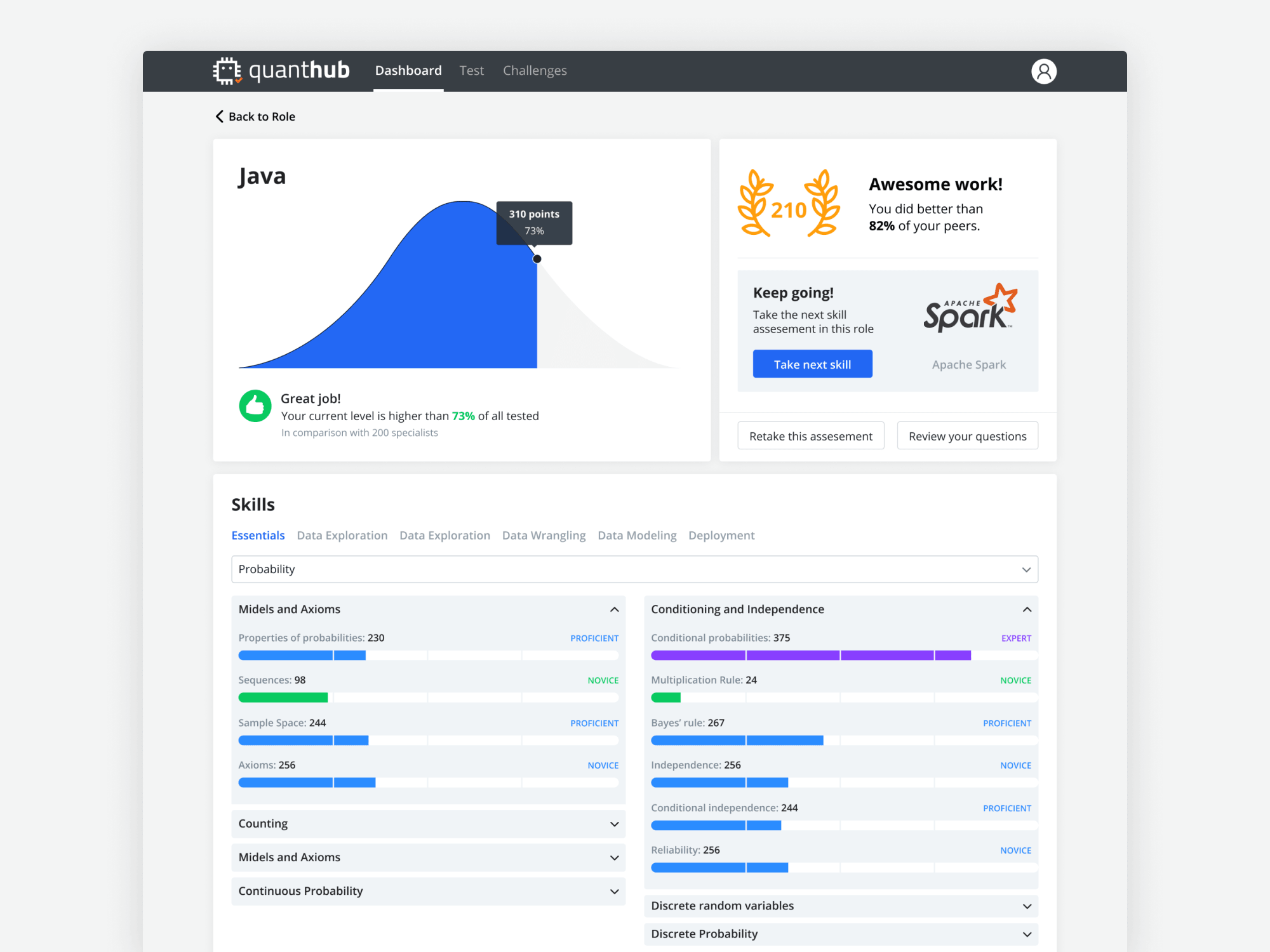
A score on its own isn't a story. The skill detail view shows how proficiency has moved over time, which sub-topics are strong, and where to focus — turning a single assessment into an ongoing growth loop.
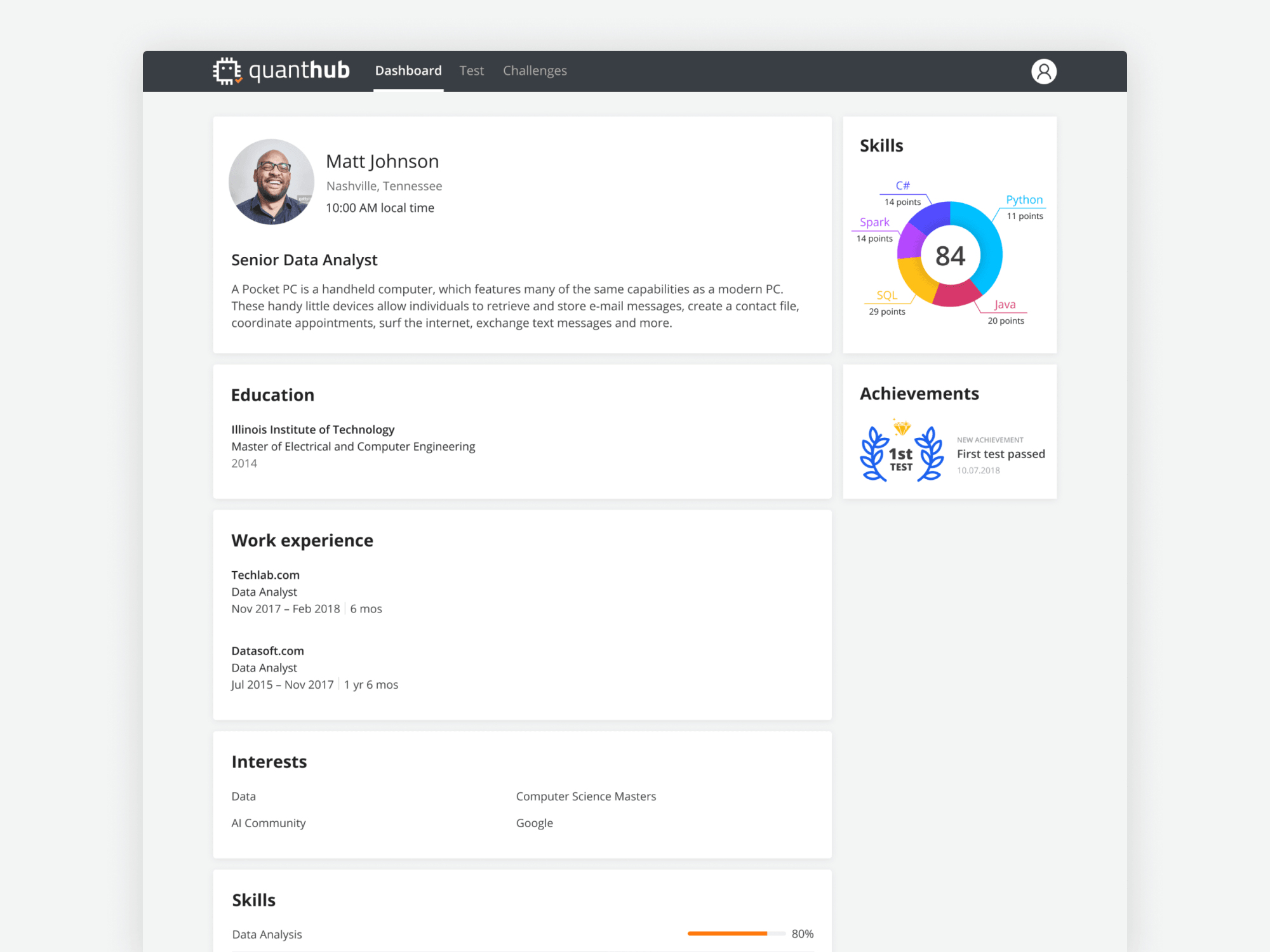
The profile is the payoff: a shareable, verified record of skill that a Quant can point recruiters to. It's the antidote to the resume-as-fiction problem the platform was built to solve.
The Company experience
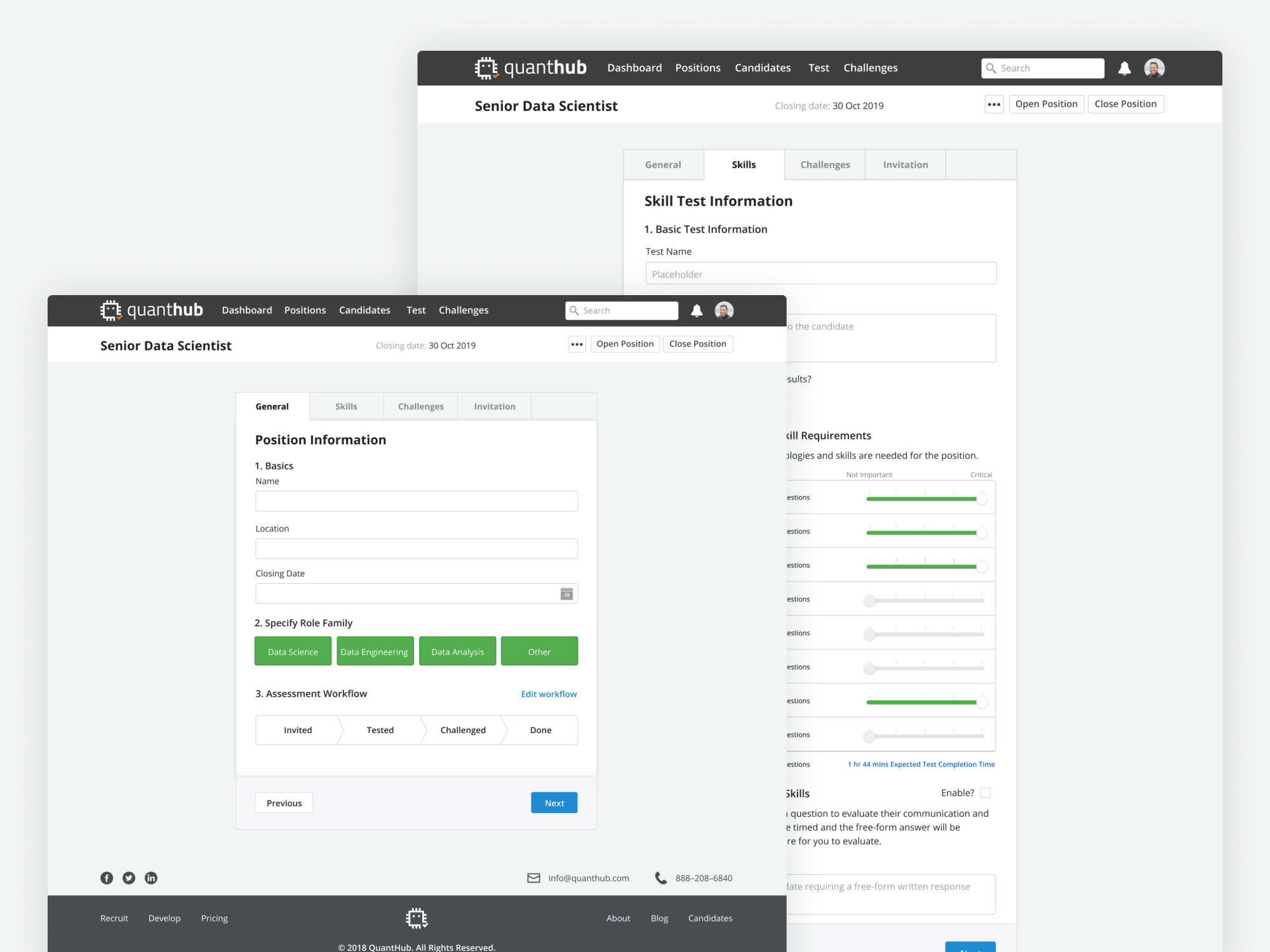
On the Company side, the unit of work is the position. Hiring managers define a role, attach the skills that matter, and set the bar — then let the platform do the filtering instead of the inbox.
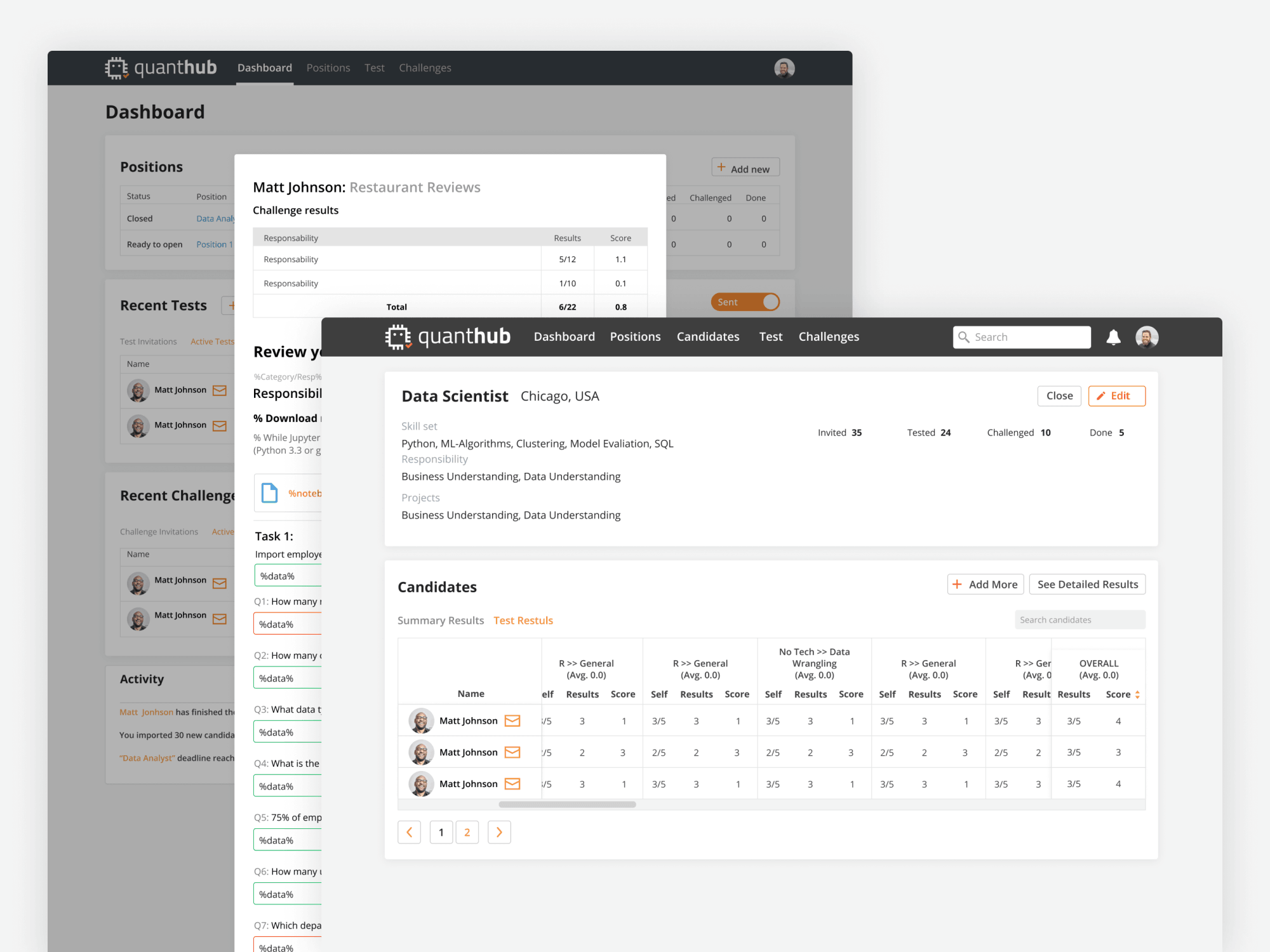
The candidate review screen replaces the resume pile with a ranked list backed by challenge results. Recruiters compare like for like, drill into specific skills, and spend their time on the conversations actually worth having.
Support
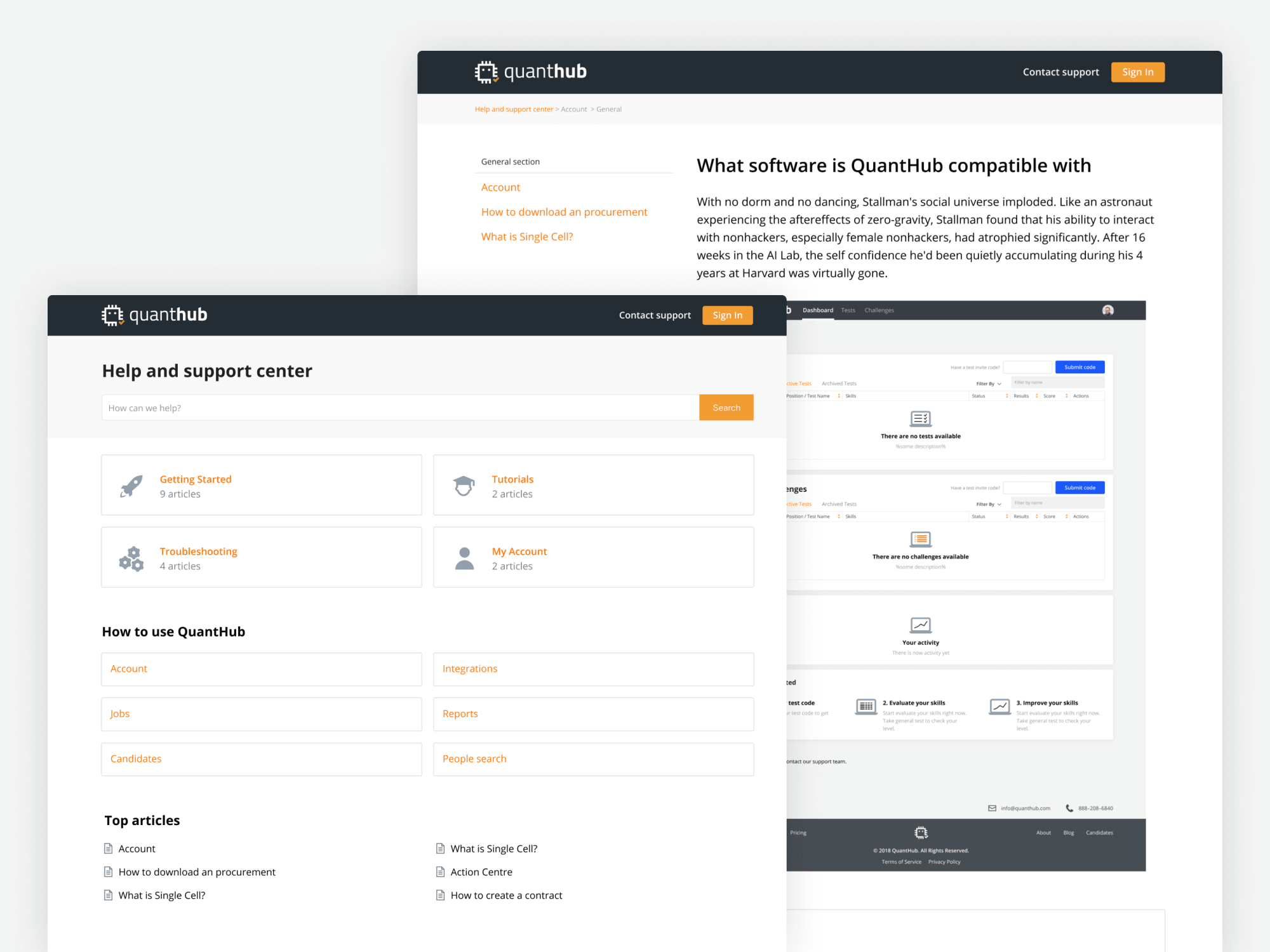
Because QuantHub asked both sides to change how they work, the Support Center was designed alongside the product, not after it. It had to teach the model — not just troubleshoot it.
Reflection
QuantHub was a from-prototype-to-production stretch: research, IA, a working design system, and two distinct surfaces that had to feel like one product. The lasting lesson was the value of building shared primitives early when two audiences are involved — without them, the Quant and Company experiences would have drifted apart within a sprint.