Hired
Data-driven candidate reports and landing page for a talent marketplace.
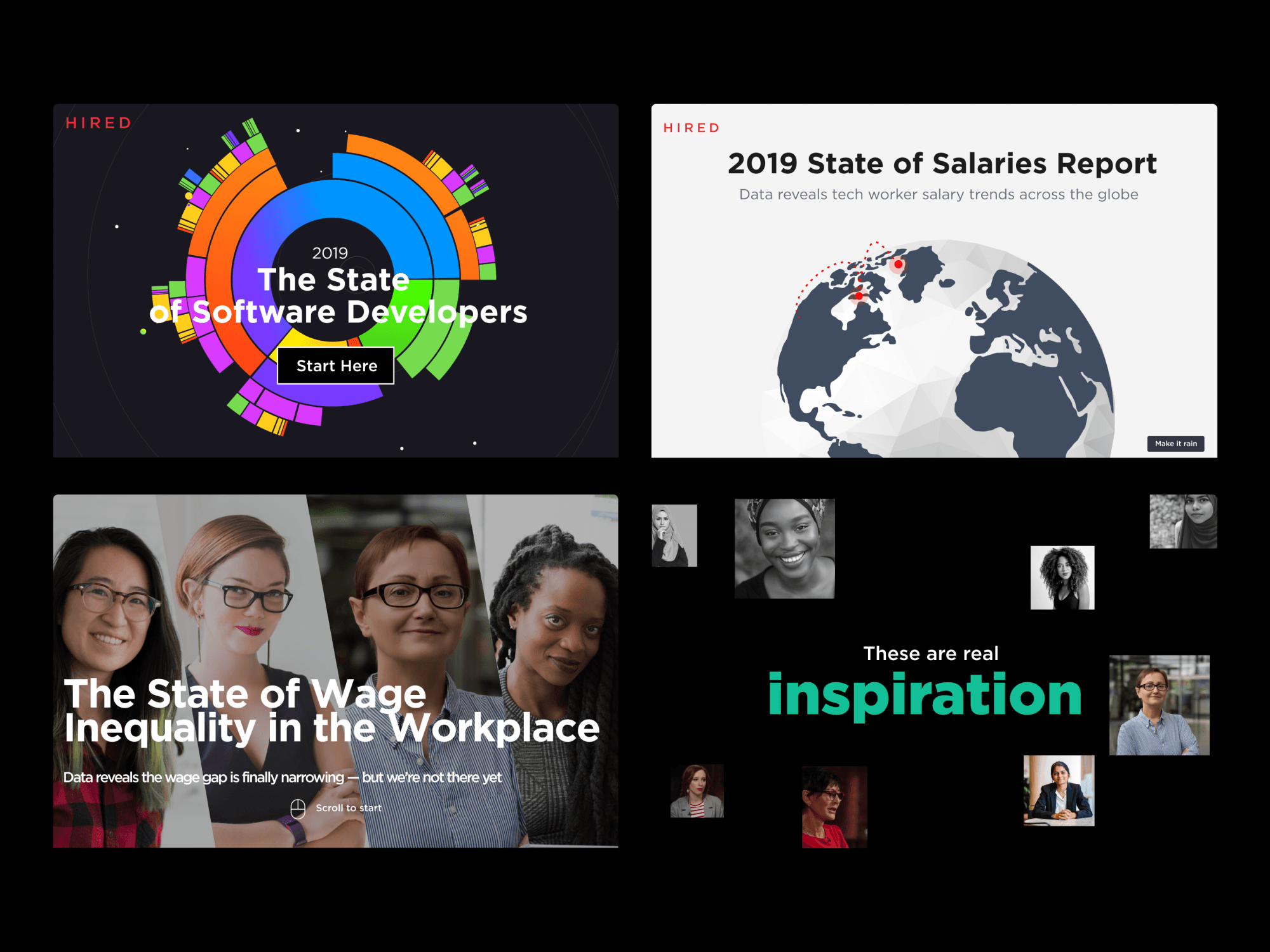
Hired connects software talent with companies that want them. The work covered both the data-driven candidate report and a marketing landing page that introduced it.
- 2019
- Product Designer
- Hired.com
Problem
Hired had survey data on 170K interviews, 10K companies, and 98K seekers — a rare window into the tech labor market. What it didn't have was a compelling way to publish it. Annual State-of reports needed to read like editorial pieces, not data dumps, and each topic needed its own art direction without fragmenting the brand.
Approach
I worked across four reports in parallel — Software Developers, Wage Inequality, Salaries, and a system-level cover anthology — treating each as an editorial product with its own visual language, anchored to a shared methodology and typographic system.
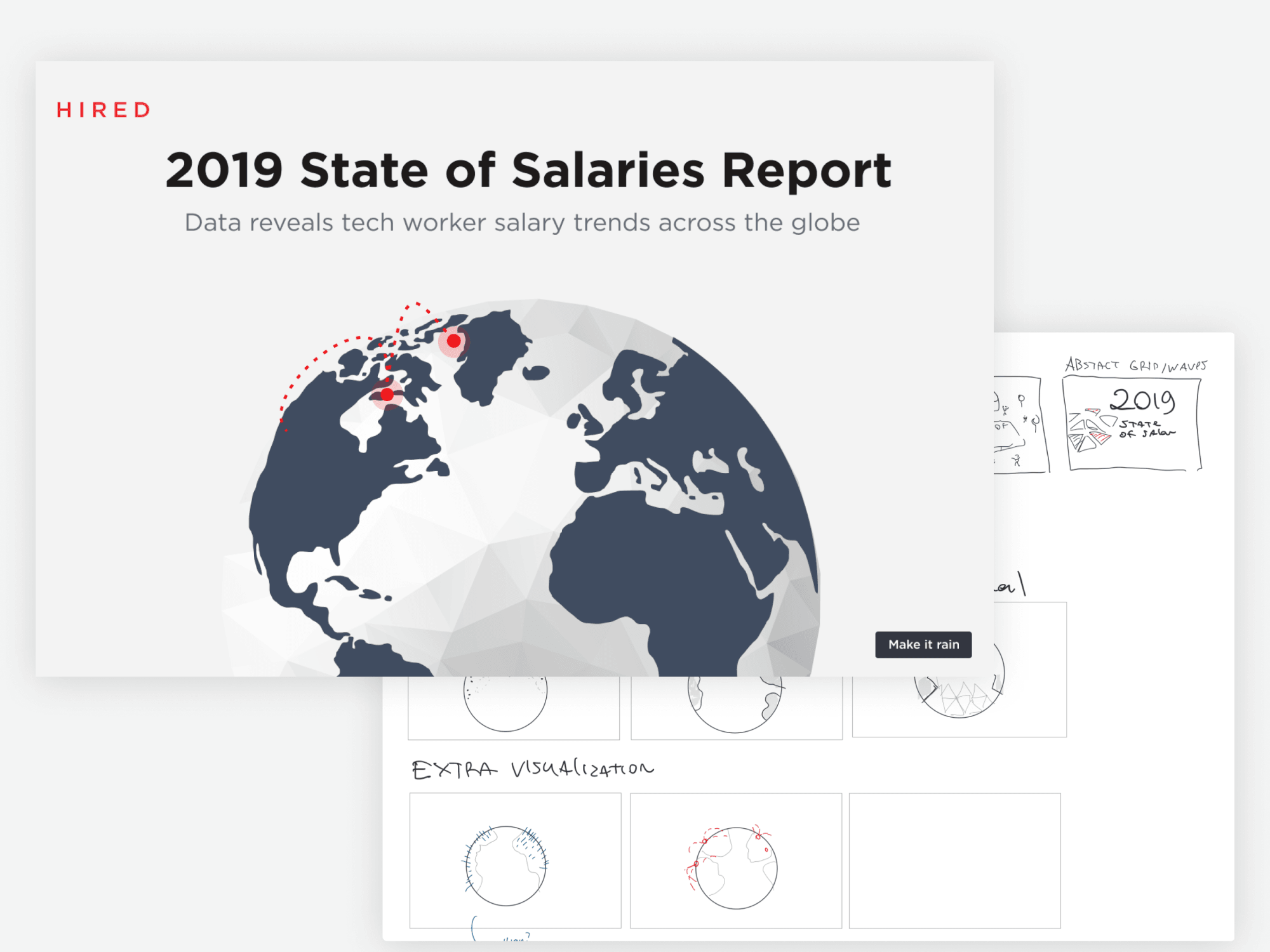
Concepts moved from hand sketches to refined 3D forms before any pixels hit the page. Working in low-fidelity first kept the team focused on which metaphors actually carried the data — and which were just decoration.
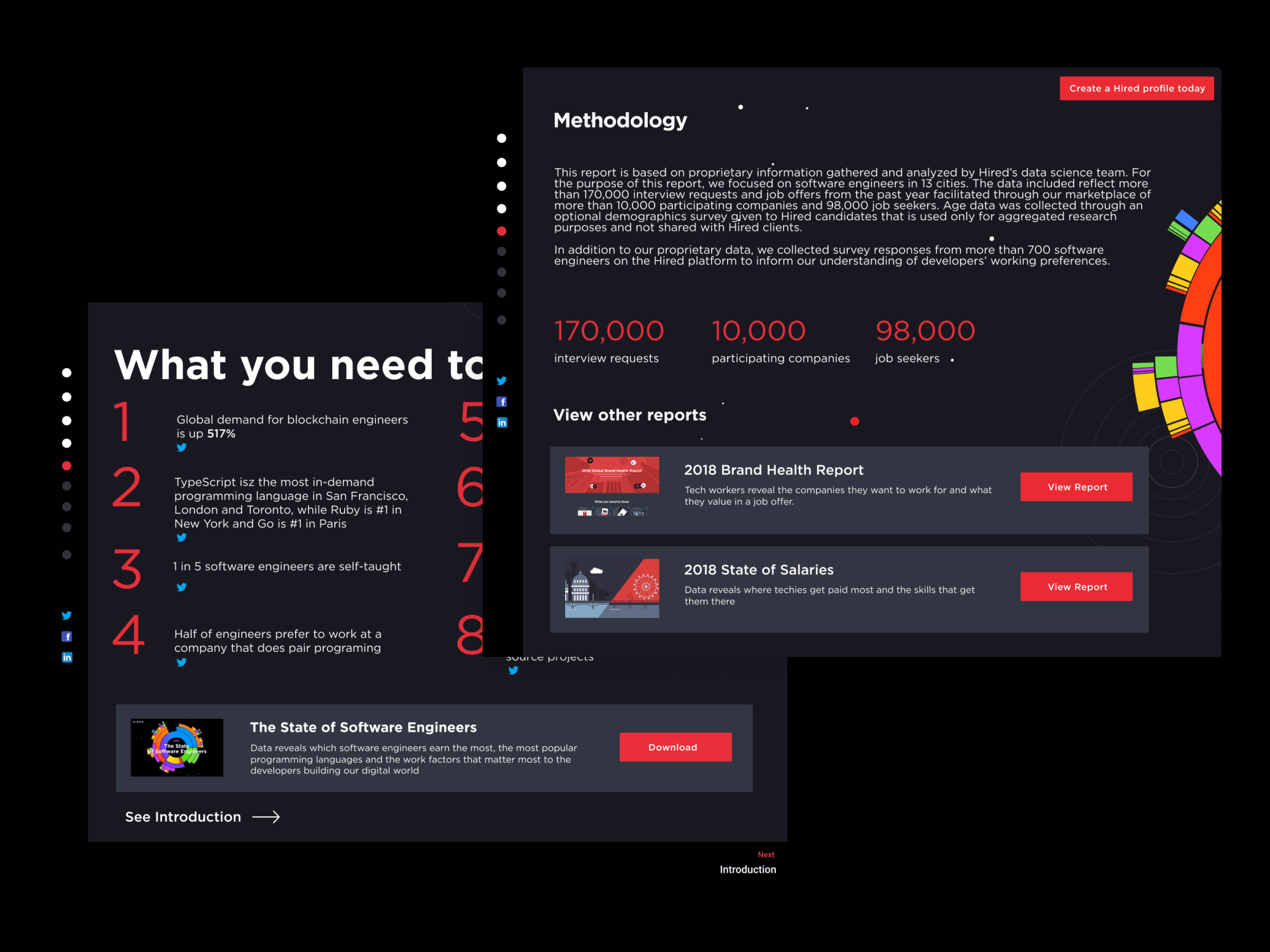
Every report opened with a transparent methodology page. Surfacing the sample size up front — 170K interviews, 10K companies, 98K seekers — earned the reader's trust before a single chart appeared.
State of Software Developers
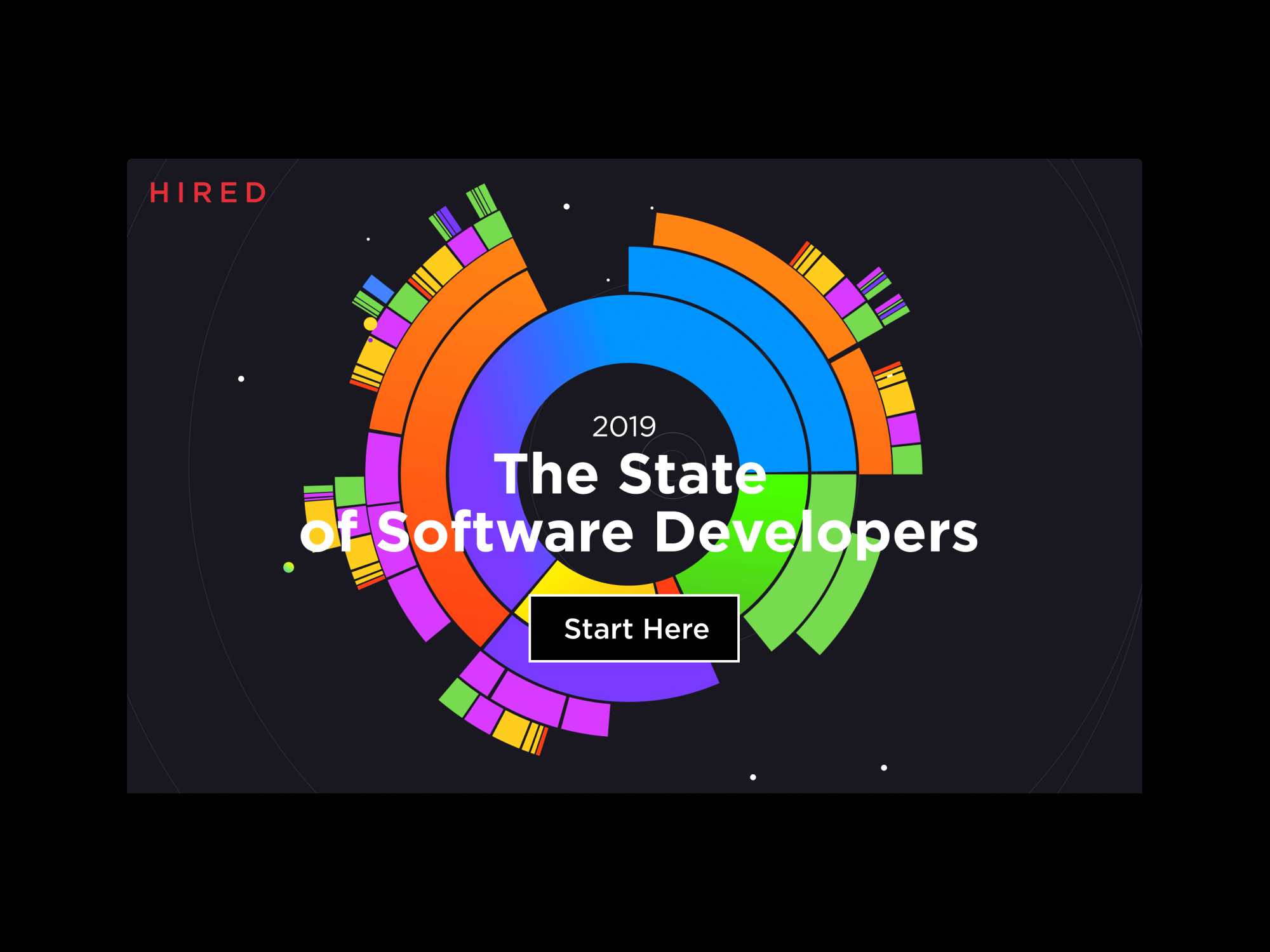
The developer report leaned into a dark, energetic palette with a rainbow sunburst hero. The visual language echoed terminal aesthetics and the gradient breadth of modern dev tooling.
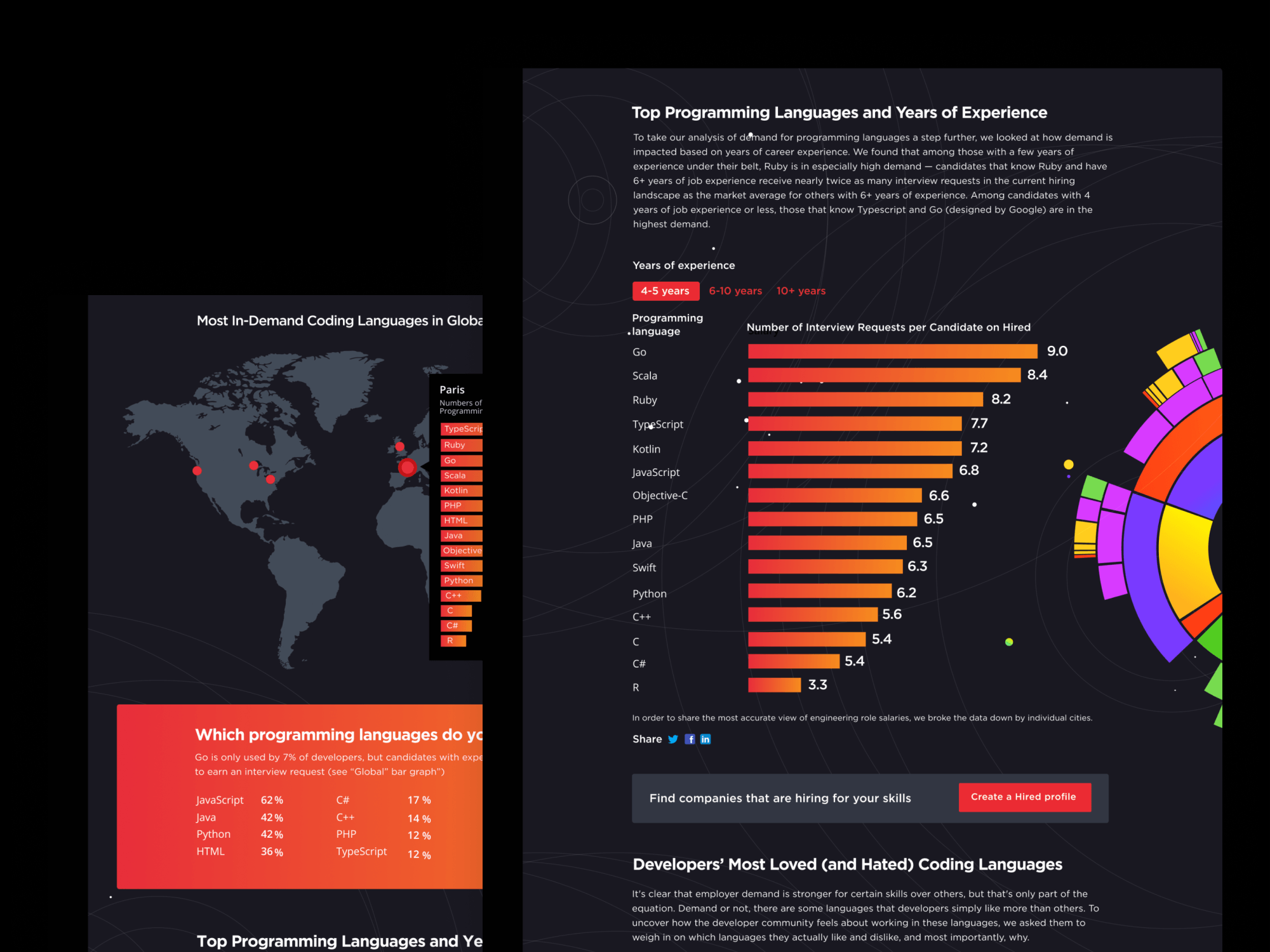
Data viz patterns repeated across the report: a world map for geographic demand, horizontal bars for language popularity, and consistent legend treatment so readers built fluency by page three.
State of Wage Inequality
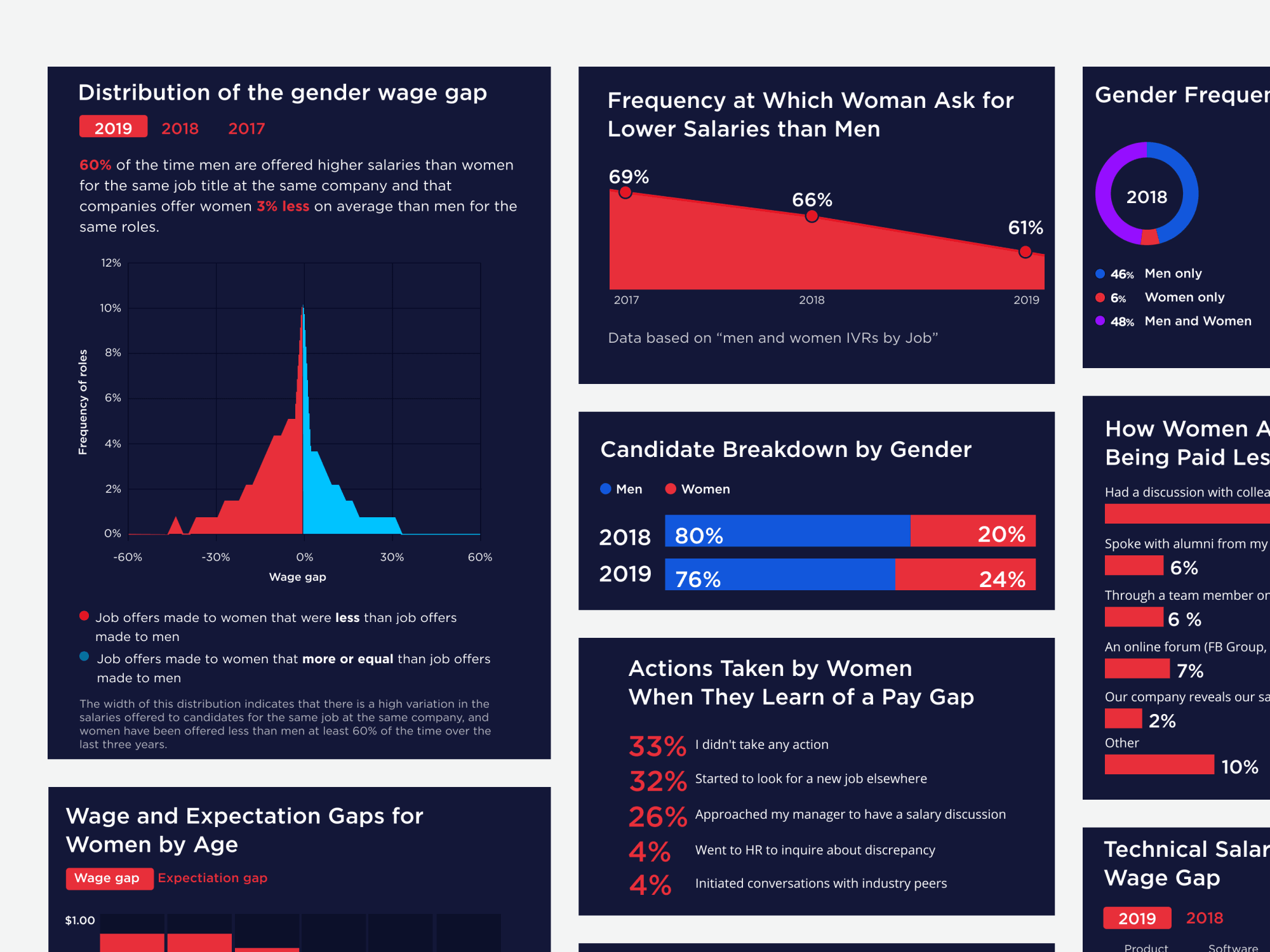
The wage gap data was the densest of the set. The dashboard spread compressed multiple breakdowns into a single scannable grid, with red key findings doing the editorial pointing.
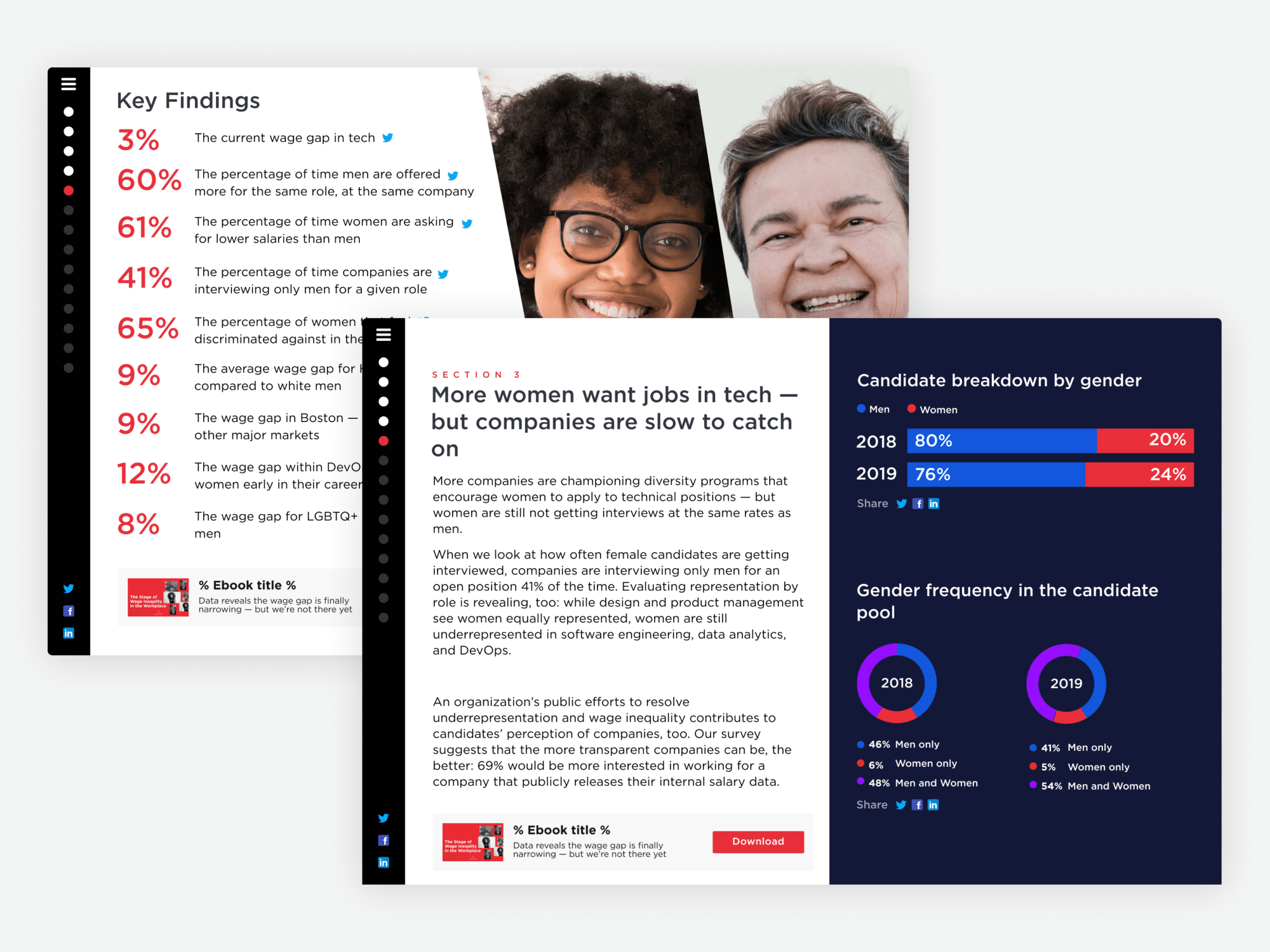
Portraits and pull quotes broke up the statistical chapters. Putting faces against the figures kept the report from reading as an abstract spreadsheet — the people inside the data stayed visible.
State of Salaries
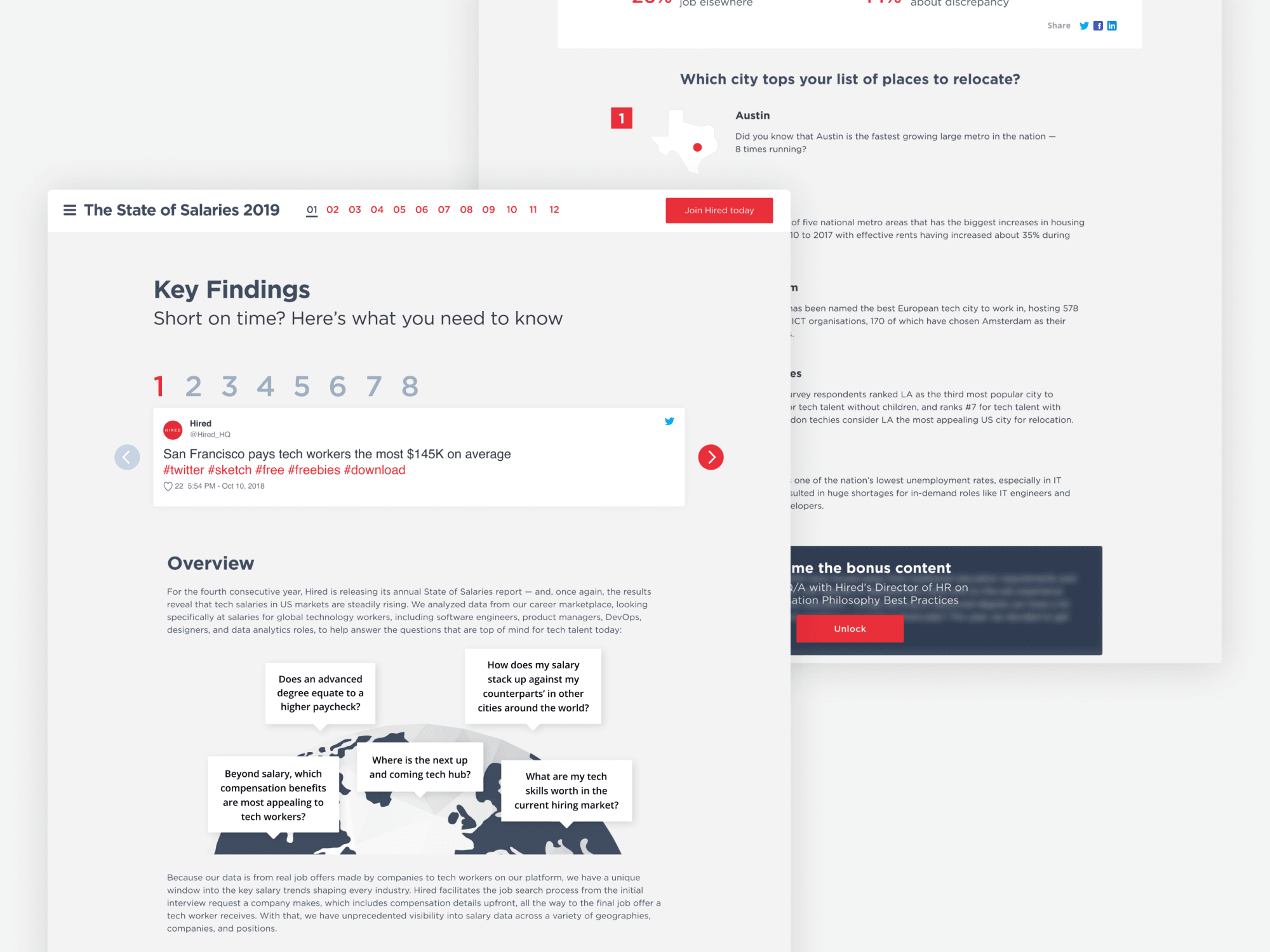
The Salary Report flipped to a light, optimistic palette. The low-poly globe sketched earlier became the anchor visual — abstract enough to feel global, concrete enough to read as data.
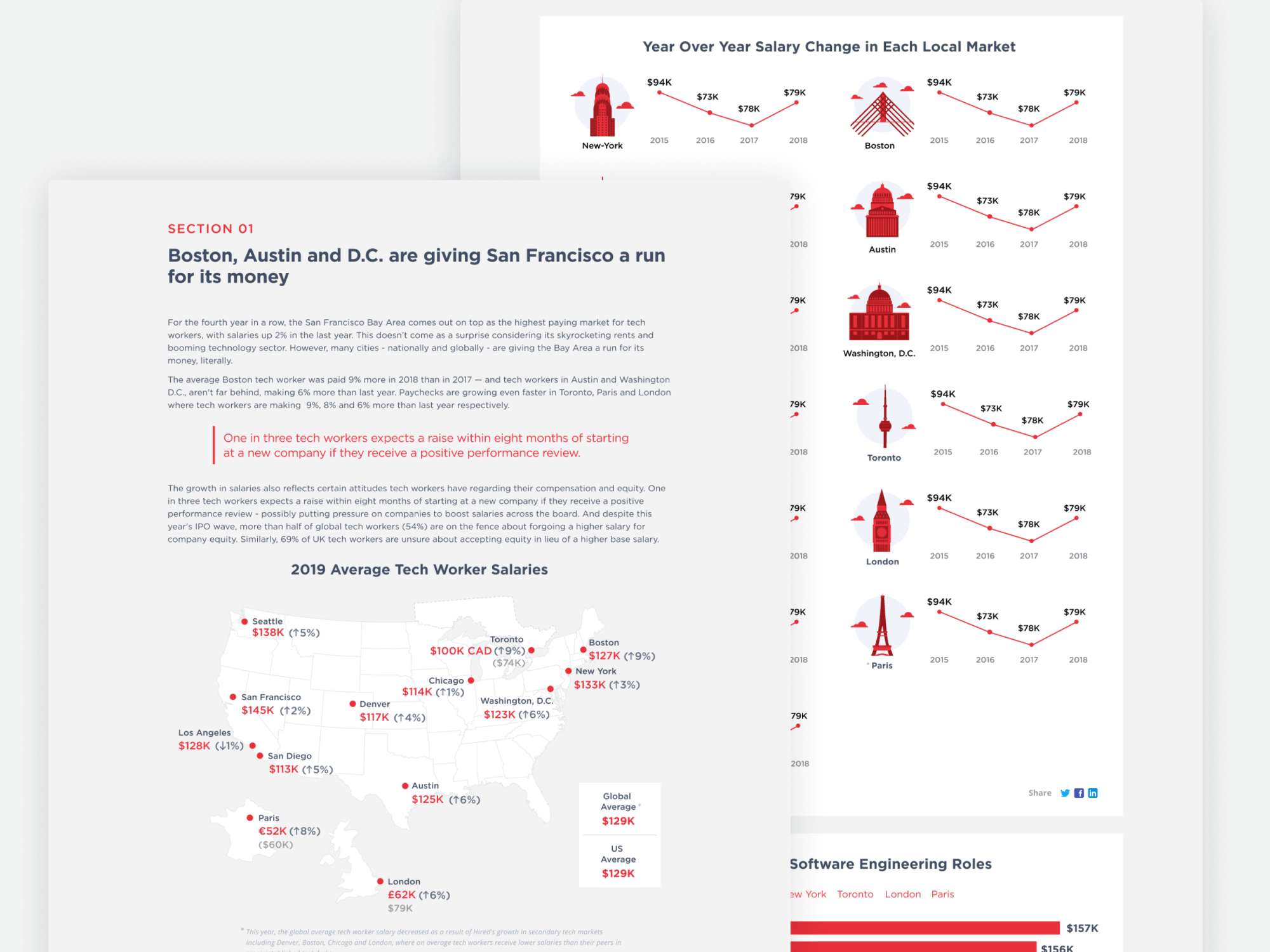
Per-city storytelling let national averages get specific. A reader in Austin or Toronto could find their market in two scrolls and compare their compensation against the regional benchmark.
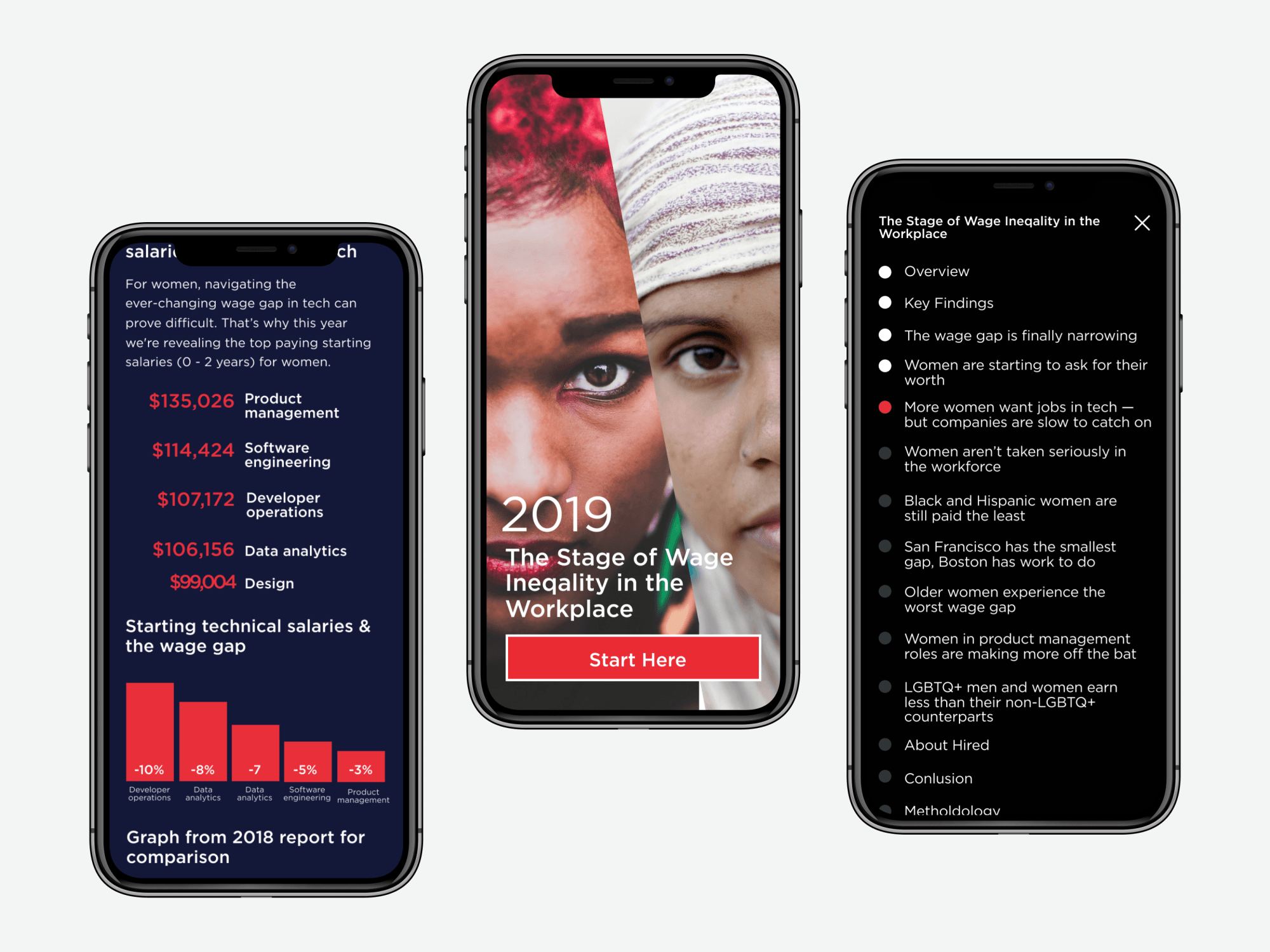
Most readers found the reports on social. The mobile experience treated long-form data as a vertical scroll, collapsing multi-column spreads into single-column reads without losing the editorial rhythm.
Outcome
Seen as a set, the four reports functioned as a system — each carrying its own art direction while sharing a methodology, typographic spine, and editorial cadence. The data-driven reports drove brand awareness for Hired as the authoritative voice on the state of tech hiring.