Walking Planter
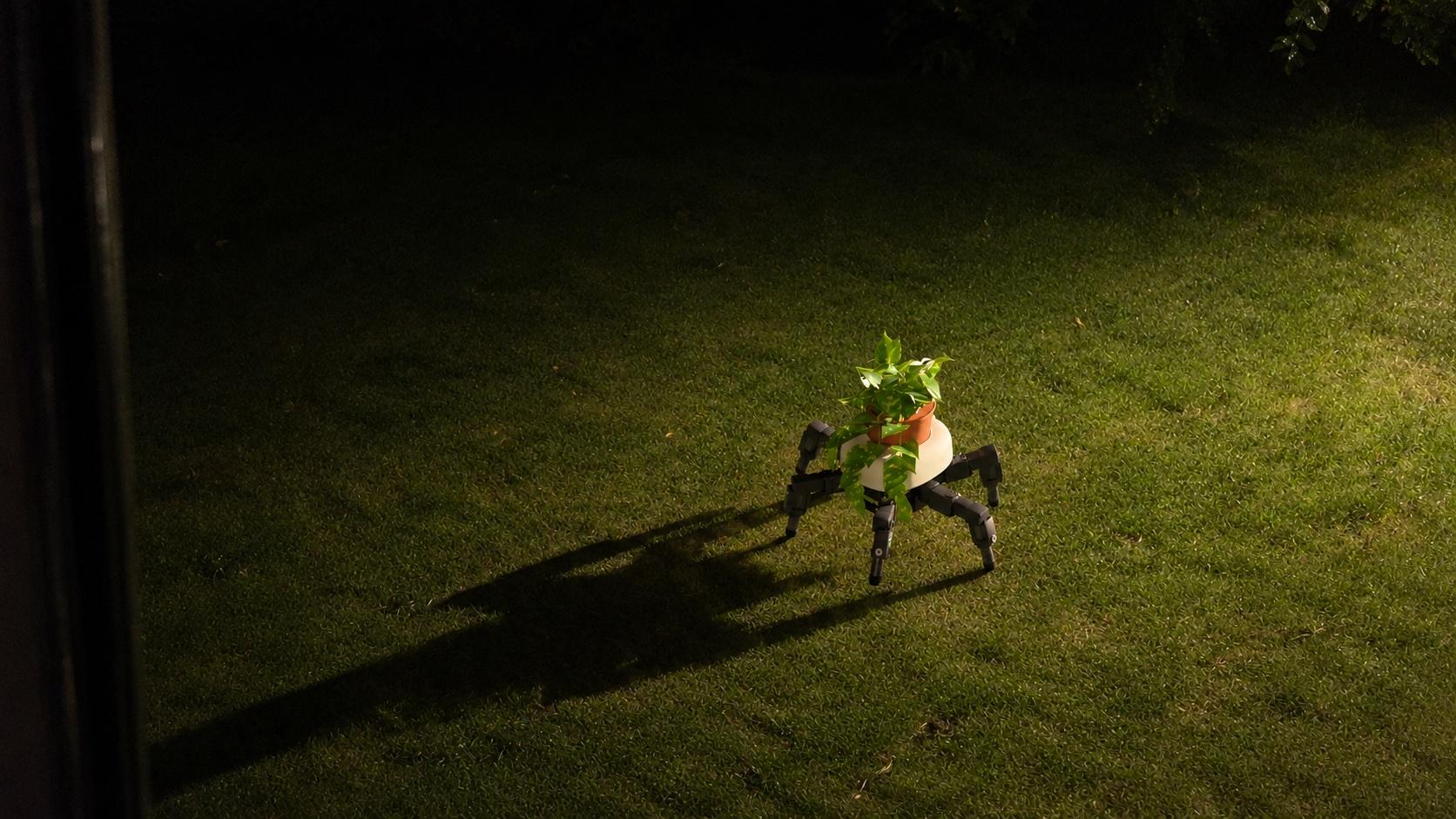
A plant pot on six legs that sits on the patio all day and stands up to follow the sun.
- Concept, not built
- Waveshare HexArth, ESP32, Raspberry Pi 5, PETG, Blender, Python
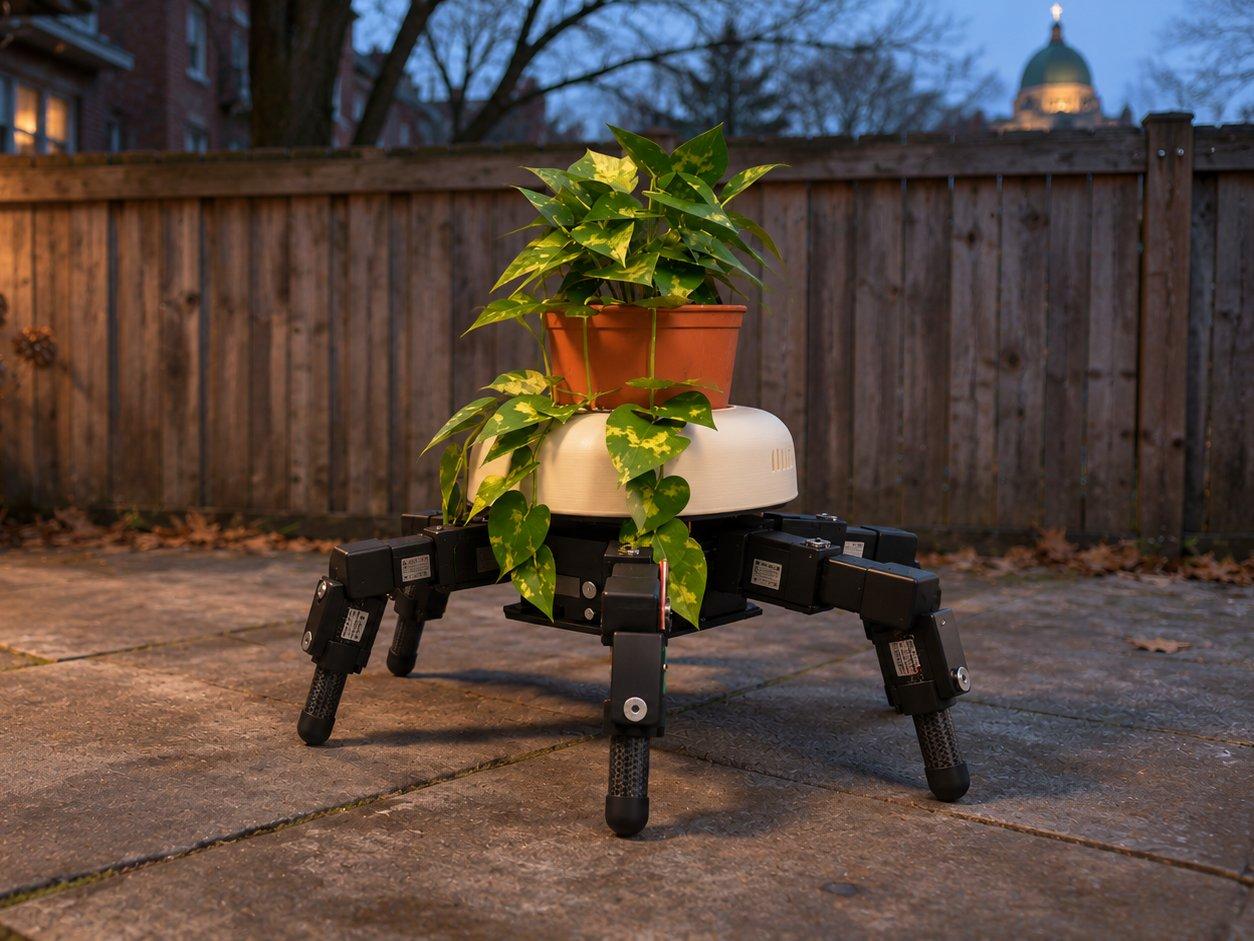
The wheeled planter could not climb a step. This one walks. A Waveshare HexArth hexapod carries a printed shell and a small potted pothos. Most of the day it sits with its legs folded so the servos rest; when the sun moves, it stands up and follows it a few slow steps at a time, then walks back onto its pad at night to charge. The Pi on its back is the gardener, the ESP32 is the legs.
How it would work
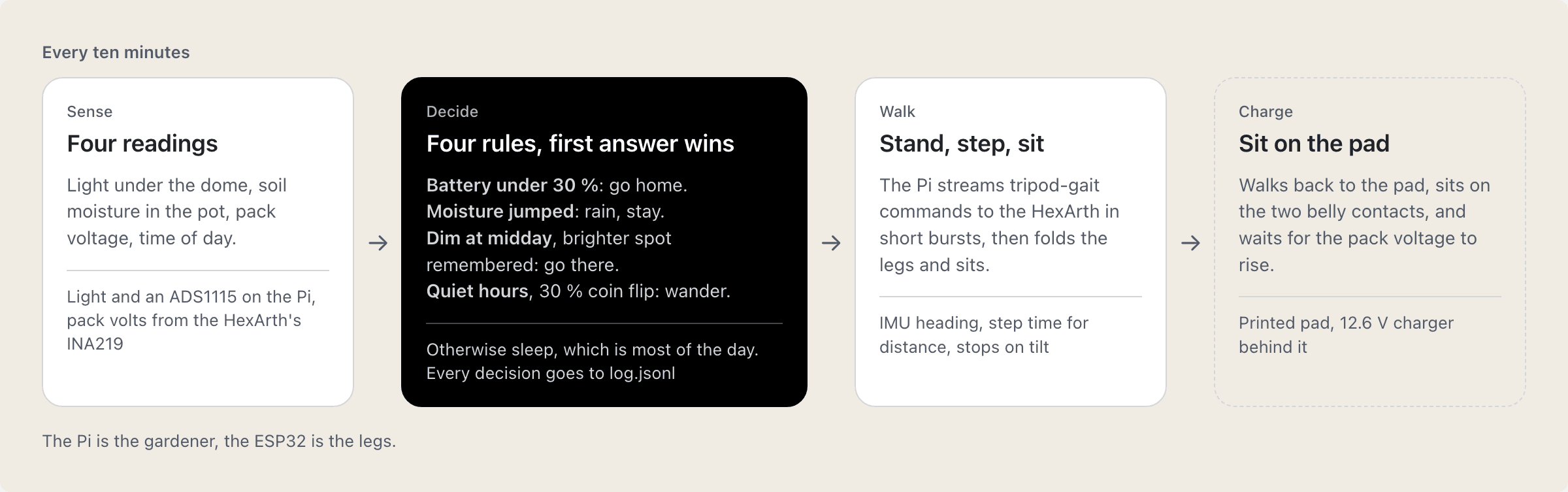
Every ten minutes the Pi reads light from a sensor under a small clear dome, soil moisture from a probe in the pot, and the pack voltage the HexArth reports. Then the same four rules as the wheeled planter, first answer wins: battery under 30 %, walk home; moisture just jumped, it is raining, stay; dim at midday with a brighter spot remembered, walk there; quiet hours and a coin flip, a short wander. A walk is: stand up, stream tripod-gait commands in half-second bursts (the firmware stops on its own three seconds after the last one), watch the IMU for tilt, sit down.
What gets built
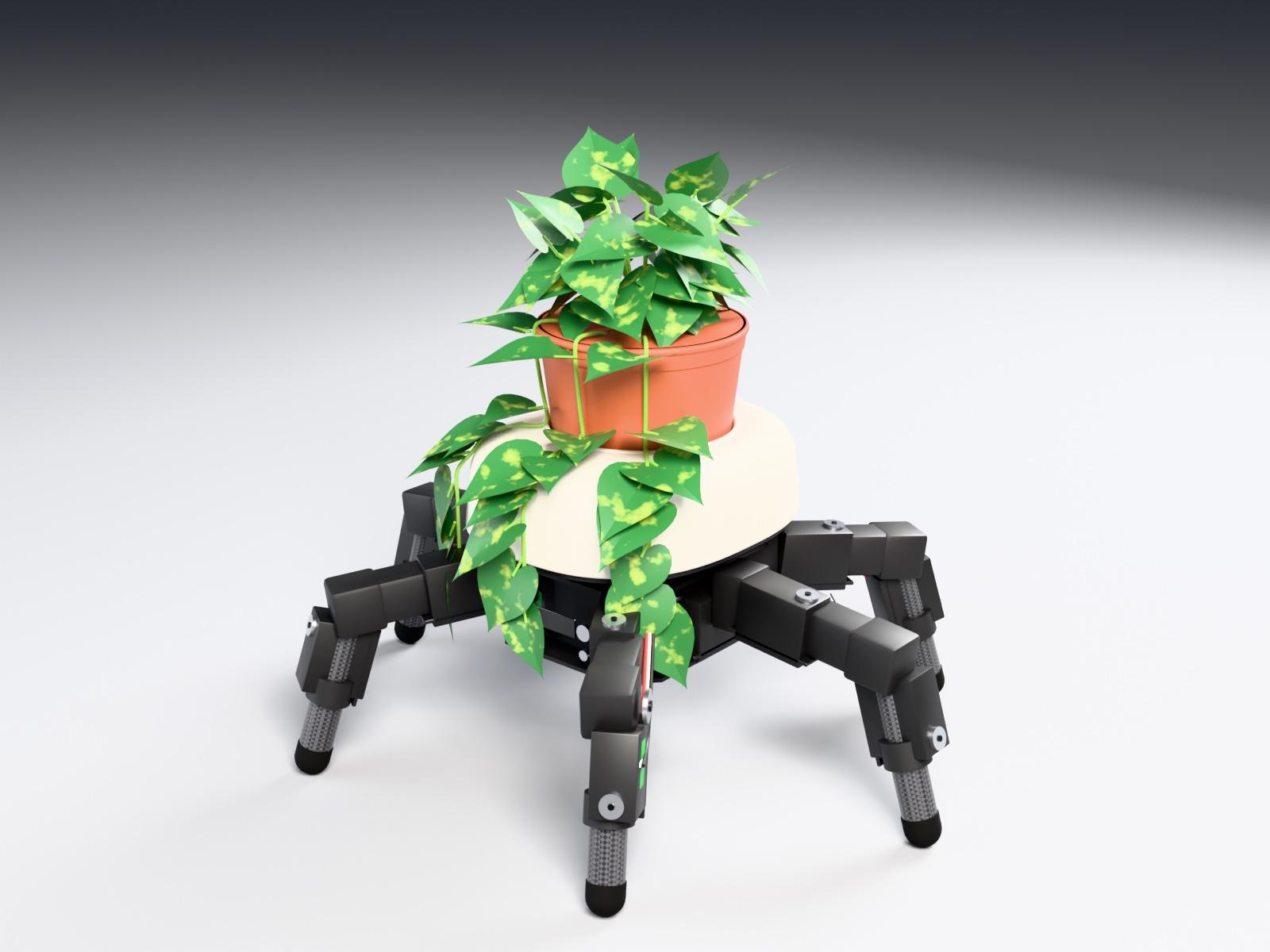
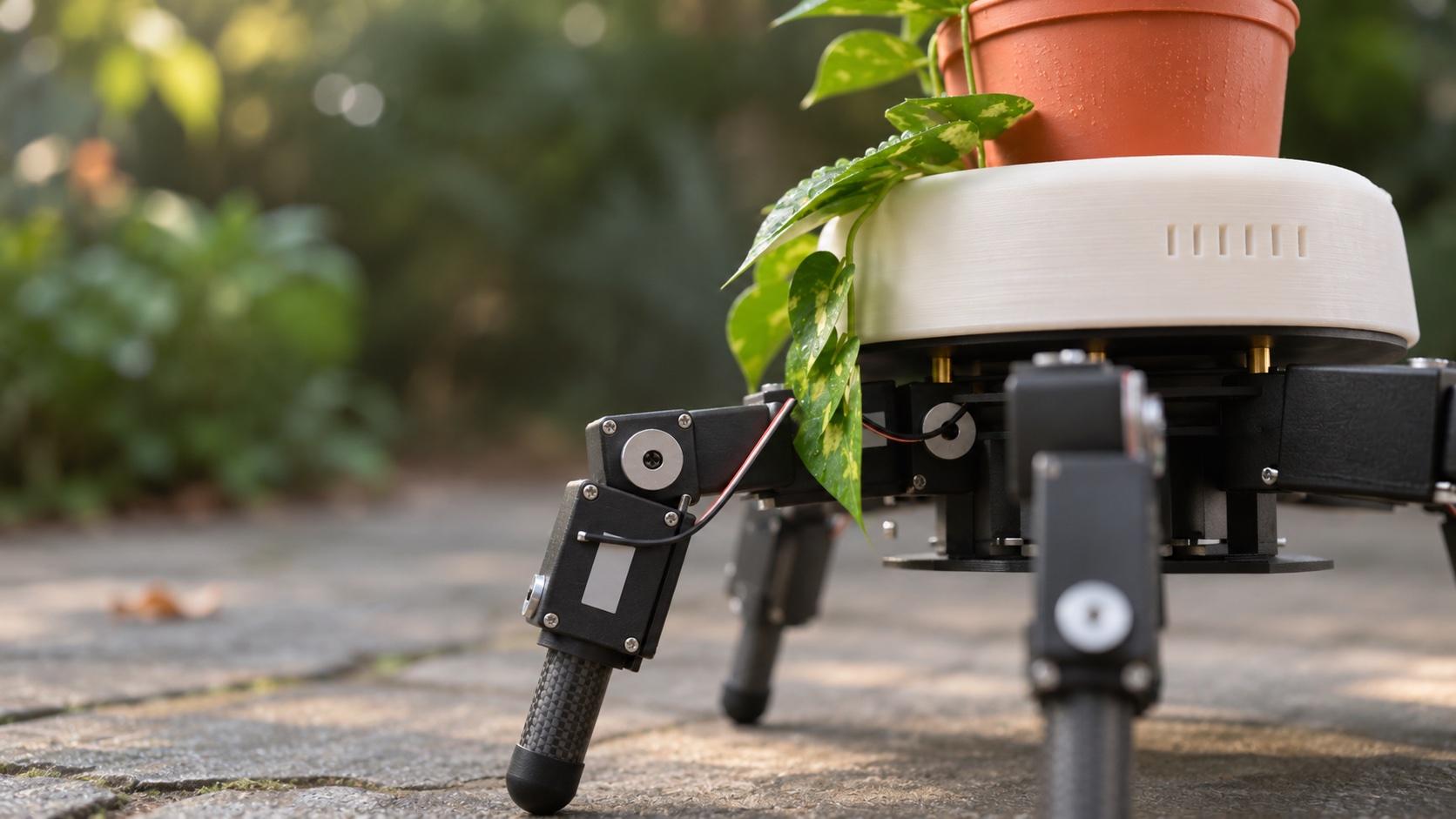
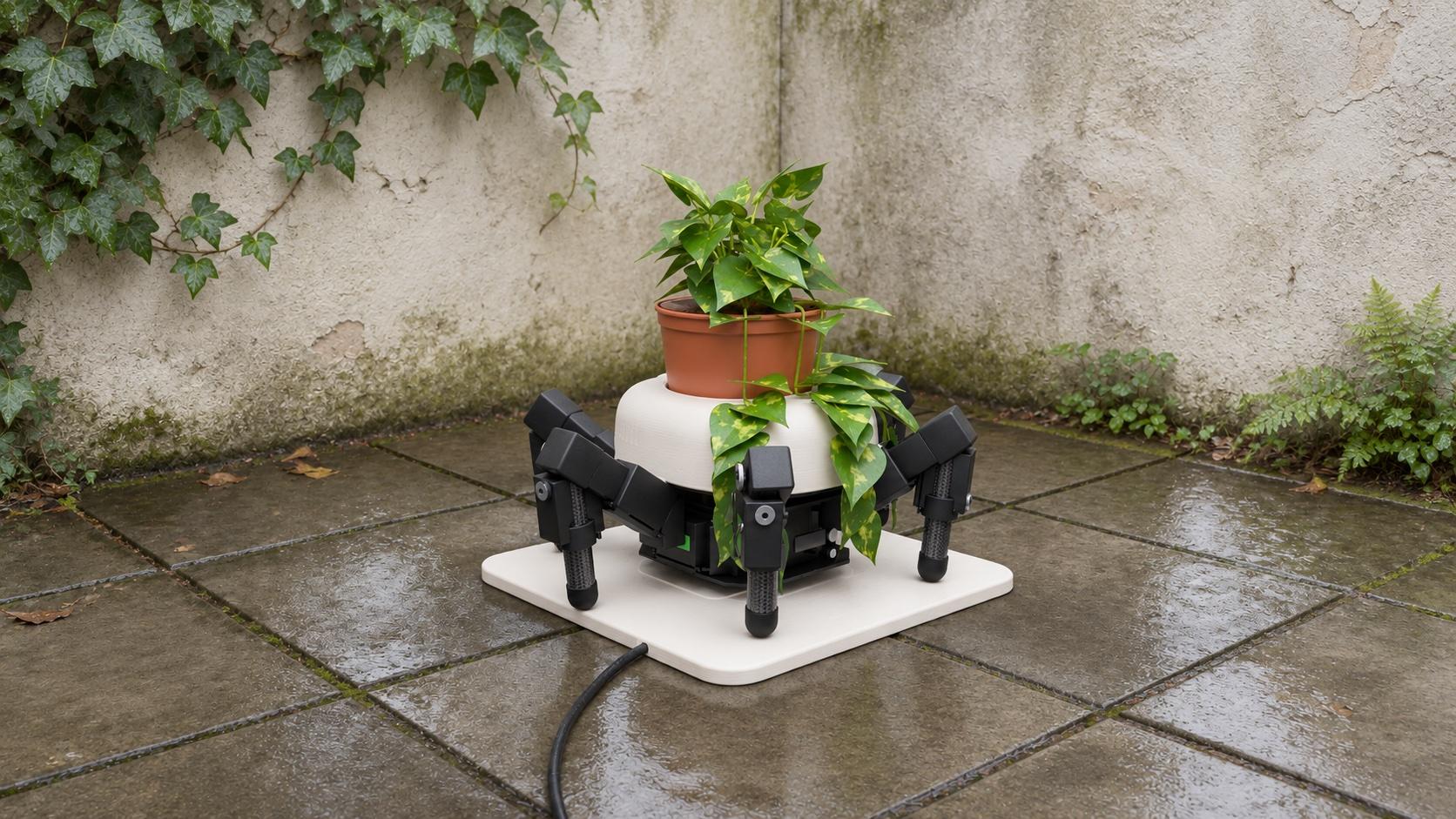
Bought: the HexArth kit (ESP32, 18 serial bus servos, IMU, battery monitor, US$439.99), six Molicel P28A cells for its 3s2p pack, a Raspberry Pi 5, a light sensor, a capacitive soil probe and an ADS1115 to read it, a thin 12 cm grower pot. About $840 CAD in all. Printed in PETG: a shell that bolts to the top plate and hides the Pi and cells, with a recess for the pot and a dome for the light sensor, and a flat charging pad with two spring contacts. Written: the scheduler, an IMU-and-step-time odometry, and a small client for the HexArth's JSON commands.
What I would learn
The HexArth carries one kilogram while walking. The shell, the Pi and the sensors take about 350 g, which leaves 650 g for the planted pot: a thin grower pot, clay pebbles and a small pothos, not terracotta. Whether the stock tripod gait stays steady with that weight riding high above the body is the first test. After that, how far step-time distance drifts over a night of wandering, and whether a fair-weather walker with unsealed servos makes sense outdoors at all.
Decisions
Sit by default
A hexapod standing still is still working: eighteen servos hold the pot up. So the resting pose is folded, with the body on the ground, and it stands only to walk. That is also the look: most of the time it is just a strange pot.
Buy the legs, design the rest
Gait, balance and servo control are solved problems in the HexArth's firmware. The design work is the gardener on top, the shell, and the weight budget.
One model, every picture
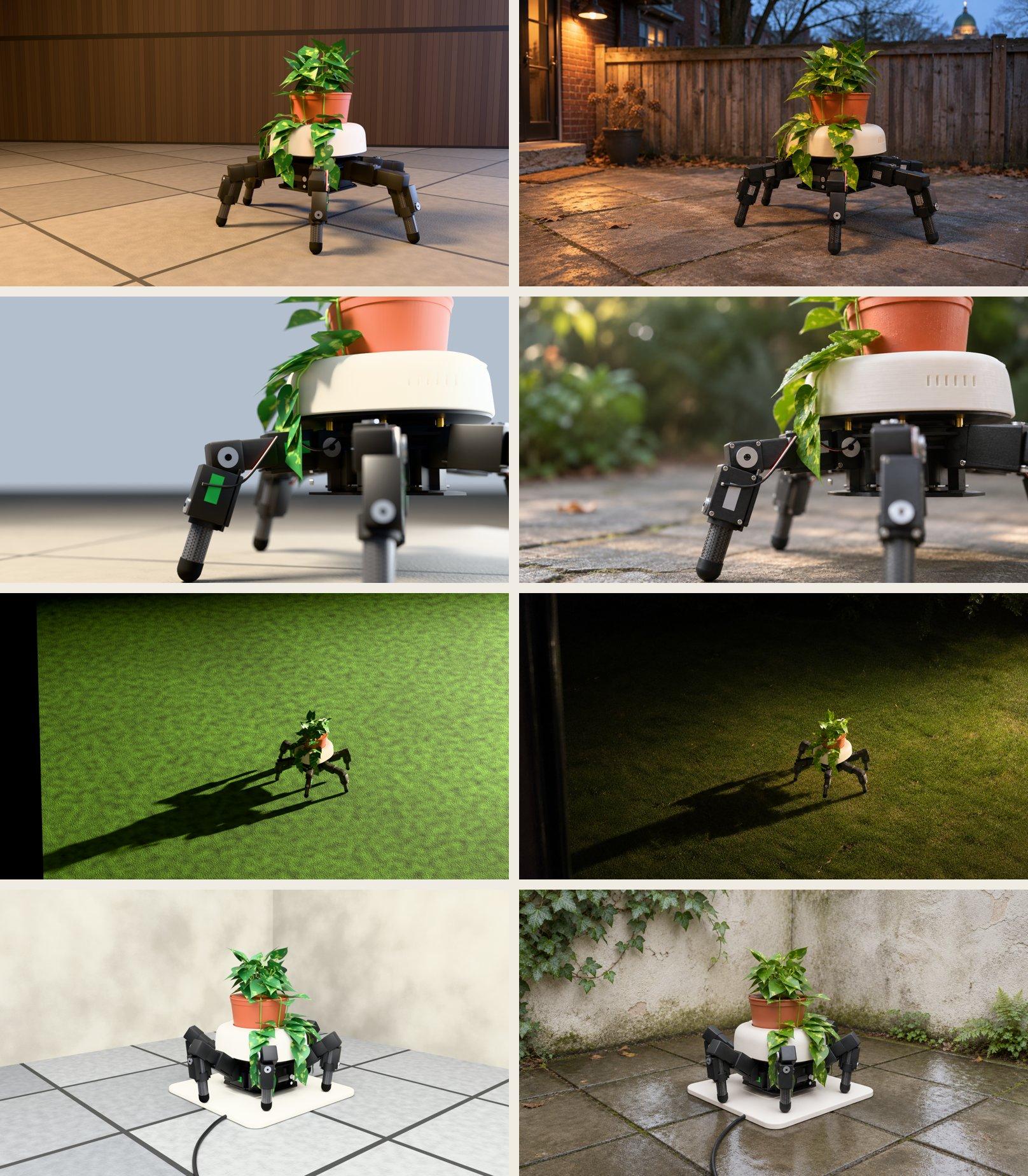
Every photo here starts as a Blender render of the same model you can turn above, from its own camera, and an image model changes only materials, light and surroundings.