Robot Planter
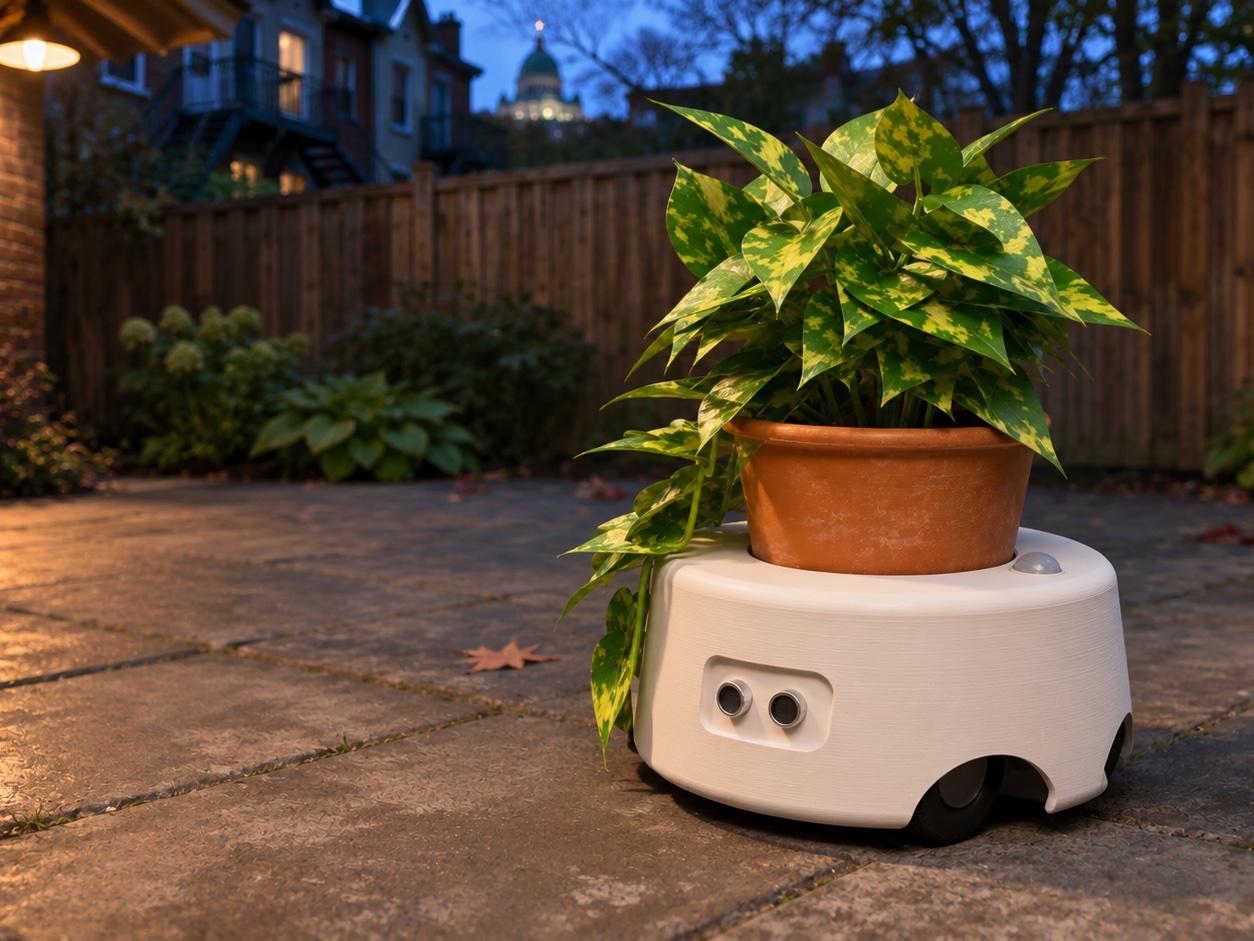
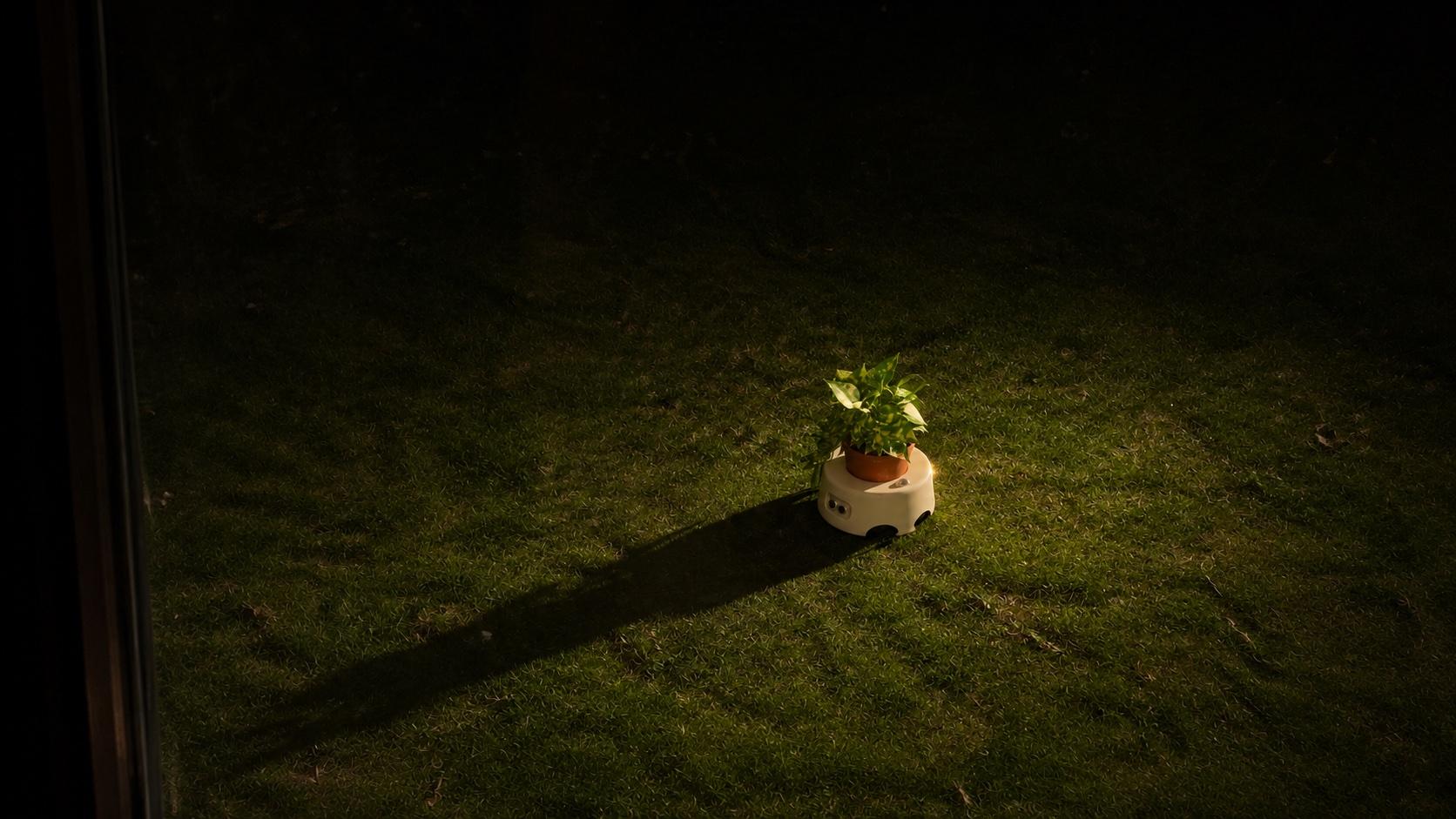
A plant pot on wheels that lives outside, finds the sun, and walks around at night when nobody is looking.
- Concept, not built
- Raspberry Pi 5, Dagu 4WD chassis, TB6612FNG, PETG, Blender, Python
A pot that moves is funny for three seconds and then it is a small mystery in the yard: by the fence yesterday, by the steps today. Underneath it is an honest machine: a $50 chassis, a Pi, a battery, three sensors, a printed shell and a rule list short enough to read on one screen. Every ten minutes it takes a reading and asks four rules in order; almost always the answer is sleep. This page is the plan, the parts, the printed shell and what it would look like.
How it would work
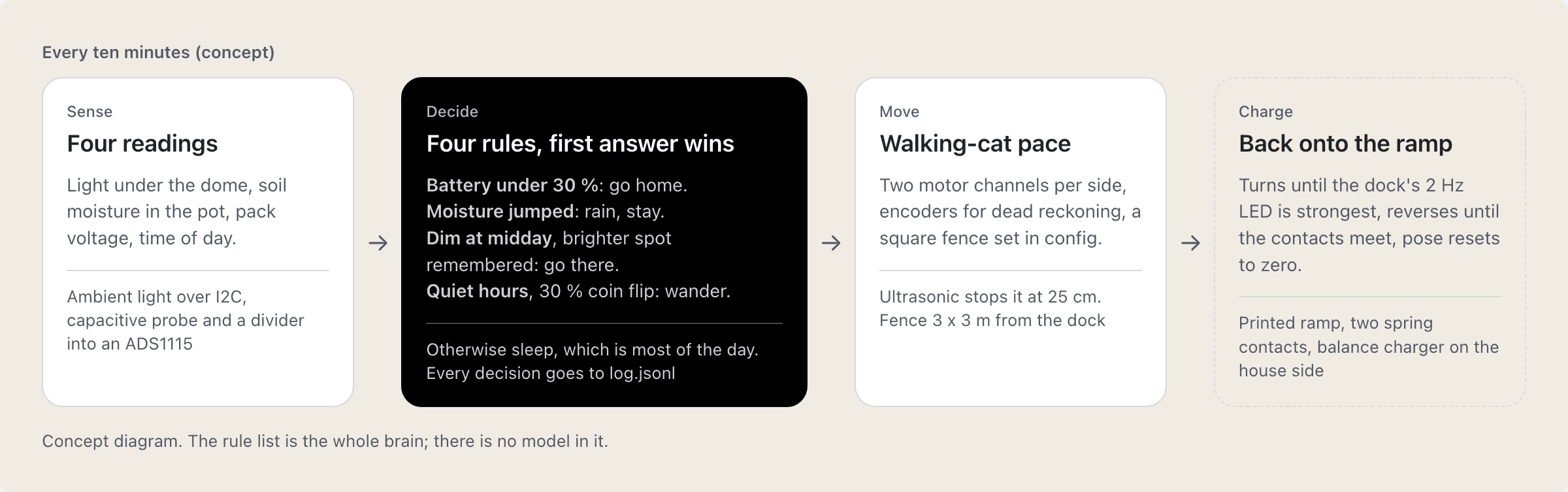
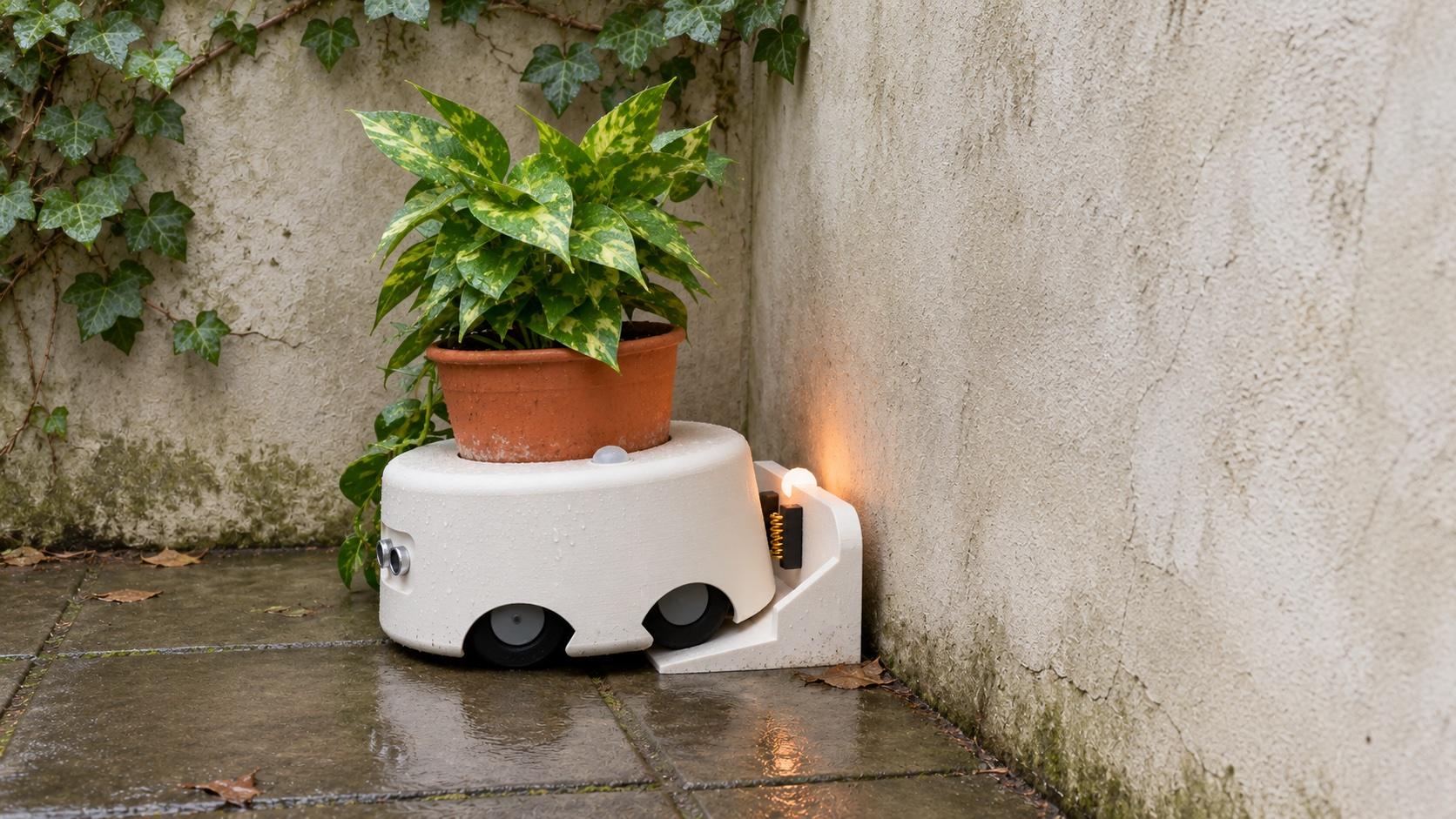
Light, soil moisture, pack voltage and the time, every ten minutes. Then four rules, first answer wins. Battery under 30 %: go home. Moisture just jumped: rain, stay. Midday and dim here, but yesterday this hour was brighter two metres over: go there. Quiet hours and a 30 % coin flip: wander inside the fence. Otherwise sleep. Moving is walking-cat speed on four small wheels, an ultrasonic sensor stops it at 25 cm, and a dead-reckoned pose keeps it inside a square set in config. Home is a printed ramp with two spring contacts and a blinking LED.
What gets built
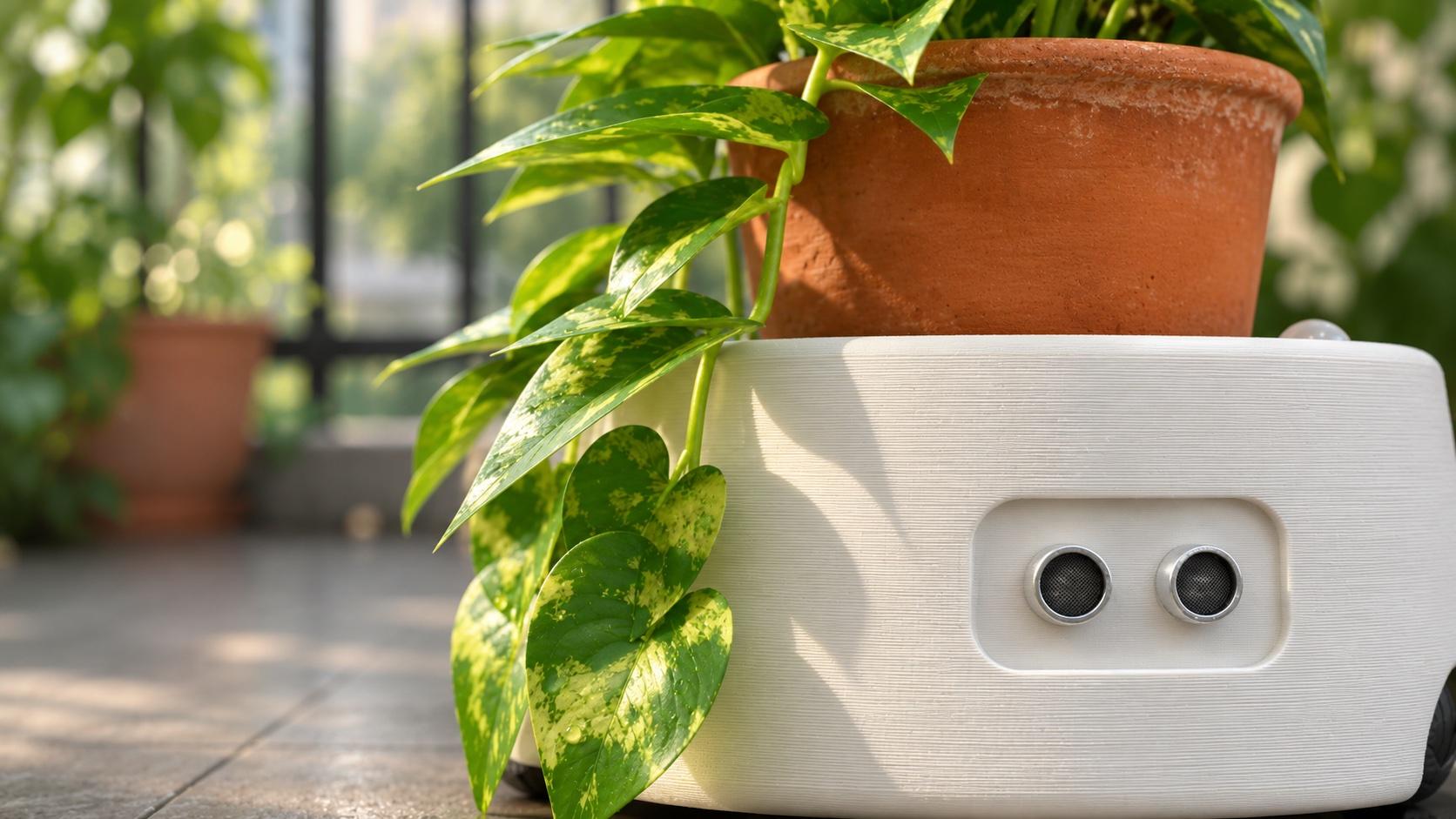
Bought: a $50 aluminium 4WD chassis with four 48:1 gearmotors, a Pi 5, a TB6612FNG motor HAT, a 3S 5000 mAh pack with a balance charger, capacitive moisture, ambient light and HC-SR04 sensors, a 15 cm plastic pot. About $477 CAD at November 2026 prices from RobotShop, PiShop and X2 Robotics. Printed in PETG, about 18 hours: a shell ring with a pot cradle that hides the chassis and lets the wheels peek out, a clear dome for the light sensor, the dock ramp, a battery tray. Written: a scheduler, a geofence, a docking routine, motor and sensor drivers, one config file, and a main loop that logs every decision.
What I would learn
Whether a $50 chassis moves 2 kg of pot and wet soil on grass; the pricing pass says probably not, and tracks cost ten times more, so the first prototype may be a patio-only pot. How far dead reckoning drifts over a night of wandering, and whether the dock seek covers it. And whether the pot being somewhere new each morning stays delightful or becomes a thing you trip over in the dark.
Decisions
A rule list, not a model
Four rules in priority order are the whole brain. They fit on one screen, they can be read in the log, and when the pot does something odd the reason is one line of text, not a weight.
Move only when nobody is looking
Quiet hours and a coin flip gate the wander. Most checks do nothing. The point is the morning, not the motion.
One model, every picture
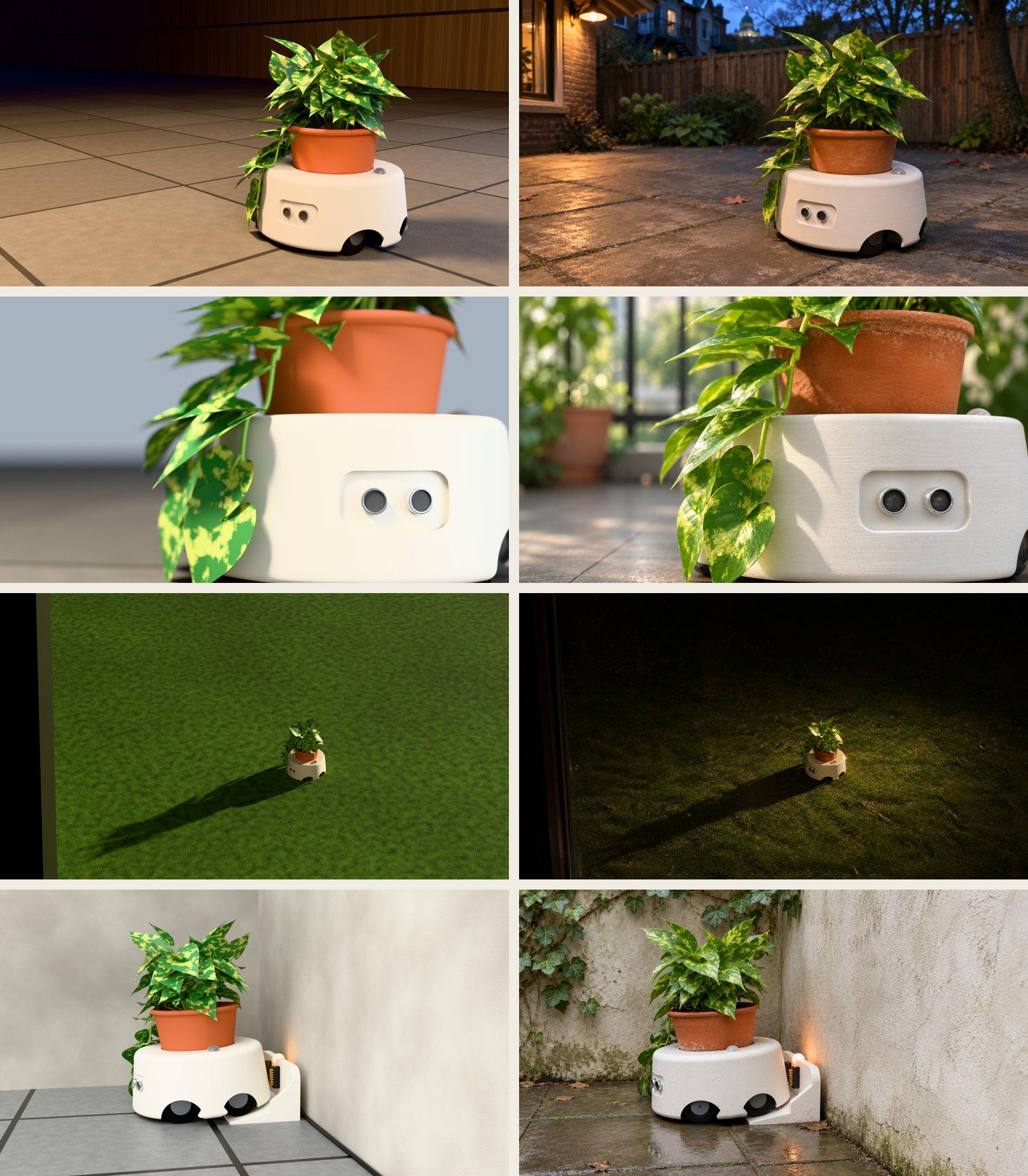
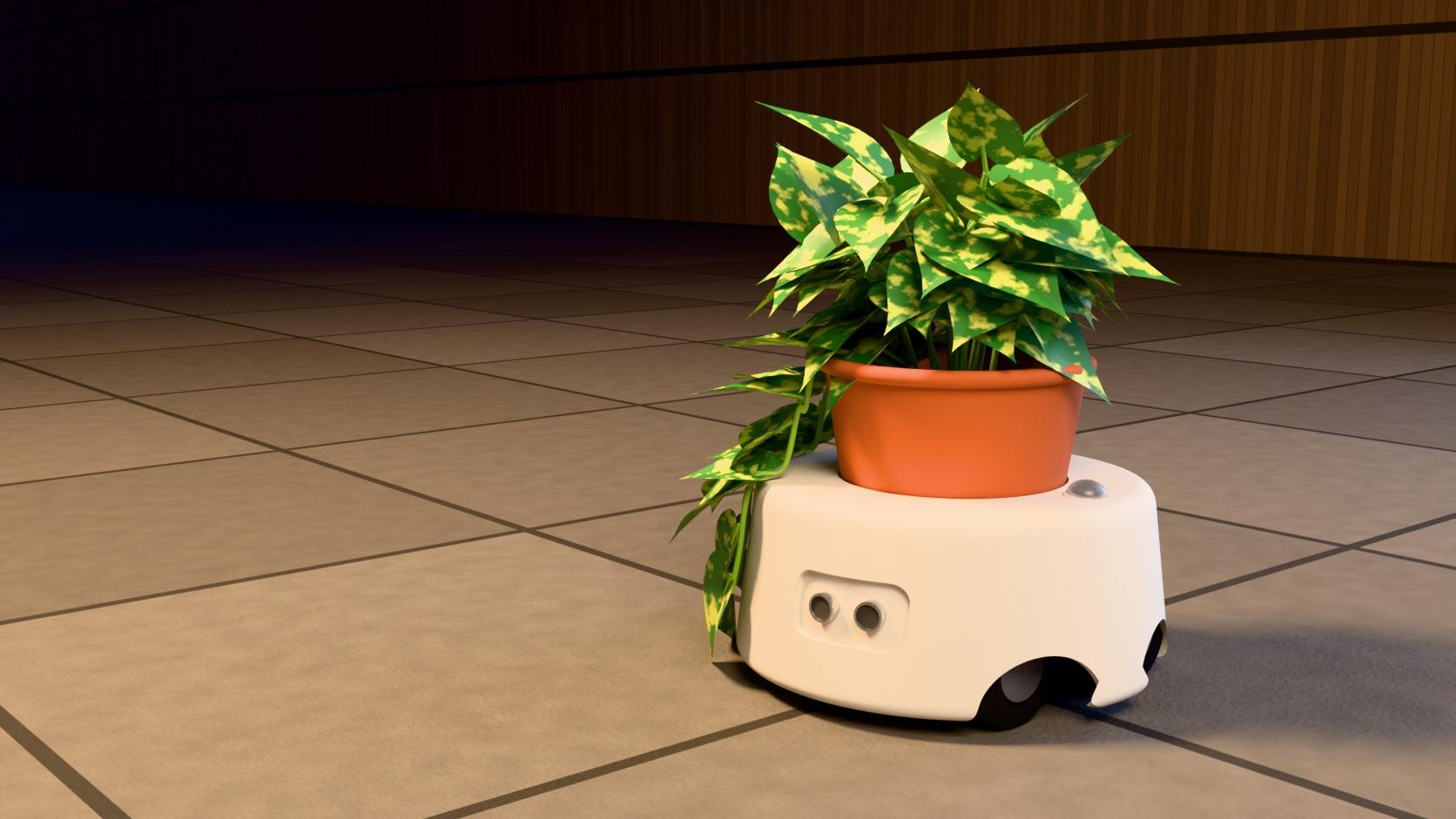
Every photo on this page starts as a Blender render of the same model you can turn above. Each shot gets its own camera and a rough set, and an image model only changes materials, light and surroundings. The first version of this page generated each photo from text, and the four pictures showed four different robots.