MeetnGreetMe
Social-travel hospitality platform. World Summit Award winner — Culture & Heritage, 2016.
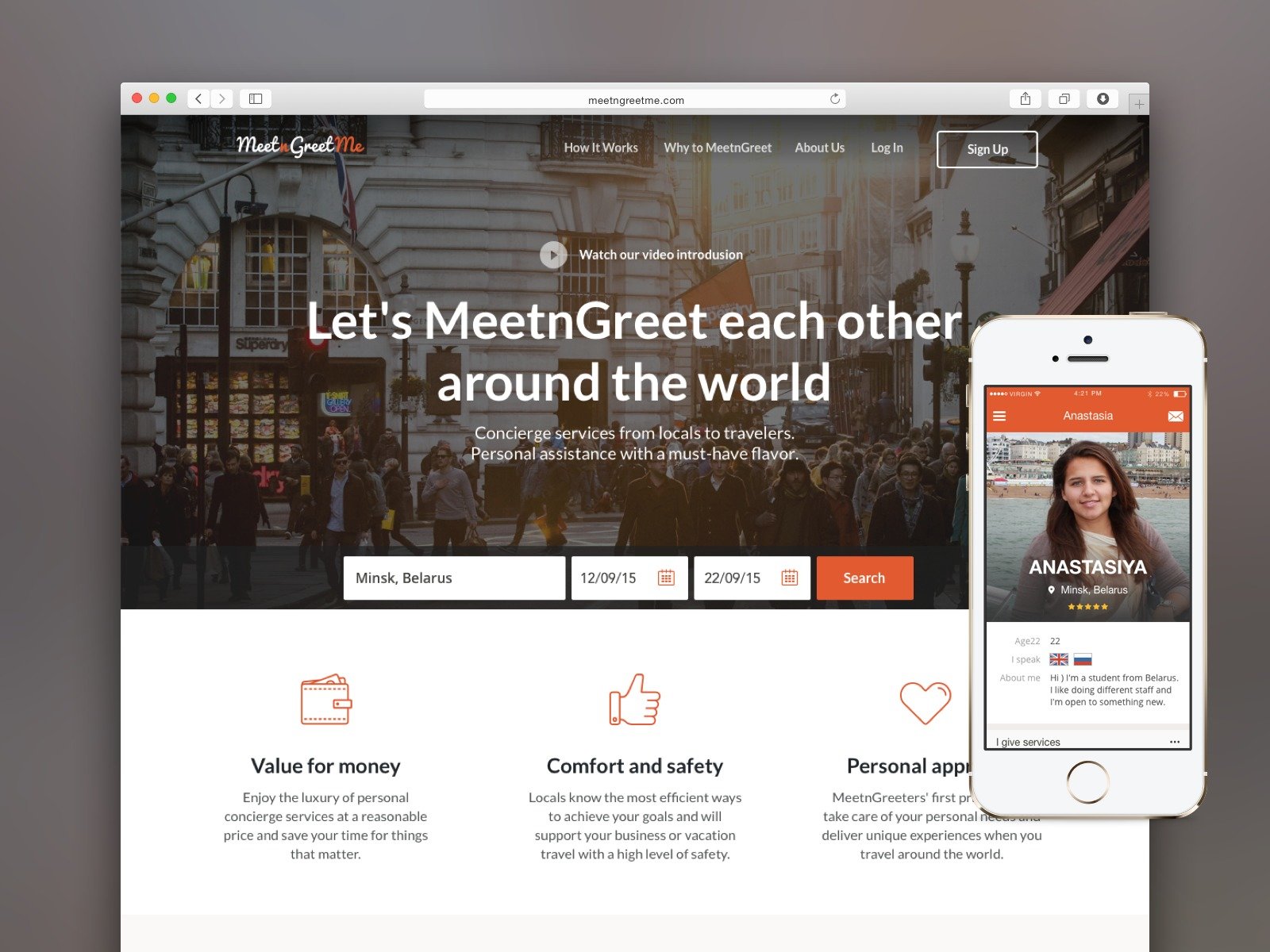
MeetnGreetMe is a two-sided marketplace for personal concierge services — connecting travelers with local hosts for business and leisure needs, all in one place.
- 2014–2017
- Co-founder, Head of Design
- World Summit Award — Culture & Heritage, 2016
Problem
Travelers landing in an unfamiliar city face a gap that guidebooks and review sites can't close: the small, human asks. Someone to meet you at the airport, translate a doctor's visit, walk you through a neighborhood market, or just grab coffee and trade stories. Existing platforms optimized for transactions — hotels, tours, rides — not for the people who could make a trip feel local.
MeetnGreetMe was a two-sided marketplace built to answer that gap: travelers post what they need, locals (we called them MeetnGreeters) offer their time and knowledge. As co-founder and Head of Design, my job was to make both sides feel safe, useful, and worth coming back to — across web and iOS, in five languages, with the trust signals a stranger-meets-stranger model demands.
Approach
Trip intent as the starting point
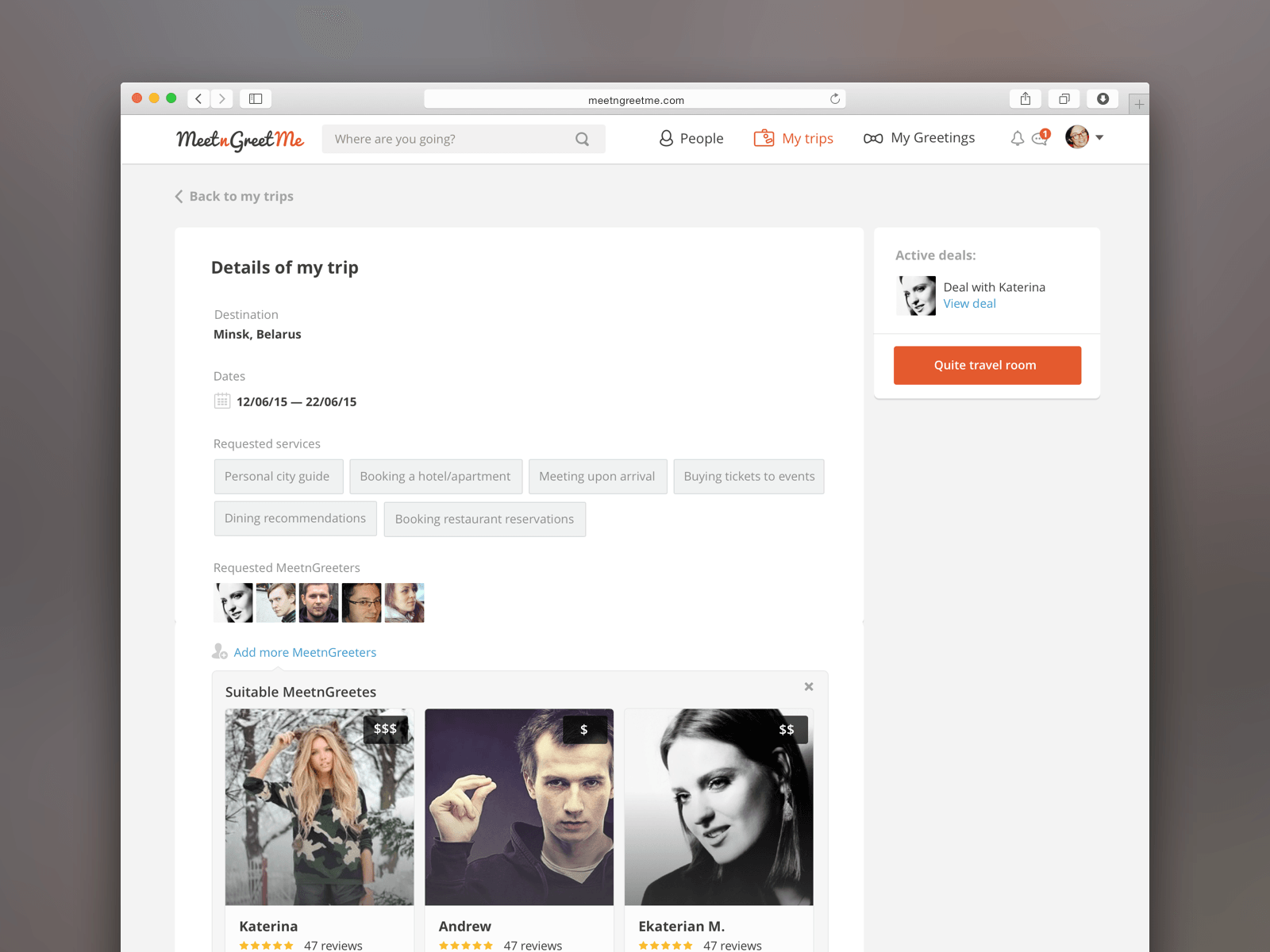
The flow started with the trip, not the greeter. A traveler picked a city and dates, then chose from a structured service taxonomy — airport pickup, city tour, language help, local shopping, hosted dinner — that doubled as the matchmaking signal for the supply side. Pre-populating greeter avatars on this screen previewed the marketplace's depth before any commitment.
Designing the taxonomy was the hardest part. Too narrow and locals couldn't express what they were good at; too broad and travelers couldn't filter. We landed on roughly a dozen categories anchored in real conversations with both sides during early closed-beta interviews.
Discovery: humans, ranked
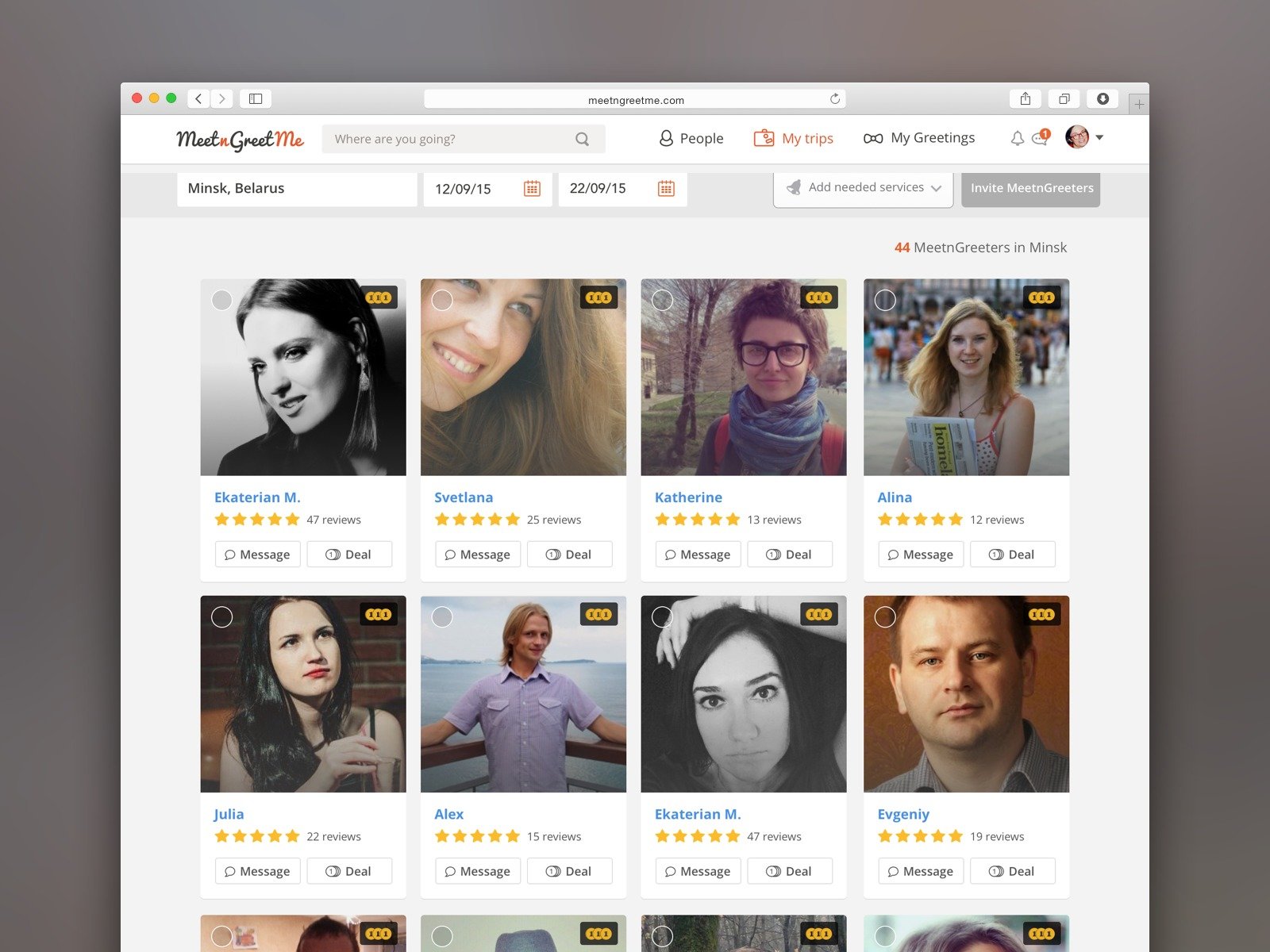
Search results led with the face. A photo, a name, a one-line introduction, languages, and verified badges. Density was deliberate — a grid that let travelers scan a dozen candidates before opening any single profile, the way you might scroll Airbnb or Couchsurfing but with the focus on the person rather than the place.
Ranking blended responsiveness (how fast they replied), review quality, and trip-fit (taxonomy overlap with the traveler's request). We exposed the signals visually rather than burying them in a sort menu — verified ID, response time, completed meetings — so the ranking logic felt earned, not algorithmic.
Decision: trust at the profile level
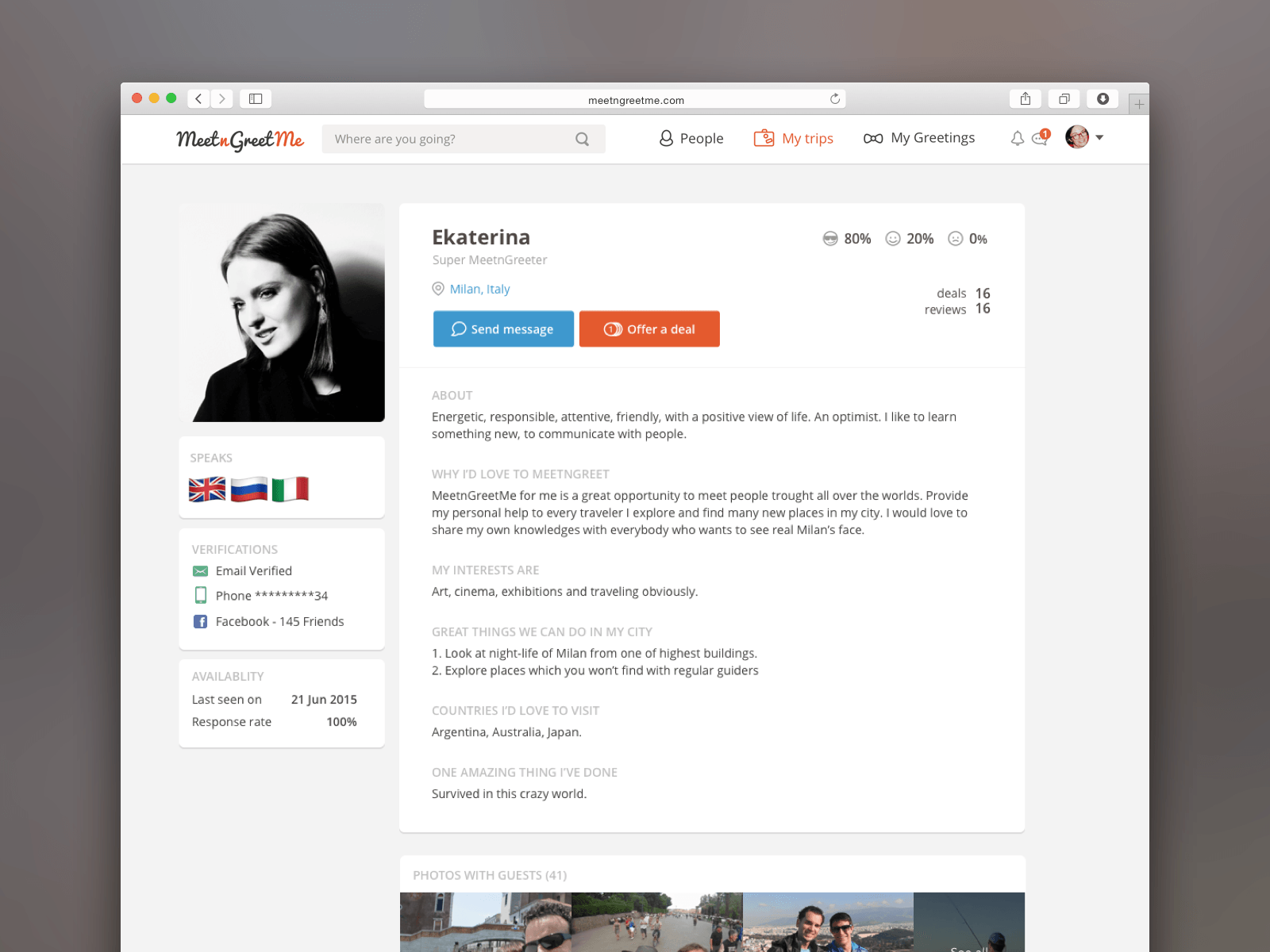
The profile was where the decision happened. We treated it like a resume crossed with an Airbnb listing — bio in their voice, services with prices, languages spoken, completed meetings, response rate, ID verification status, and reviews. Dual CTAs (send a request vs. ask a question) let travelers ease in instead of forcing commitment.
Every element on this page was a trust signal we'd seen mentioned in interviews. Verification badges, photo authenticity, completion counts, last-active timestamps — small things that, together, signaled this person was real and reachable.
Mobile parity, not mobile-second
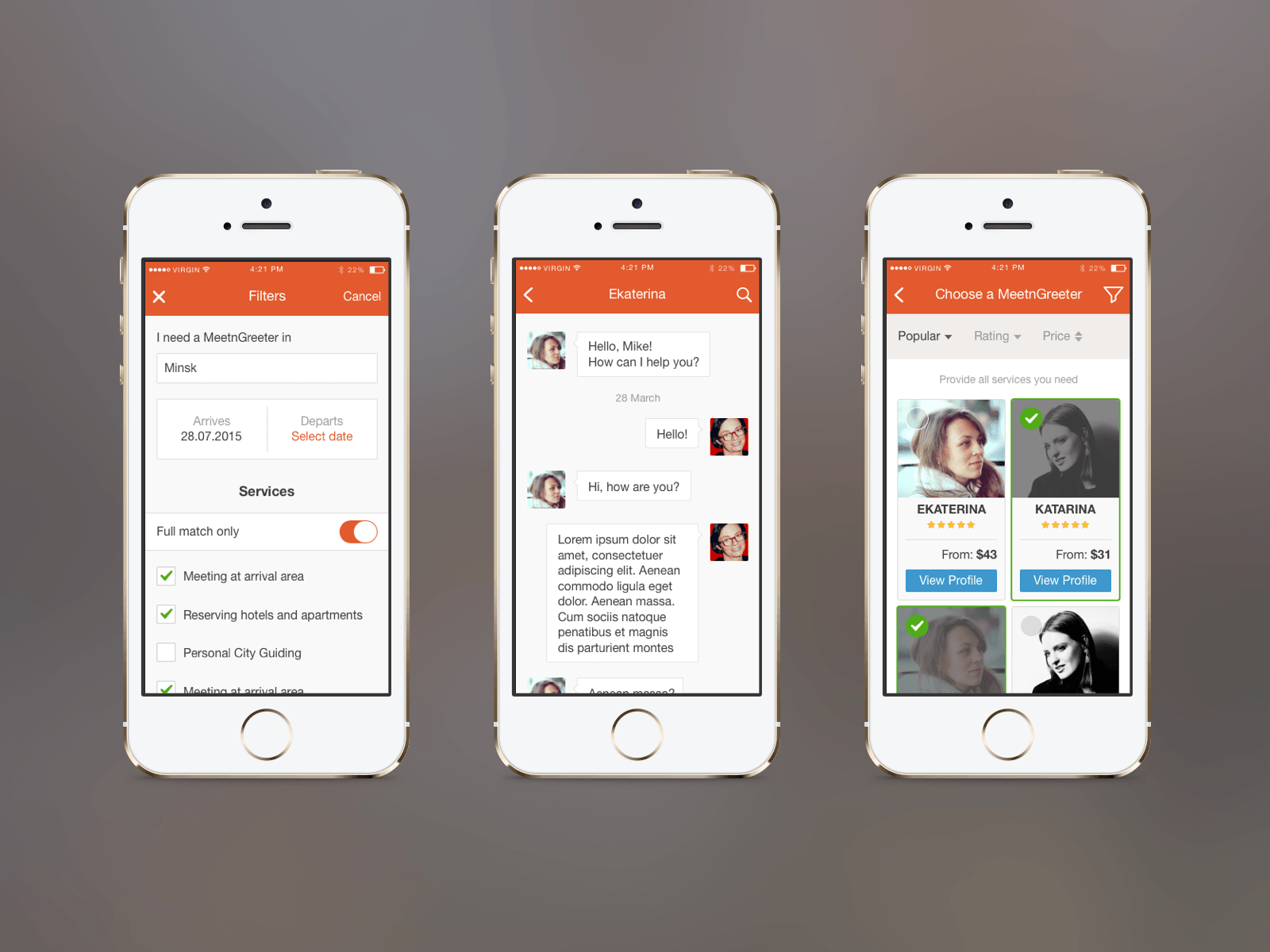
The native iOS app shipped with feature parity because travelers were most active on mobile mid-trip. Once they'd landed, the phone was the device. We reworked the discovery grid into a single-column scroll, kept the profile dense but tap-friendly, and prioritized the inbox — the conversation thread was the most-used screen by a wide margin once a match was made.
Designing for both surfaces simultaneously forced us to keep components honest. If a layout couldn't survive a 375-wide screen, it usually meant we were over-decorating on desktop.
System thinking: the notification spine
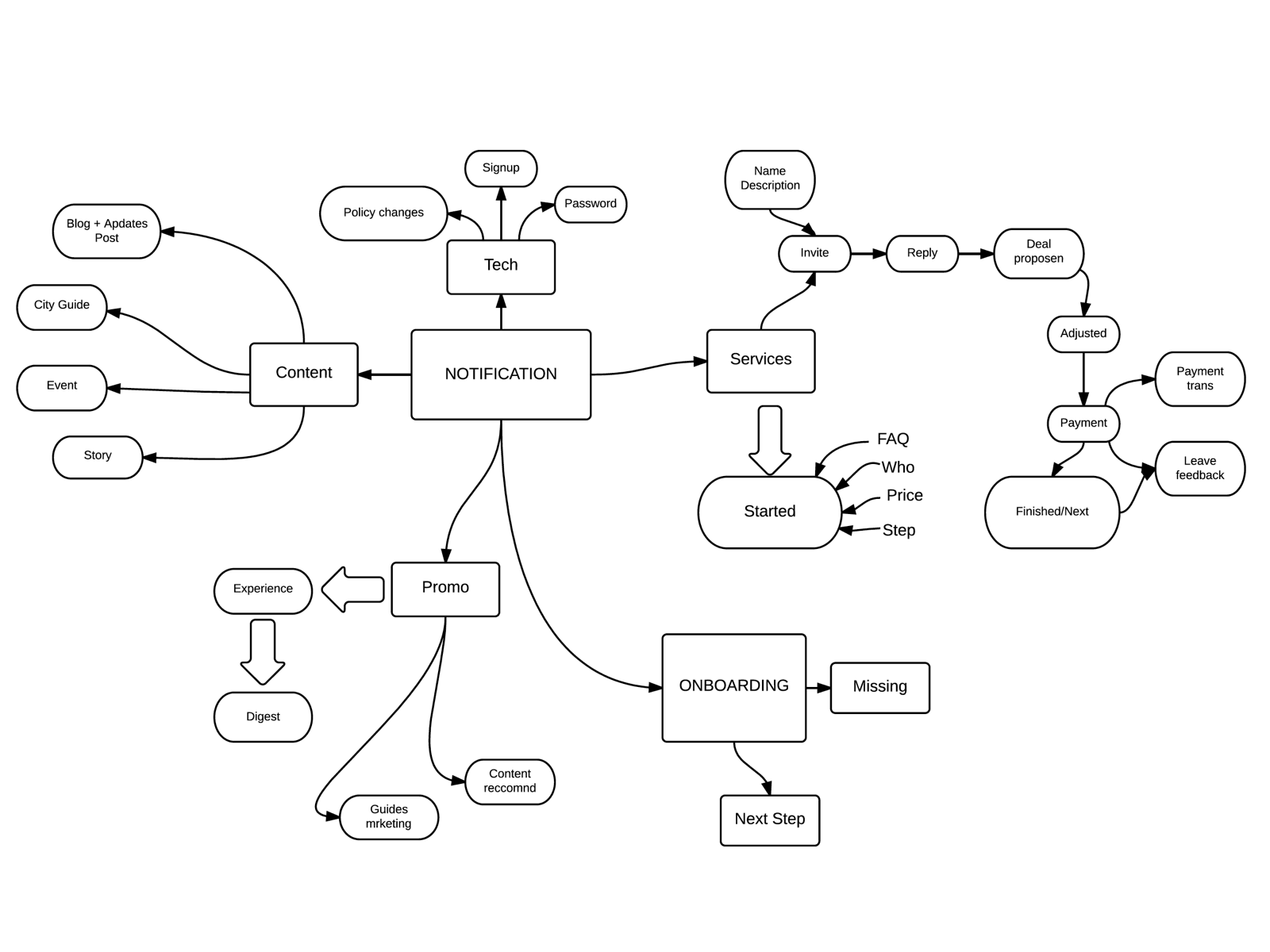
A marketplace lives or dies on its messaging spine. We hand-mapped every state — request sent, request received, accepted, declined, modified, payment held, meeting confirmed, meeting completed, review prompted — and the channels each one fired through (email, push, in-app). The diagram became the source of truth that backend and design referenced together.
This kind of system mapping isn't decorative. Two-sided marketplaces fail when one side waits too long to hear back; the notification graph was as critical to the product as any screen we shipped.
Outcome
MeetnGreetMe won the World Summit Award — Culture & Heritage, 2016, a UN-affiliated recognition for digital products advancing cultural understanding. The platform shipped across web and iOS, supported five languages, and built a community of greeters across more than 60 cities. The category — peer concierge travel — was nascent then; the lessons about trust signals, two-sided liquidity, and notification design carried into every marketplace I touched afterward.