Flow Builders
B2B workflow-builder interfaces across multiple engagements.
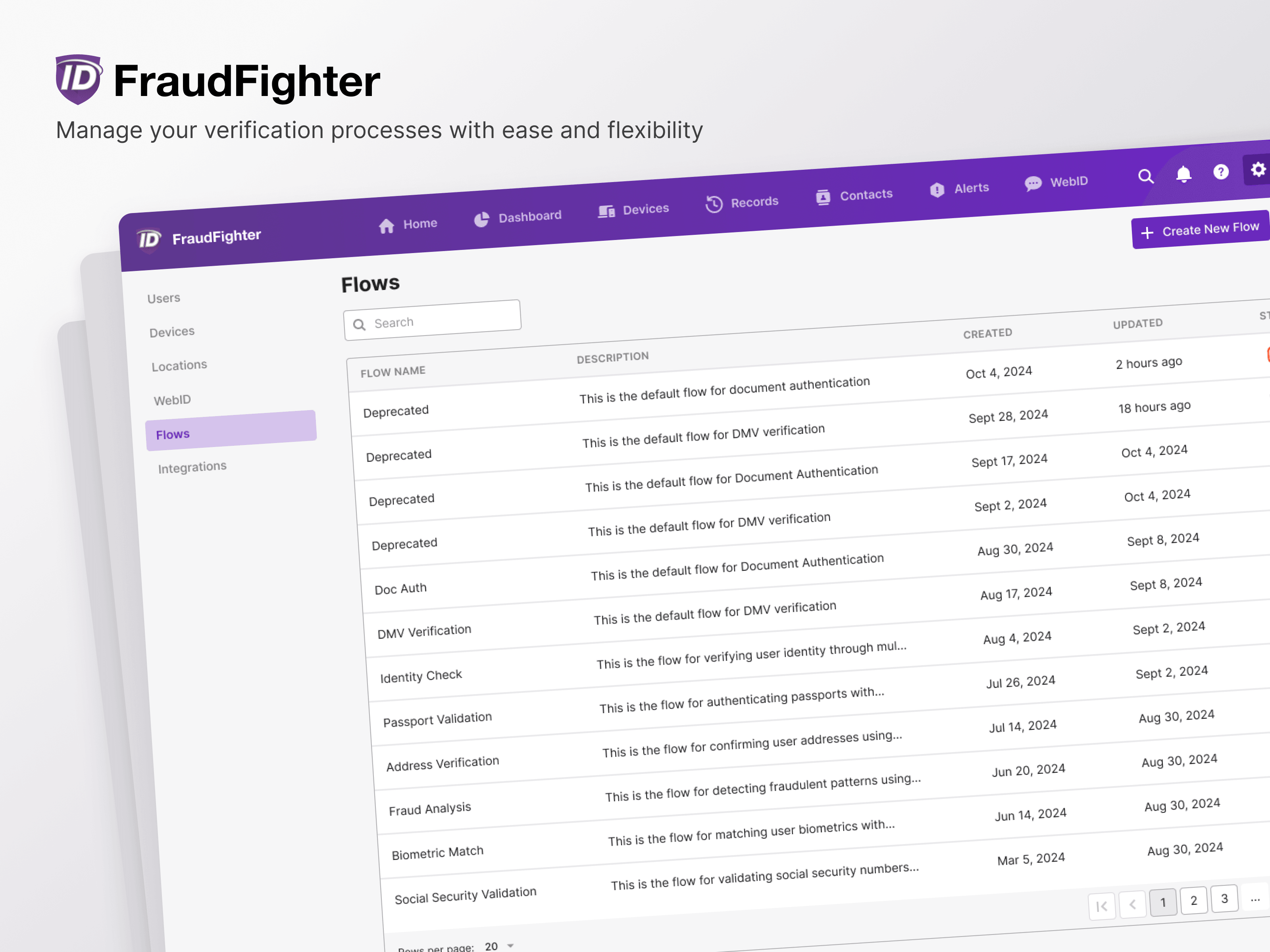
B2B workflow-builder interfaces across multiple engagements — visual programming for non-engineers.
- 2021–2024
- Lead Designer
Between 2021 and 2024 I led design on three separate B2B engagements where the core surface was the same primitive: a flow builder. FraudFighter (verification rules), Testlock (BPMN + form builder + GPT), and SegmentLogic (audience workflows) each framed the problem differently, but each needed users to compose logic visually, configure pieces on a side rail, and ship the result with confidence.
FraudFighter — verification rules engine
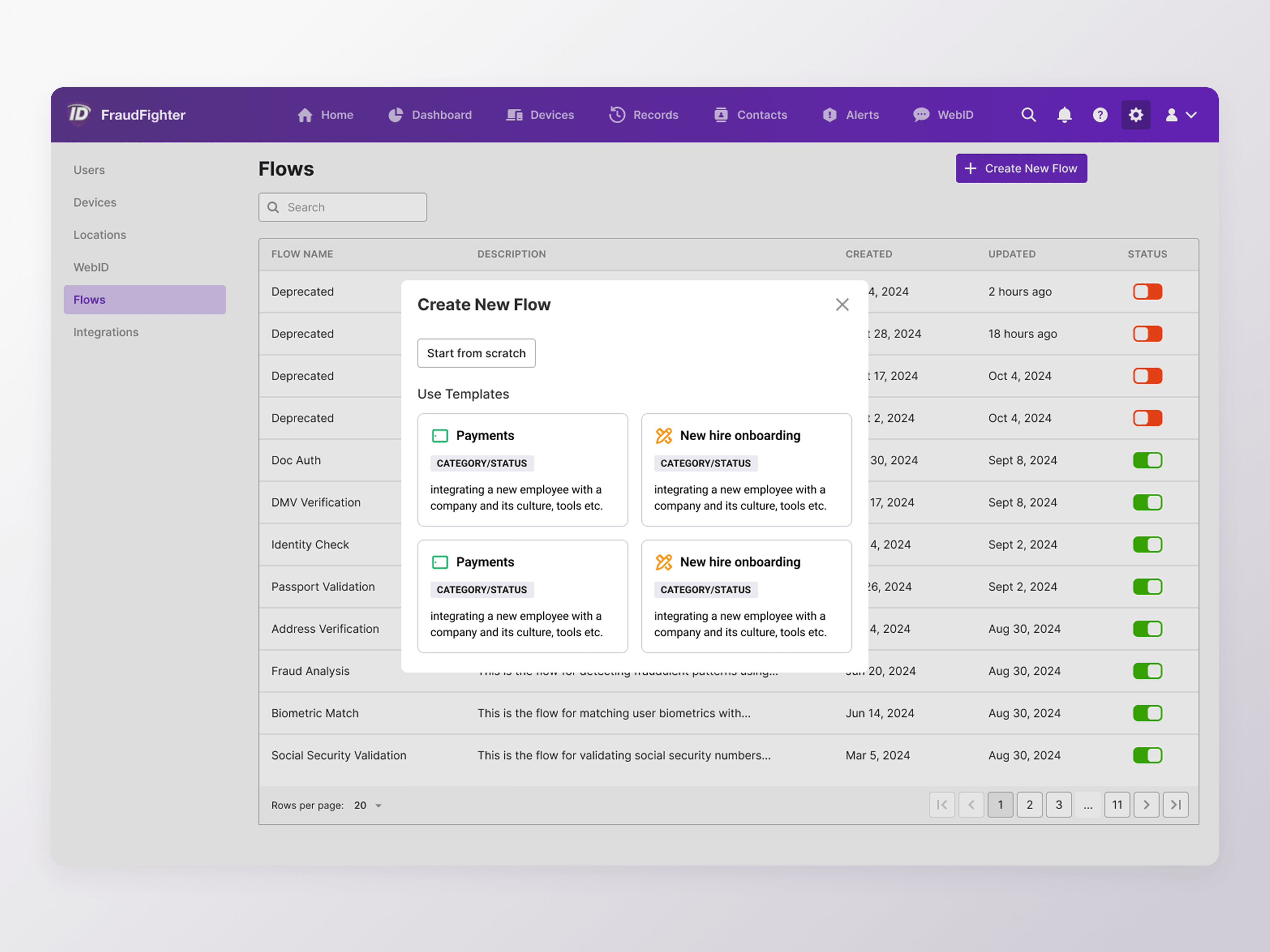
FraudFighter operates in the identity-verification domain. Risk teams needed to assemble multi-step checks without leaning on engineering, so we built a node-based rule canvas with branching outcomes. The unlock was treating the canvas and the properties rail as a single editing surface — select a node, tune it inline, never lose context.
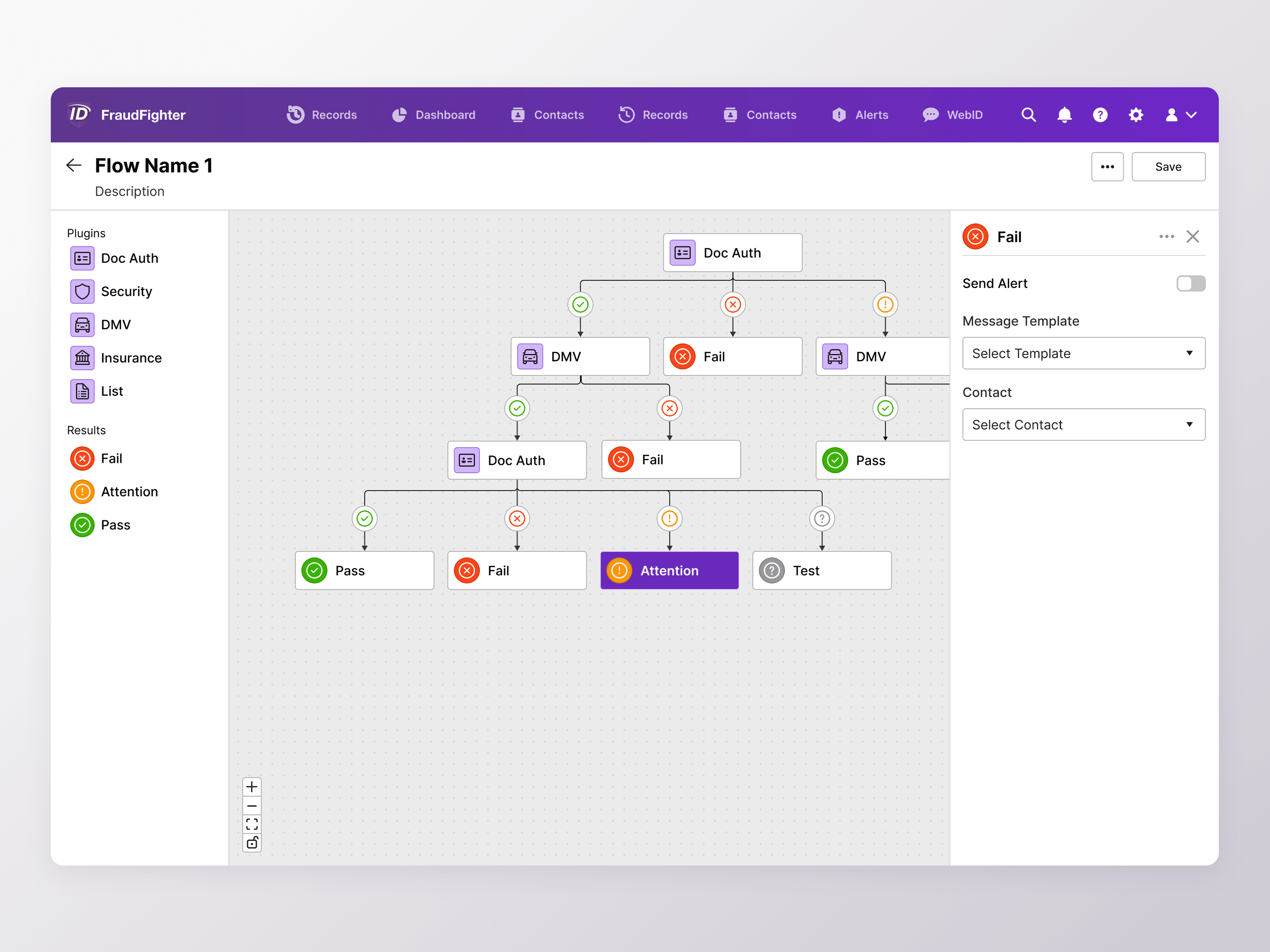
The canvas — nodes connect outcomes, the rail edits the selected step. Branching is explicit so reviewers can audit decision paths without reading code.
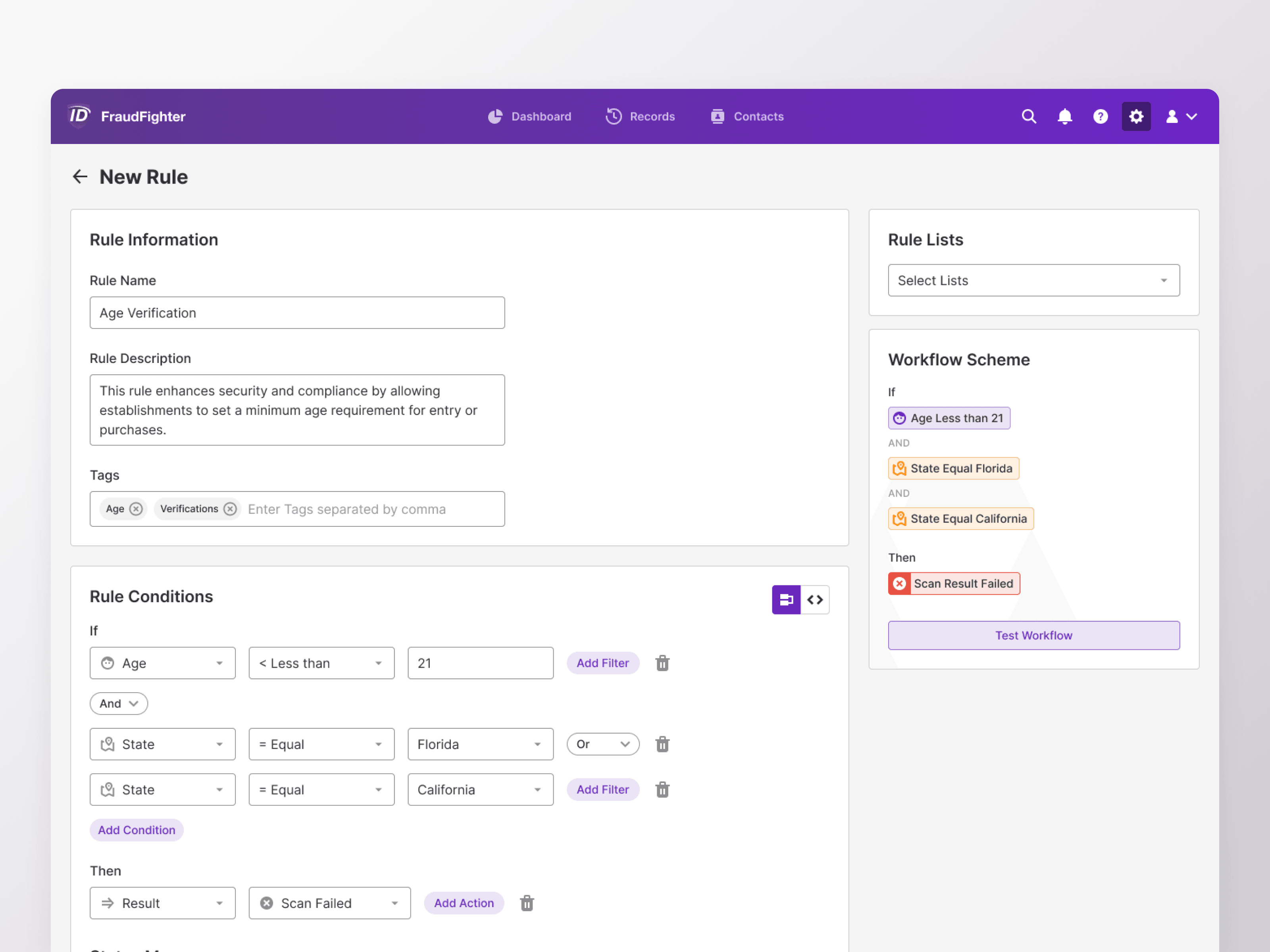
Adding a rule lives in the side panel rather than a modal. Modals broke flow when users were composing five or six rules in a row; the panel kept the canvas in view.
Testlock — BPMN editor with GPT schema assistant
Testlock needed a heavier-weight process tool: BPMN-style flow modelling, an embedded form builder for human-in-the-loop steps, and a GPT assistant that could draft schemas from a prompt. The challenge was reconciling formal notation with the casual, conversational entry points users actually wanted — the AI couldn't undermine the rigor of the editor.
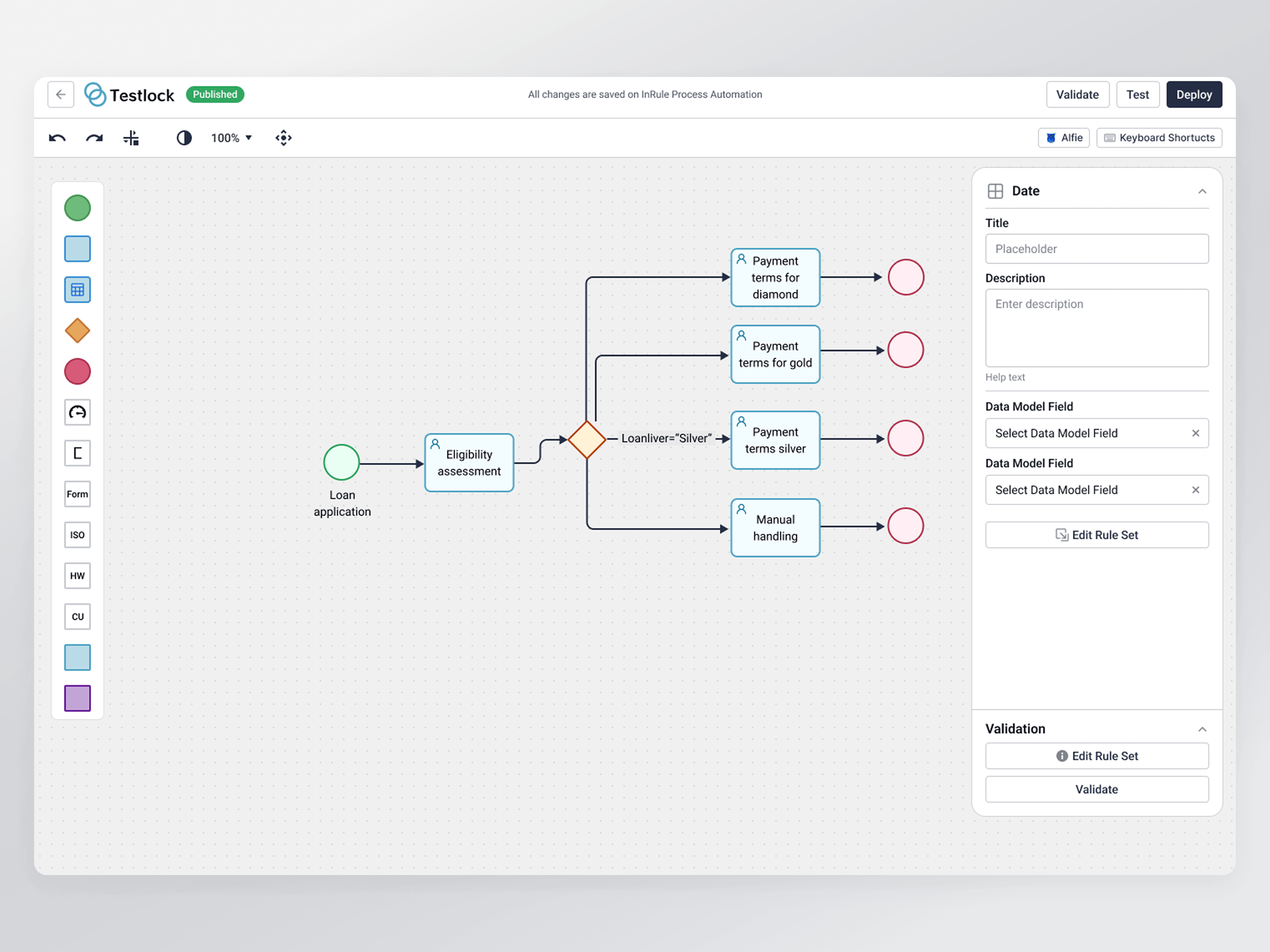
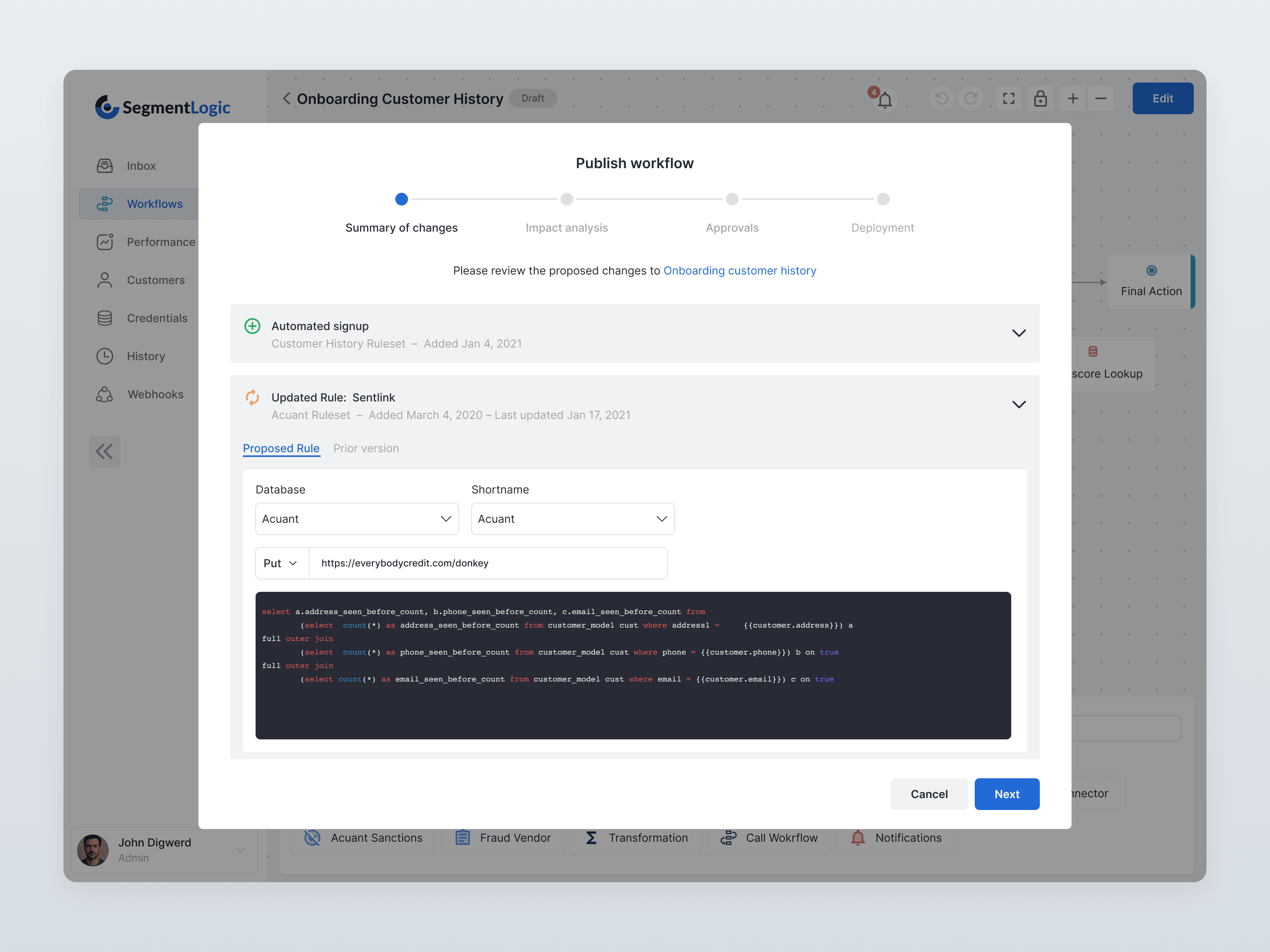
Wiring a node to a data source via the properties rail. The same rail pattern from FraudFighter, but carrying more configuration weight per step.
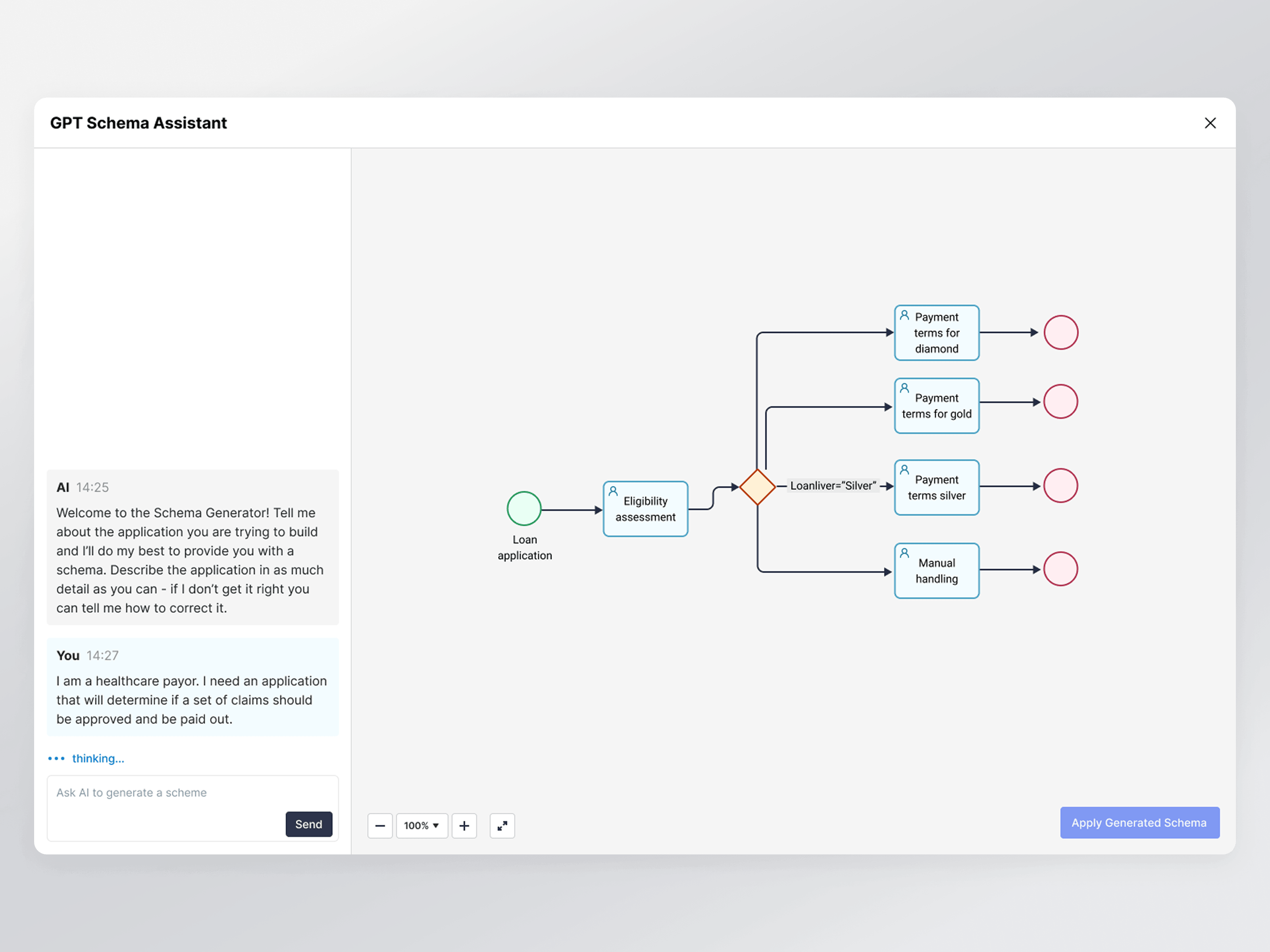
Conversational drafting that lands directly into the structured editor. The assistant proposes; the canvas remains the source of truth.
SegmentLogic — audience workflows with impact analysis
SegmentLogic wraps the same canvas pattern in a three-step stepper: index of saved workflows, an editing canvas, then a publish step that surfaces impact before changes go live. Because edits affect downstream audiences, the publish moment carried more weight than in the other two products.
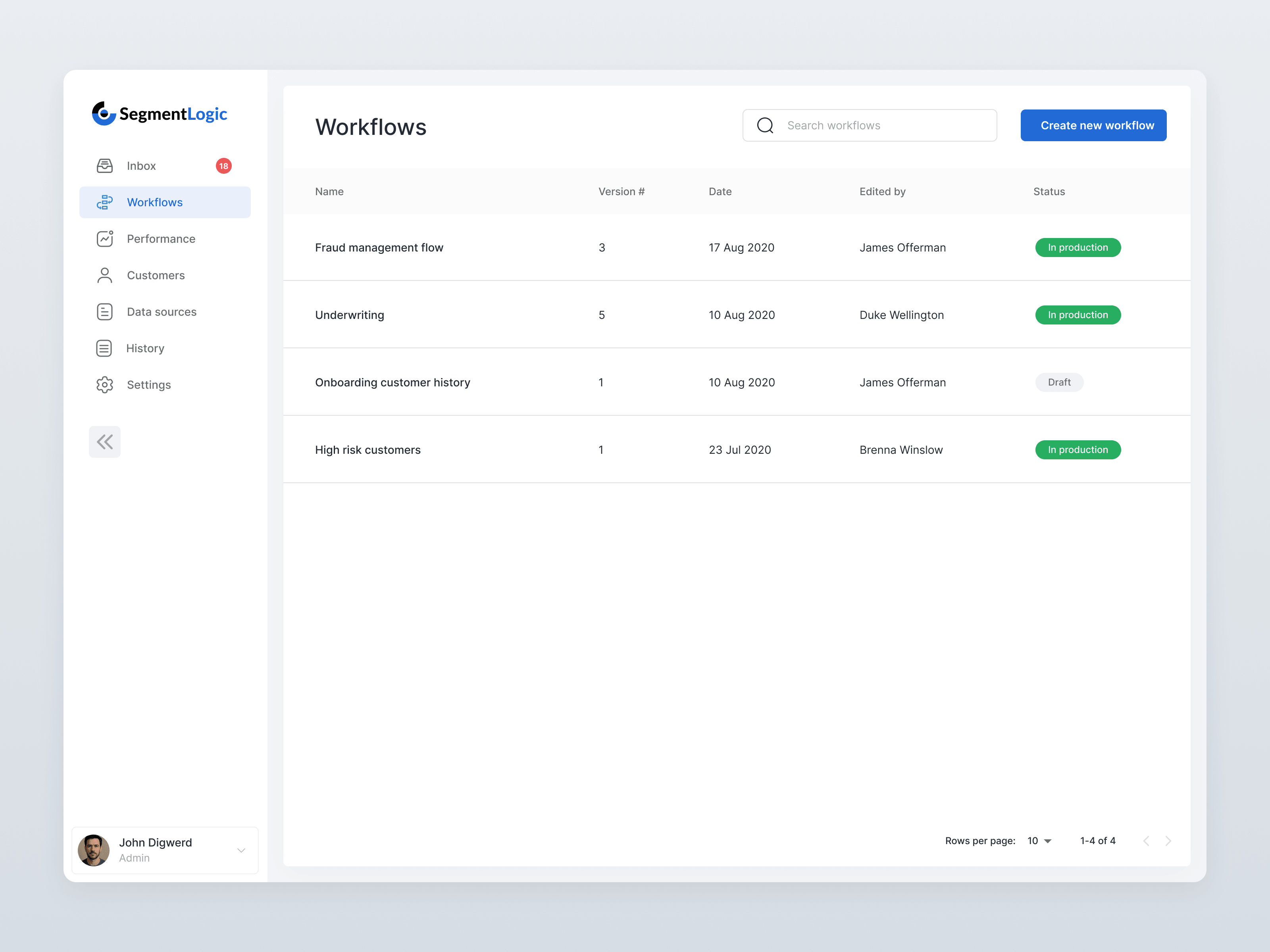
Index of workflows — entry point for the stepper. Status and ownership readable at a glance so users find the right workflow fast.
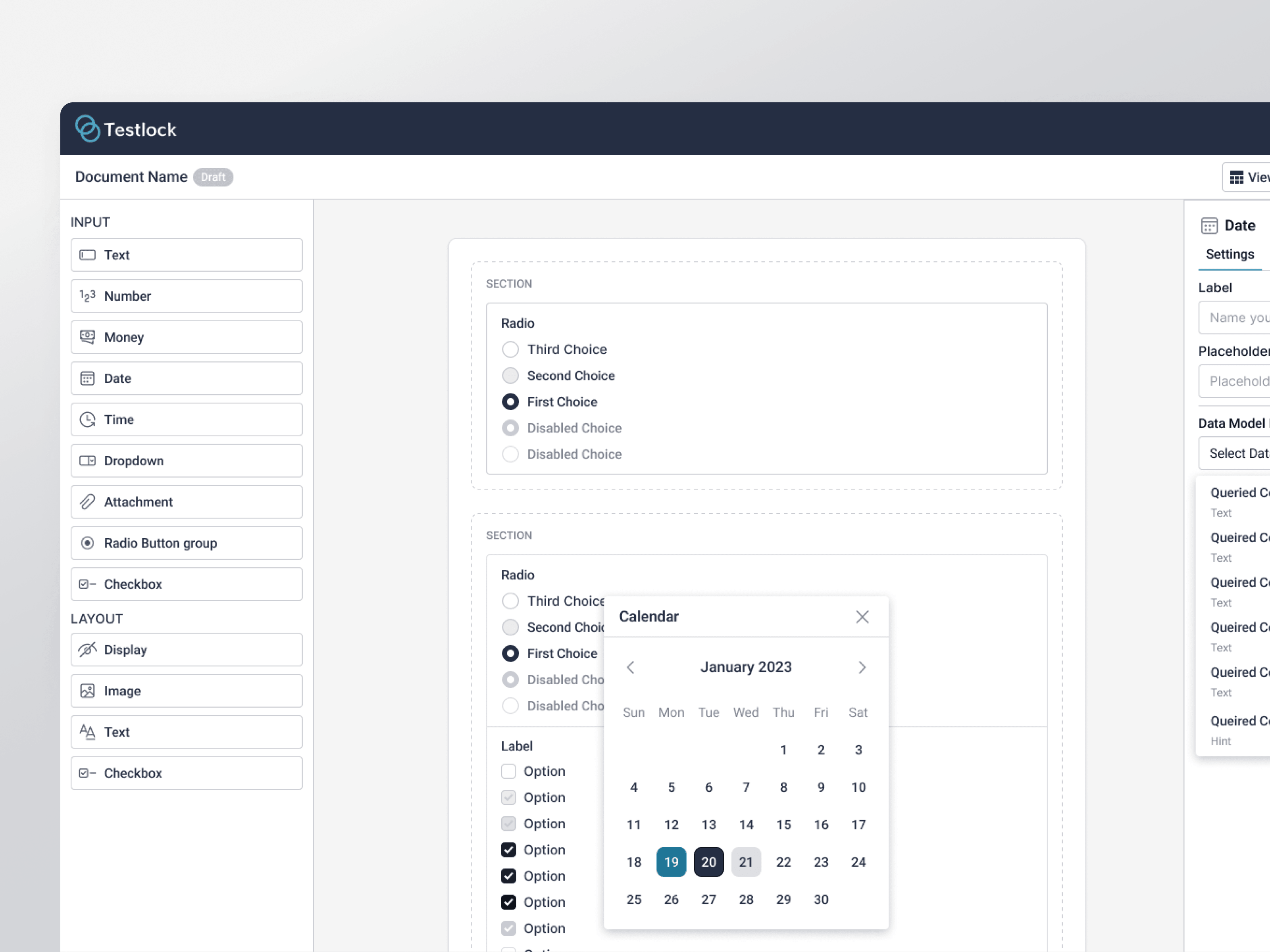
Editing a form attached to a workflow step. Forms live inline so users don't context-switch out of the workflow they're authoring.
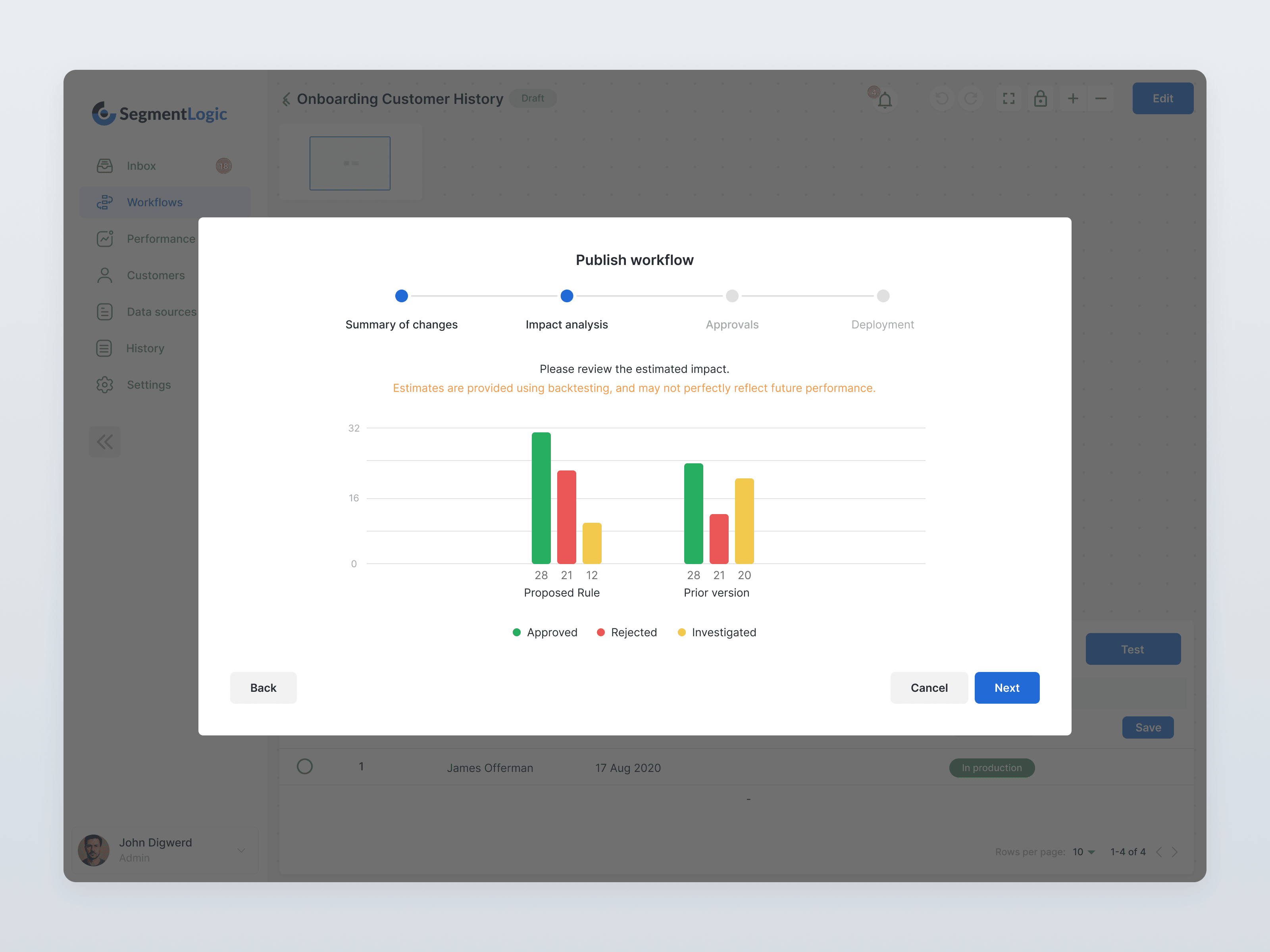
What carried across — and what was unique
Three brands, three domains, one underlying shape: a canvas for composing logic, a properties rail for editing the selected piece, and a publish moment that earns user trust. The pattern held because the underlying user job was the same — assemble logic visually, tune it, ship it.
- Shared: canvas + side-rail properties as a single editing surface; explicit draft → publish progression; node selection drives all configuration UI.
- FraudFighter unique: optimized for fast rule authoring with branching outcomes auditable by risk reviewers.
- Testlock unique: formal BPMN notation paired with a GPT assistant that drafts into the structured editor without bypassing it.
- SegmentLogic unique: three-step stepper wrapping the canvas, with a publish step designed around impact awareness on downstream audiences.