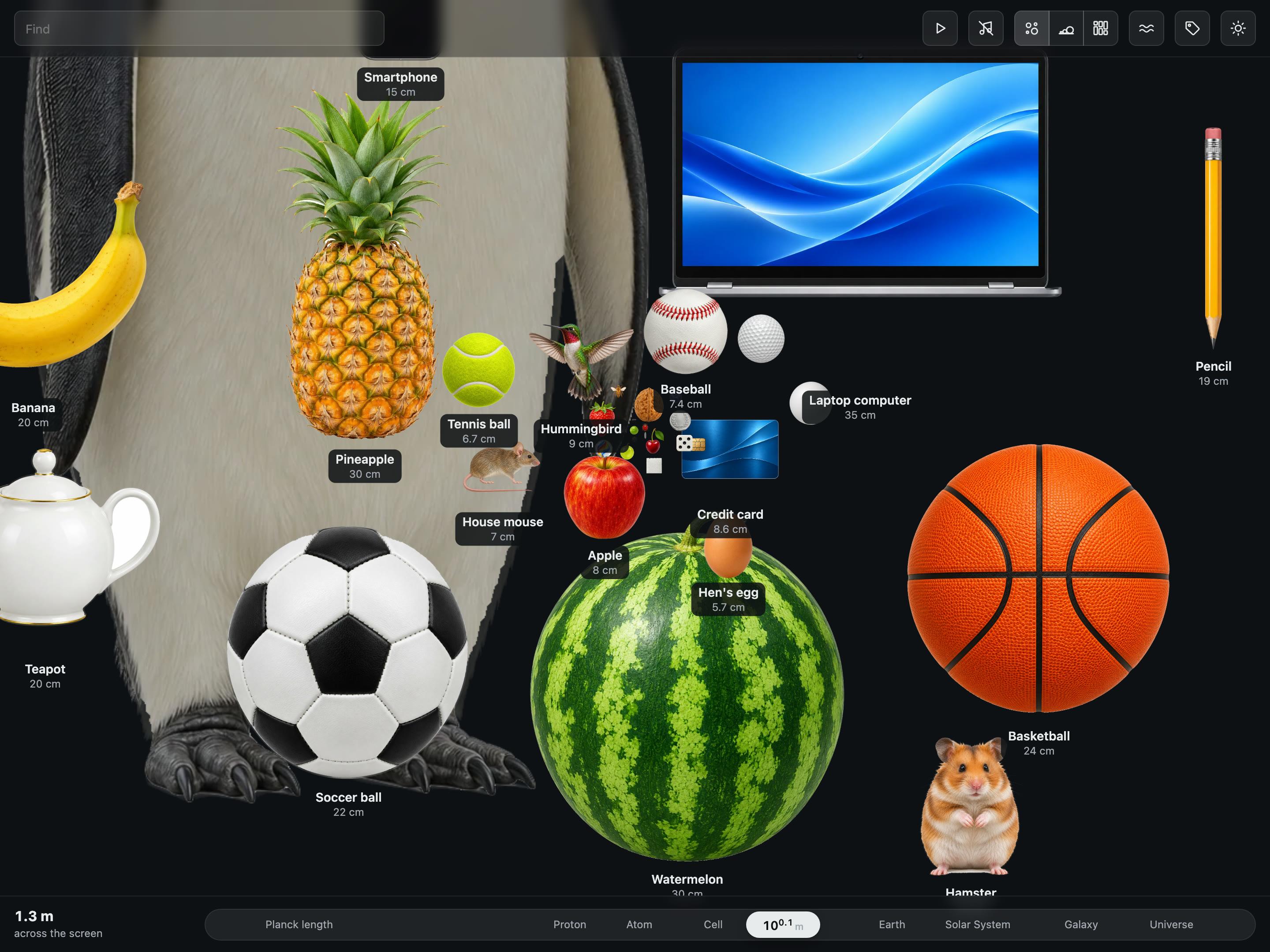
About 1.3 m across the screen in the scatter layout, captured from the live page. Every object is drawn at its real size next to the others.
Status
Live
Tools
JavaScript, CSS, Python, Codex image generation, ElevenLabs Music
Zoom from the Planck length to the edge of the observable universe through 298 objects drawn at their real sizes relative to each other: everyday things, animals, cells, planets, stars and galaxies. There are three layouts, search, a fact for each object, a six-minute guided tour and a score of 20 tracks that changes with the scale. The pictures are generated, so most of the work was holding them to one rule: the length drawn is the length measured.
The live page zooming out from the smallest scales to the largest in the line layout, captured one frame at a time.
Decisions
Draw everything flat
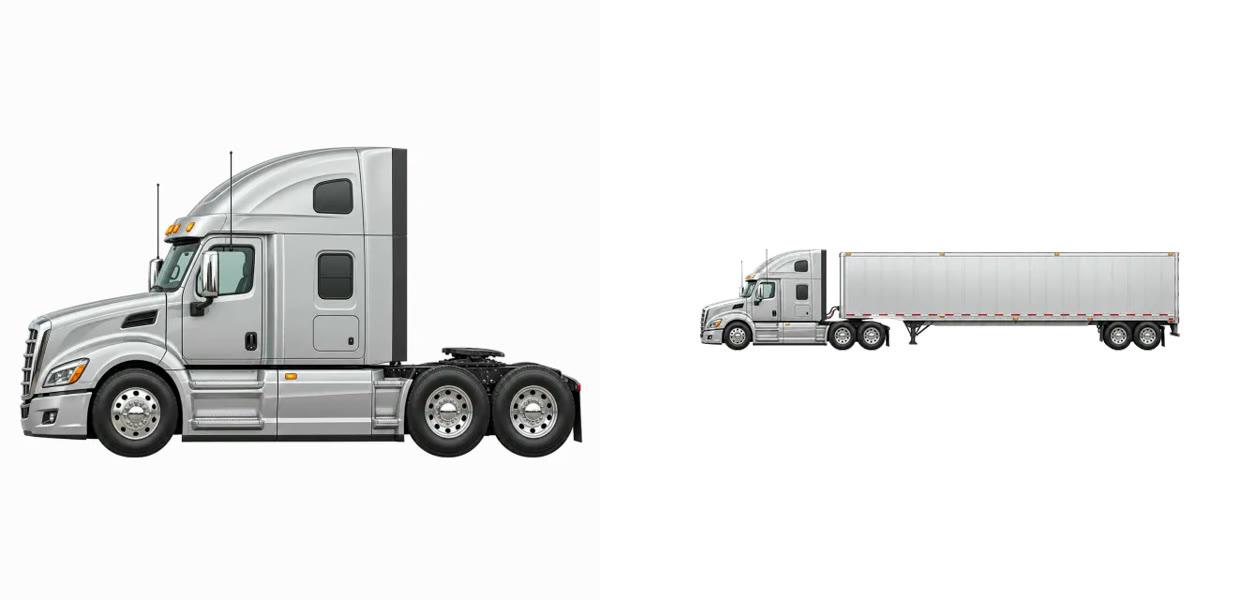
A bus seen at an angle is shorter on screen than the same bus from the side, so it no longer measures 12 m next to a 12 m whale shark. 49 objects that came back at an angle were redrawn as side or front elevations, cross-sections or top-down plans. The semi truck had been drawn as the tractor alone, stretched to the 22 m of the whole rig, and was redrawn as the full rig.
The semi truck as first generated, the tractor alone (left), and redrawn as the full 22 m rig (right).
Draw in code what a picture cannot keep to scale
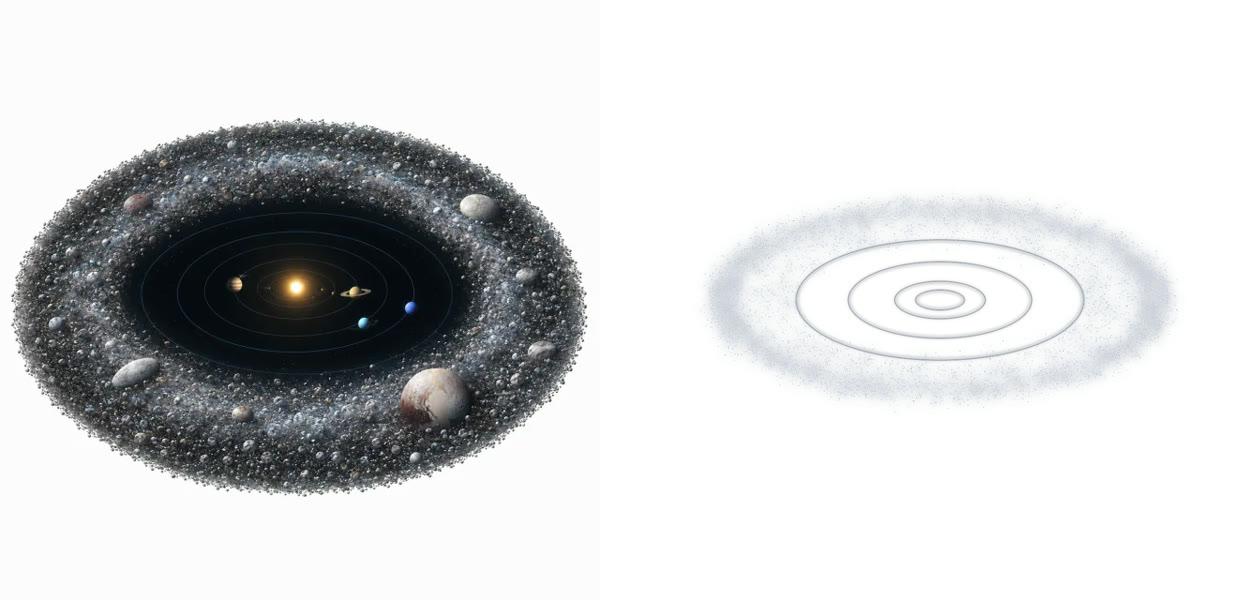
The generated Kuiper Belt had dwarf planets bigger than Jupiter, so it was replaced by a drawing made in code: the giant planets' orbits and the belt from 30 to 50 AU as specks. Orbits became just their line, each light wave one plain wavelength, and the black hole a shadow with a see-through gas disc, so nothing painted around an object adds to its size.
The Kuiper Belt as generated (left) and as drawn in code to scale (right), shown here on white; the page shows it on black.
Load ahead of the zoom
Zooming out, big objects arrived from above before their pictures had loaded. Pictures now load nearest to the current zoom first. On a simulated 20 Mbps link, a gentle zoom-out went from 156 of 360 frames with an empty object to none.